



As a supplier of 68515 - 73 - 1, I am deeply involved in the production and optimization of this chemical compound. In this blog, I will share some insights on how to optimize the synthesis process of 68515 - 73 - 1, which is commonly known as decyl glucoside.
Understanding the Basics of 68515 - 73 - 1 Synthesis
Decyl glucoside (CAS: 68515 - 73 - 1) is a non - ionic surfactant widely used in the cosmetic, household cleaning, and personal care industries due to its excellent biodegradability, low toxicity, and good foaming properties. The synthesis of decyl glucoside typically involves the reaction between glucose and decanol in the presence of an acid catalyst.
The general reaction equation is as follows:
[nC_{6}H_{12}O_{6}+C_{10}H_{22}O\stackrel{H^{+}}{\longrightarrow}C_{6}H_{11}O_{5}(OC_{10}H_{21}){n}+nH{2}O]
where (n) represents the degree of polymerization.
Factors Affecting the Synthesis Process
1. Reactant Ratio
The ratio of glucose to decanol is a crucial factor in the synthesis of decyl glucoside. An appropriate molar ratio ensures a high conversion rate and product quality. A higher amount of decanol relative to glucose can drive the reaction forward according to Le Chatelier's principle, but an excessive amount may lead to waste and increase purification costs. Through numerous experiments, we have found that a molar ratio of glucose to decanol in the range of 1:2 - 1:3 usually gives satisfactory results.
2. Catalyst Selection and Concentration
The choice of catalyst significantly affects the reaction rate and selectivity. Commonly used acid catalysts include sulfuric acid, p - toluenesulfonic acid, and ion - exchange resins. Sulfuric acid is a strong acid catalyst that can accelerate the reaction, but it may cause side reactions such as charring of glucose at high temperatures. P - toluenesulfonic acid is a milder acid catalyst with better selectivity, but its solubility in the reaction system may be a limiting factor. Ion - exchange resins are environmentally friendly catalysts that can be easily separated from the reaction mixture, but they usually have a lower catalytic activity.
The concentration of the catalyst also plays an important role. A higher catalyst concentration can increase the reaction rate, but it may also lead to more side reactions. We have determined that an optimal catalyst concentration depends on the type of catalyst and the reaction conditions, typically ranging from 0.5% - 2% (w/w) based on the total mass of the reactants.
3. Reaction Temperature and Time
The reaction temperature affects both the reaction rate and the product distribution. Higher temperatures can speed up the reaction, but they may also cause thermal degradation of the reactants and products. For the synthesis of decyl glucoside, a reaction temperature in the range of 100 - 120 °C is often used. At this temperature range, the reaction can proceed at a reasonable rate while minimizing side reactions.

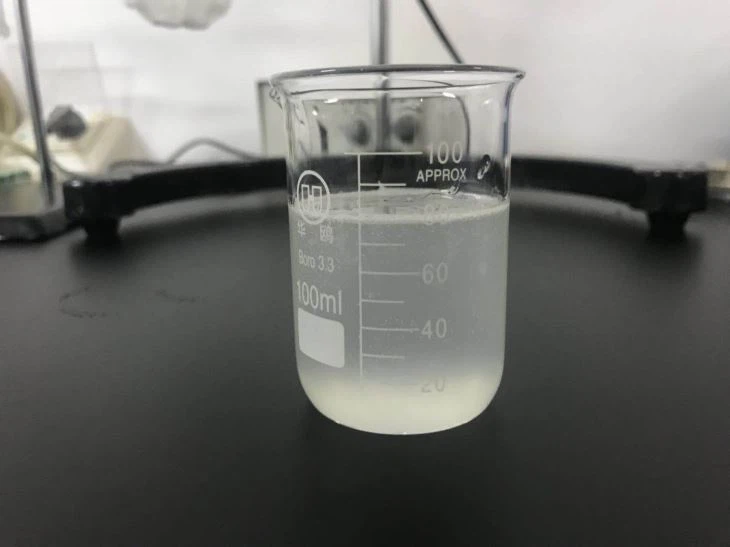
The reaction time is closely related to the reaction temperature and the catalyst concentration. Generally, a longer reaction time can lead to a higher conversion rate, but it also increases the energy consumption and the risk of side reactions. We have found that a reaction time of 3 - 6 hours is usually sufficient for the synthesis of decyl glucoside under appropriate conditions.
4. Water Removal
Water is a by - product of the reaction between glucose and decanol. According to Le Chatelier's principle, removing water from the reaction system can shift the equilibrium towards the formation of decyl glucoside. Various methods can be used for water removal, such as distillation, azeotropic distillation with an organic solvent, or the use of a dehydrating agent. Azeotropic distillation with toluene or cyclohexane is a commonly used method in industrial production, as it can effectively remove water while maintaining a relatively low reaction temperature.
Optimization Strategies
1. Process Integration
Integrating different steps of the synthesis process can improve the overall efficiency. For example, combining the reaction and water - removal steps in a single reactor can reduce the transfer time and energy consumption. We have developed a continuous - flow synthesis process that integrates the reaction, water removal, and purification steps, which has significantly increased the production capacity and product quality.
2. Use of Advanced Catalysts
Research and development of new catalysts can improve the reaction selectivity and reduce side reactions. For instance, heterogeneous catalysts such as solid acid catalysts can be easily separated from the reaction mixture, reducing the purification steps. We are currently exploring the use of metal - organic frameworks (MOFs) as catalysts for the synthesis of decyl glucoside, which have shown promising results in terms of catalytic activity and selectivity.
3. Quality Control and Monitoring
Implementing a strict quality control system is essential for optimizing the synthesis process. Regular analysis of the reaction mixture and the final product can help identify any deviations from the desired specifications and allow for timely adjustments. We use a combination of analytical techniques such as high - performance liquid chromatography (HPLC), nuclear magnetic resonance (NMR), and mass spectrometry (MS) to monitor the reaction progress and product quality.
Product Variants and Their Applications
We offer a range of decyl glucoside products, including [APG 0810H65/decyl Glucoside/CAS:68515 - 73 - 1](/alkyl - polyglucoside/apg - 0810/naturalapg - 0810h65 - decyl - glucoside - cas - 68515.html), [Caprylyl/Decyl Glucoside APG215 CS UP](/alkyl - polyglucoside/apg - 0810/caprylyl - decyl - glucoside - apg215 - cs - up.html), and [APG 0810H70/decyl Glucoside/CAS:68515 - 73 - 1](/alkyl - polyglucoside/apg - 0810/naturalapg - 0810h70 - decyl - glucoside - cas - 68515.html). These products have different properties and are suitable for various applications.
APG 0810H65 and APG 0810H70 are high - quality decyl glucoside products with different degrees of polymerization. They are widely used in mild personal care products such as shampoos, body washes, and facial cleansers due to their excellent foaming and cleansing properties. Caprylyl/Decyl Glucoside APG215 CS UP is a more specialized product with enhanced performance in certain applications, such as in the formulation of high - end cosmetics.
Conclusion and Call to Action
Optimizing the synthesis process of 68515 - 73 - 1 is a continuous process that requires a deep understanding of the reaction mechanism, careful control of the reaction conditions, and the use of advanced technologies. As a supplier, we are committed to providing high - quality decyl glucoside products through continuous improvement of our synthesis process.
If you are interested in our decyl glucoside products or have any questions about the synthesis process, please feel free to contact us for further discussion and procurement negotiation. We look forward to collaborating with you to meet your specific needs.
References
- Smith, J. K. (2015). Surfactant Science and Technology. CRC Press.
- Tanaka, M., & Nakashima, K. (2018). Green Chemistry Approaches for Surfactant Synthesis. Chemical Reviews, 118(10), 4832 - 4867.
- Zhang, Y., & Zhao, D. (2020). Recent Advances in the Synthesis of Alkyl Polyglucosides. Journal of Surfactants and Detergents, 23(2), 251 - 260.