



Lipid Layer Enhancer PO65
Jeslyee Chemicals: a One-Stop Lipid Layer Enhancer PO65 Supplier
With its good reputation, our company has served dozens of customers around the world and has become a leading company in the field of chemicals and ingredients focusing on the surfactant industry.
Stable Supply
As a professional chemical company, we have our own laboratories and factories to ensure smooth supply and stable quality. Our products include alkyl polyglucosides, APG 0810, APG 0814, APG 1214, lipid layer enhancers, lauryl glucoside and other types.
One-Stop Service
Our belief is to combine high-quality products with competitive prices and strive to meet the needs of chemicals through one-stop order service and technical support. We can provide advice, solutions, product samples and any required documentation, which means you have a reliable partner in the surfactant sector.
Rich Market Experience
Our APG products have been exported to many countries and regions such as the United States, Canada, Mexico, Malaysia, Vietnam, United Arab Emirates, Russia, and Uzbekistan. Our sales staff are experienced and knowledgeable to support customers in any region.
Professional Team
We have a team of experts to recommend products based on customer needs. In addition, every order will be fulfilled within the deadline and the professional logistics team provides the shipment details according to the order. We have also set up a professional customer service team to follow up on product feedback.

Brief Introduction to Lipid Layer Enhancer PO65
The main ingredients of lipid layer enhancer PO65 are cocoside and glycerol monooleate. Naturally derived from coconut and sunflower oils, they are high-performance additives that support moisturizing requirements in surfactant systems. It softens and conditions the skin by depositing glyceryl oleate on the skin's surface. This lipid is also found naturally in human skin and produces an intensely moisturizing and skin-softening feel. This ingredient is ideal for baby care, body wash and lotion targeted at today's environmentally conscious consumer. Their role is primarily to increase the mildness of the formula, as well as soften and moisturize the skin. This ingredient can be added to baby care and cleaning products, facial cleansers, hand sanitizers, personal care wipes, shampoos, shower/bath products, and more.
How Lipid Layer Enhancer PO65 Work
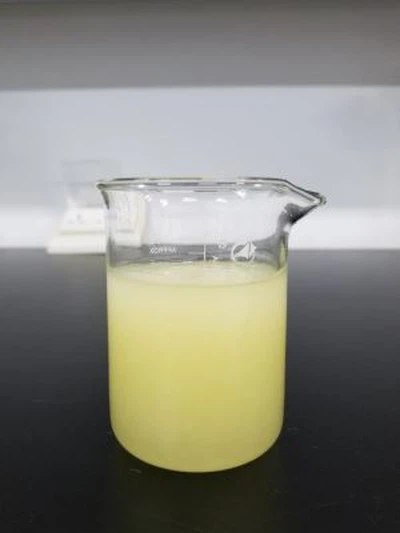
Lipid layer enhancer PO65 is a clear to slightly yellow viscous liquid with a mild odor. It's sulfate-free and 100% plant-based, using coconut/palm kernel oil, sunflower oil, glucose and glycerin. It replaces the fat/lipid layer that is removed from the skin or scalp when using body wash or shampoo. When the skin doesn't have this layer, it feels itchy and tight. Natural cellulite repair agent gently softens and conditions skin and hair. Lipid layer enhancer PO65 also helps thicken the formula. Once it is mixed with the natural surfactant base, it will begin to thicken the shampoo mixture.


- Lipid layer enhancer PO65 is a free EO/PO lipid layer enhancer used in the production of clean formulations. It is sulfate-free and can be used to create cold-process recipes and as a natural thickener in liquid soap or body wash. It works in sheer, opaque and pearlescent formulas. It is usually added in the initial stages of cosmetic formulations.
- Lipid layer enhancer PO65 is a high-performance additive that supports the moisturization of surfactant systems and improves wet combability of hair. It works well in formulas for sensitive skin types. When used in foaming formulations, cocoyl glucoside and glyceryl oleate increase viscosity, resulting in thicker, better-lathered cosmetics. It softens and conditions the skin by depositing glyceryl oleate on the skin's surface.
- Lipid layer enhancer PO65 is very mild and consists of cocoyl glucoside and glyceryl oleate. These are non-ionic surfactants and the mixture is suitable for use in organic bath and shower products as well as creams and lotions. Used as a lipid layer enhancer in cosmetic cleansing preparations such as shower gels, foaming body washes, shampoos and baby products. It is compatible with all anionic and amphoteric surfactants as well as polyquaternium cationic surfactants. Not only is it a wonder ingredient in cleansing products, it is also a very effective emollient (2-5%) in creams and lotions. The pH of the original mixture is 3.0-4.0 (5% in water),Lorem ipsum dolor sit ament, consectetur adipisicing elit,sed do eiusmod tempor incididunt labore et dolore magna aliqua. it enim ad minim veniam.but the pH of the final product should be adjusted to approximately 5.0-6.5.
Lipid Layer Enhancer PO65 Labeling Information
|
Chemical description |
Coco Glucoside and Glyceryl monooleate |
|
INCI name |
Coco-Glucoside (and) Glyceryl Oleate |
|
CAS-No. |
110615-47-9 & 68515-73-1 & 68424-61-3 |
|
Appearance |
Transparent to slightly yellowish viscous liquid |
|
Water content (%) |
32 - 35 |
|
PH Value (5% aq.) |
3.0 - 4.0 |
|
Density (20°C) |
1.06-1.10 g/cm3 |
|
Viscosity (20°C) |
2,500 - 6,000 mPas |
Main Ingredient in Our Lipid Layer Enhancer PO65
Coco-glucoside is a mixture of non-drying fatty alcohol from coconut oil and the sugar glucose. It primarily functions as a gentle cleansing agent in cosmetics because of its ability to lift dirt and oils from skin. It may be plant-derived (from coconuts) or manufactured synthetically. In its raw form, coco-glucoside is a cloudy, viscous solution. The independent Cosmetic Ingredient Review panel has found coco-glucoside is safe and non-irritating as used in cosmetics. It is used in concentrations up to 2% in leave-on products, and 15% in rinse-off formulations. Sourced from Coconut Oil, this soothing raw material has many qualities, such as its non-greasy hydrating properties, which cleanse the skin while its conditioning property prevents it from drying out. When added to hair products, this conditioning ability helps to smooth out the strands, making them more manageable. With ultra-gentle cleansing properties, Coco Glucoside is well-suited to all skin types and makes an ideal addition to mild formulations for natural products that are especially intended for sensitive skin. These may include toiletries, skin care, hair care, and personal hygiene products, even those meant for the delicate skin of babies as well as for acne-prone complexions. Known for exhibiting extraordinary foaming properties, Coco Glucoside produces a highly-pleasing and stable foam, making it an ideal addition to foaming bath products, such as bubble baths and shampoos. Being compatible with all other surfactants, it can be mixed as a co-surfactant without risking the stability, performance, or the foaming and cleansing capacity of the final product. It easily allows for a natural preparation to be thickened while maintaining the gentleness and efficacy of the resultant formulation.
By lowering the surface tension of the ingredients to be emulsified, glyceryl oleate aids in the formation of emulsions. It is also popular in cleansing products as it helps to thicken them up and has some refatting and skin-smoothing effects. It serves as an emollient, a substance that conditions skin. It keeps the products blended together and binds moisture to the skin. As a result, it is a typical component of lotions, sunscreen, and many other cosmetic products. glyceryl oleate can be used as a nourishing, biodegradable substitute for silicones in hair care products. By partially hydrolyzing corresponding tri- and diglycerides, esterifying glycerol with oleic acid, or glycerolyzing common fats and oils like those found in pine sap, glyceryl oleate can be produced. A common commercial technique for creating monoglycerides is through the transesterification reaction known as the glycerolysis of fats and oils. Glyceryl Oleate is one of the direct food substances that the Food and Drug Administration (FDA) has listed as being "Generally Recognized As Safe" (GRAS). The Cosmetic Ingredient Review (CIR) Expert Panel has reviewed Glyceryl Oleate's safety. The CIR Expert Panel examined the scientific evidence and came to the conclusion that Glyceryl Oleate was safe to use as an ingredient in cosmetics under the usage and concentration standards currently in place. This substance belongs to a class of substances that the European Chemical Agency (ECHA) has also identified as easily biodegradable with little chance of bioaccumulation or aquatic toxicity.
Uses of Lipid Layer Enhancer PO65
Personal Skin Care
Lipid layer enhancer PO65 is ideal for use in facial cleansers, shower gels and cleansers. It's suitable for almost all skin types and is especially gentle on sensitive skin, children and babies. Lipid layer enhancer PO65 supports the function of natural surfactants in shampoo. It works by softening and moisturizing the hair shaft while conditioning the scalp.
Personal Hair Care
This yellowish viscous liquid is actually an extremely useful natural ingredient with excellent emulsifying properties. Lipid Layer Enhancer PO65 is great for use in skin care products and shampoos if you want to blend certain oils together or need the right mix of water and essential oils to get the results you want. It also adds much-needed foaming and cleansing factors to your products without any artificial substances. For its personal hair use, Lipid Layer Enhancer PO65 is versatile and can be used in liquid soaps, herbal shampoos, and more. It is also an important ingredient in moisturizing body washes, lotions and products for sensitive skin.
Some Useful Tips about Lipid Layer Enhancer PO65
Lipid layer enhancer PO65 should be stored in the original sealed container to protect it from moisture. The product remains stable during storage at temperatures between 10 and 30°C for at least 12 months. It is preferably processed at temperatures between 15 and 25°C. Storage at temperatures below 10°C may cause crystallization. This property is reversible by stirring and heating at 25 - 40°C. Prolonged storage and transport of this material at temperatures >30°C results in an increase in viscosity, but this has no effect on the efficacy of the lipid layer enhancer PO65. Processing must be adjusted appropriately only if the viscosity increases (viscosity will increase during stirring).
1-5% is the normal usage level to add moisturising properties. Additional amounts will increase moisturising properties and softness, with beautiful skin refatting properties. As you increase the levels, the final product will become more opaque and less clear.
In addition to our precautions and general safety information, we always recommend keeping a first aid kit nearby. You are working with hot water and oils, accidents can happen, so always be prepared!
At pure usage levels it can cause irritation to the skin.When blending always take the following precautions:
- Use gloves (disposable are ideal)
- Take care when handling hot oils
- Wear eye protection
- Work in a well ventilated room
- Keep ingredients and hot oils away from children
- If ingested, seek immediate medical advice
- If contact made with eyes, rinse immediately with clean warm water and seek medical advice if in any doubt.
FAQ
Q: How is glyceryl oleate made?
Q: What does glyceryl oleate do?
Q: How safe is glyceryl oleate?
Q: Where is glyceryl oleate used?
Q: What are the health benefits of glyceryl oleate?
Q: Why is lipid layer enhancer PO65 added to skin and hair care products?
Q: What is the function of Coco glucoside and glyceryl oleate?
Q: What are the side effects of Coco glucoside?
Q: What is the usage rate of Glyceryl oleate?
Q: Is glyceryl oleate an emulsifier?
Q: Is glyceryl oleate good for hair?
Q: Is Coco Glucoside good for sensitive skin?
Q: Is Coco glucoside all natural?
Q: Does Coco Glucoside need preservative?
Q: What is the shelf life of Coco glucoside?
We're well-known as one of the leading lipid layer enhancer po65 manufacturers and suppliers in China. Please rest assured to buy high quality lipid layer enhancer po65 made in China here from our factory. For price consultation, contact us.
lauryl glucoside