


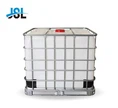
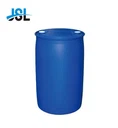
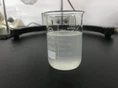
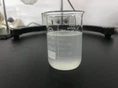
APG 0814
Jeslyee Chemicals: a One-Stop APG 0814 Supplier
With its good reputation, our company has served dozens of customers around the world and has become a leading company in the field of chemicals and ingredients focusing on the surfactant industry.
Stable Supply
As a professional chemical company, we have our own laboratories and factories to ensure smooth supply and stable quality. Our products include alkyl polyglucosides, APG 0810, APG 0814, APG 1214, lipid layer enhancers, lauryl glucoside and other types.
One-Stop Service
Our belief is to combine high-quality products with competitive prices and strive to meet the needs of chemicals through one-stop order service and technical support. We can provide advice, solutions, product samples and any required documentation, which means you have a reliable partner in the surfactant sector.
Rich Market Experience
Our APG products have been exported to many countries and regions such as the United States, Canada, Mexico, Malaysia, Vietnam, United Arab Emirates, Russia, and Uzbekistan. Our sales staff are experienced and knowledgeable to support customers in any region.
Professional Team
We have a team of experts to recommend products based on customer needs. In addition, every order will be fulfilled within the deadline and the professional logistics team provides the shipment details according to the order. We have also set up a professional customer service team to follow up on product feedback.


Brief Introduction to APG 0814
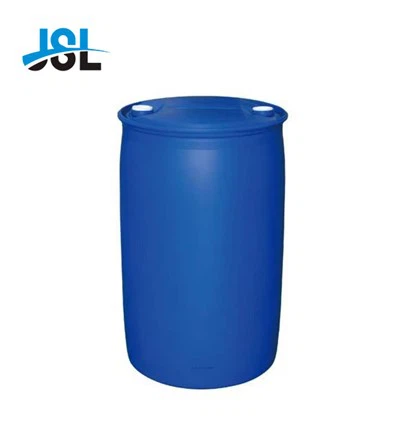
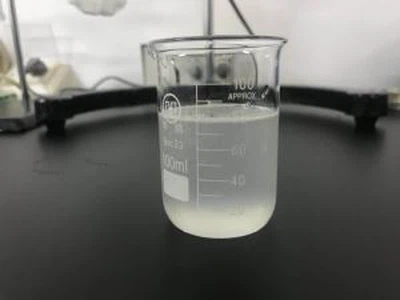
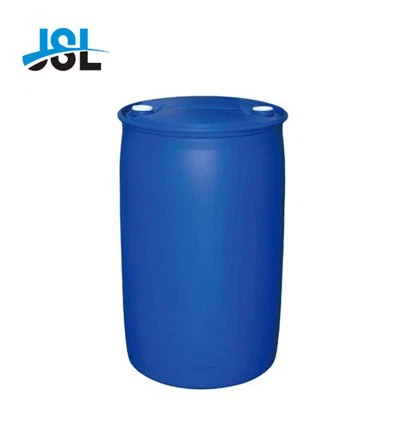
APG 0814 acts as a nonionic surfactant. It is derived from the fatty alcohols of coconut and palm kernel oils and the glucose of corn. It does not contain ethylene oxide, is gentle to the skin, has low toxicity and has good hydrating and solubilizing properties. This ingredient has medium to high foam and very good wetting, dispersing and surface activity. APG 0814 is compatible with strong acids and all other types of surfactants and is also readily biodegradable. In addition, it is soluble in highly corrosive systems and produces rich and stable foam, making it ideal for addition to cleansing care products such as shampoos, body washes, and facial creams and lotions.
How APG 0814 Work
APG 0814 is formed by the condensation of long-chain fatty alcohols with glucose extracted from corn or coconut; plant glucose reacts with fatty alcohols to form alkyl glycoside surfactants. Since it is a biodegradable plant derivative, it is considered a natural ingredient. As a surfactant/detergent, APG 0814 works by reducing the surface tension of the product it is added to. It promotes more effective removal of dirt and grease while providing a more stable, longer-lasting lather. The non-toxic, natural, non-irritating, non-dioxin-generating auxiliary surfactant cocoside and decyl glucoside can achieve better long-lasting foaming performance.

Features of APG 0814
Natural
APG 0814 is a nonionic surfactant produced using a one-step process from renewable plants: natural fatty alcohols and glucose. It has low surface tension, good solubility, strong detergency, high concentration electrolyte resistance, strong alkali resistance, and good thickening effect.
Compatibility
APG 0814 has good compatibility, so it can be combined with other non-ionic or ionic surfactants to improve the effect and performance. When used as a formula ingredient, it can make the product foam good, rich, stable and delicate. Moreover, APG 0814 is less irritating, has good compatibility with skin and is easily biodegradable.
Easy to Store at Room Temperature
When APG 0814 is stored at room temperature for a long time, a small amount of solid precipitation or turbidity will occur, which is caused by magnesium. But this turbidity has no negative effects. As long as the pH value is adjusted below 9, the cloudiness will disappear.
Wide Range of Applications
APG 0814 has good biocompatibility and can be widely used in personal and household care products, such as shampoo, facial cleanser, hand soap, laundry detergent, body lotion, bubble water, detergent, etc. It can also be used as glyphosate pesticide auxiliary and oil extract foaming agent.
Advantages of APG 0814
Since APG 0814 is a surfactant, when used with water, it attracts impurities and removes them from the skin's surface.
For sensitive skin, using APG 0814 is a safe choice. It is a skin-friendly substance that can cleanse sensitive skin without any toxic reactions.
APG 0814 is an effective emulsion stabilizer in cosmetics. In the cosmetics industry, many products are mixtures of oils and water solutions. As we all know, oil and water are immiscible and APG 0814 helps to do this. It homogenizes such mixtures and makes them usable on the skin.
Unlike chemical surfactants, APG 0814 does not cause skin irritation. It maintains the pH of the scalp and keeps the natural conditions intact.
APG 0814 is derived from natural substances and does not contain ethylene oxide. Ethylene oxide is a by-product of the manufacturing process of chemical surfactants such as sodium lauryl sulfate. It is toxic to the skin and can cause rashes in many cases.
APG 0814 Labeling Information
|
Chemical description |
C8 - C14 fatty alcohol glucoside |
|
INCI name |
Coco Glucoside |
|
CAS-No |
141464-42-8 |
|
Formula |
C16H32O6 |
|
Purity |
>50% |
|
Species |
Nonionic surfactant |
|
Appearance |
Yellowish, slightly cloudy and viscous liquid |
|
Solid Content(%) |
50.0-52.0 |
|
Water (wt %) |
48.0-50.0 |
|
PH Value (20% aq.) |
11.5-12.5 |
|
Free Alcohol (wt %) |
1max |
|
Viscosity (mPa·s), 20°C |
400-500 |
|
Sulfated Ash (wt %) |
3max |
|
Synonyms |
APG0814, APG425N, Coco glucoside, Coco glycoside, coco polyglucoside |
Main Types of Our APG 0814
Decyl glucoside is an organic compound formed from coconut and corn starch, and it has the chemical formula C16H32O6. It is well-known for its mildness and ability to maintain the skin's natural moisture balance while effectively removing dirt and impurities. Decyl Glucoside is biodegradable, environmentally friendly, and exhibit low aquatic toxicity. These qualities make them safer alternatives for both your skin and the ecosystem. It can be categorized as a mild, non-toxic surfactant that is useful in cosmetic formulates such as baby shampoo and other personal care products for sensitive skin. Therefore, most companies producing natural personal care products use this as a cleanser because it is a plant-derived material that is biodegradable and gentle for all hair types. We can produce decyl glucoside through the reaction between glucose from corn starch and the fatty alcohol decanol (a component derived from coconut). This compound is helpful in moisturizing the skin for the prevention of inflammation and itchiness. It is specifically safe to be used on sensitive skin. Usually, decyl glucoside does not cause any rashes or irritation on the skin.
Coco glucoside is an organic compound derived from coconut, and it has the chemical formula C16H32O6. Therefore, it is a naturally-derived substance and is useful as a surfactant. Generally, a surfactant is useful in reducing the surface tension of liquids and improving the washing process. Coco Glucoside, derived from coconut oil, is particularly favored for its excellent foaming and cleansing properties. Its gentle yet effective action helps to remove impurities and excess oil from the skin's surface, leaving it clean and refreshed without causing dryness or irritation. Coco Glucoside belongs to the family of alkyl glucosides, derived from renewable sources such as coconut oil and corn starch. These surfactants are known for their mild nature and compatibility with various skin types, making them ideal choices for those with sensitive or delicate skin. We can find this compound in different personal care products such as shampoo, soap, makeup, and laundry detergents. It is a common ingredient in these products due to its gentle, effective cleansing ability, and it can be used for skin and hair products and stabilize formulas. According to repeated patch tests, this substance rarely shows skin irritation or sensitizing effects.
Applications of APG 0814
Textile and Dying
APG 0814 can be used for cotton wrinkle resistance in textile industry, it can also be used as powder dispersing agent and anti-rust agent of the water solution. APG is suitable to be used for refining, dying process, the solution isn’t easy to produce foam, can decrease dying spot, especially suitable for high temperature refining flux, high temperature dispersing agent and equalizing agent. In textile dying industry, excessive scouring of spun silk to remove silk fibroin would decrease the strength, gloss, softness of spun silk. APG 0814 can be added to avoid excessive scouring. APG 0814 itself has good viscosity, which can give textile auxiliaries a certain viscosity, and its thickening performance is comparable to that of alkanolamines. At the same time, it does not produce nitrosamines (hazardous substances) like alkanolamines, whose use has been restricted or banned.
Cleaning Products
APG 0814 is easily be dissolved in alkaline solution, it compose even solution in the water solution which NaOH mass fraction is 10%, it can retain high surface activity in high concentration solution of NaOH and Na2SiO3. Short carbon chain APG dissolves in alkaline easier, it is suitable to produce high alkaline liquid detergent. For example, high alkaline scouring agent use 20% branched chain polyethenoxy ether adding 10% APG and 10% SLES, its penetrating performance and detergency performance are good. The product is generally used as a secondary surfactant for dishwashing detergent, laundry detergent and I&I (Industrial and Institutional) cleaning. APG 0814 as major activity composite, there is a new type green environmental friendly high effect scouring agent. It can produce three-in-one high effective scouring agent, it has good properties of resistance to strong alkaline, no cloud point, little foam, phosphate free, silicon free, no alkyl phenol structure.
Papermaking, Pharmaceuticals, Fire Protection
APG 0814 can improve the sizing treatment in the paper industry. It is an excellent floating deinking agent for waste paper when used in conjunction with other surfactants. It can also be used as a firefighting agent. APG 0814 has broad antibacterial activity against Gram-negative bacteria, positive bacteria and fungi. The activity increases with the increase of carbon atoms, so it can be used as a sanitary detergent. It can be used together with Chinese herbal medicine to produce anti-itch skin care products, which have good compatibility and are non-irritating to the skin. APG derivatives have broad application prospects in the pharmaceutical industry.
Some Useful Tips about APG 0814

APG 0814 should be transported as non-dangerous goods. They should be sealed and stored in a cool, ventilated, and dry place.

The high pH value of APG 0814 may lead to characteristic turbidity of product when stored in room temperature.

The color, pH value and viscosity of APG 0814 can be adjusted according to customer’s requirements.

It has no negative influence to the product quality and use. When used as an additive in formulations, adjust the pH about 8.0, the turbidity disappears. The high pH value has preservative effects to the product.
Ultimate Guide
Q: Is decyl glucoside safe on skin?
Q: I have eczema. Can decyl glucoside cause irritation?
Q: What are the uses of Decyl Glucoside?
Q: How is Coco Glucoside used?
Q: Is Coco Glucoside safe?
Q: Can Coco Glucoside cause health problems?
Q: Are there environmental issues with Coco Glucoside?
Q: Is Decyl glucoside safe ingredient?
Q: What is the active substance of coco glucoside?
Q: What percentage of Coco glucoside is acceptable?
Q: What is decyl glucoside used for?
Q: What is the pH stability of Coco glucoside?
Q: Is decyl glucoside good or bad?
Q: What category is decyl glucoside?
Q: Is Coco glucoside soluble in water?
Q: Is Coco glucoside drying?
Q: Is Coco Glucoside 100% natural?
Q: What is another name for decyl glucoside?
Q: Is decyl glucoside organic or inorganic?
We're well-known as one of the leading apg 0814 manufacturers and suppliers in China. Please rest assured to buy high quality apg 0814 made in China here from our factory. For price consultation, contact us.
APG 0814, , 141464 42 8