



Hey there! As an alkyl glucoside supplier, I've been getting a lot of questions about the hydration behavior of alkyl glucoside. So, I thought I'd sit down and write a blog post to break it all down for you.
What the Heck is Alkyl Glucoside?
First things first, let's quickly go over what alkyl glucoside is. Alkyl glucosides are a type of non - ionic surfactant. They're made from natural raw materials like fatty alcohols and glucose, which makes them biodegradable and environmentally friendly. These properties have made them super popular in a whole bunch of industries, from personal care products to household cleaners.
We offer some great products, like Caprylyl/Decyl Glucoside APG 8170, APG 0810H65/decyl Glucoside/CAS:68515 - 73 - 1, and APG 0810/decyl Glucoside/CAS:68515 - 73 - 1. These products have unique properties that are closely related to their hydration behavior.
The Basics of Hydration Behavior
Hydration behavior refers to how a substance interacts with water. When it comes to alkyl glucoside, this interaction is crucial because it affects its performance in various applications.
Solubility and Aggregation
Alkyl glucosides are soluble in water, but the degree of solubility depends on a few factors. The alkyl chain length plays a big role. Shorter alkyl chains generally lead to better solubility in water. When alkyl glucoside molecules are added to water, they start to interact with water molecules through hydrogen bonding.
At low concentrations, alkyl glucoside molecules exist as individual entities in the water. But as the concentration increases, they start to aggregate. These aggregates are called micelles. The formation of micelles is a key part of the hydration behavior of alkyl glucoside. Micelles have a hydrophobic core (the alkyl chains) and a hydrophilic shell (the glucose head - groups), which allows them to solubilize hydrophobic substances in water.
Critical Micelle Concentration (CMC)
The critical micelle concentration is the concentration at which micelles start to form. For alkyl glucosides, the CMC can vary depending on the alkyl chain length, temperature, and the presence of other substances in the solution. A lower CMC means that micelles form at a lower concentration, which can be beneficial in applications where you want to achieve good solubilization or emulsification with a small amount of surfactant.
For example, in our Caprylyl/Decyl Glucoside APG 8170, the specific combination of alkyl chain lengths results in a CMC that is suitable for a wide range of applications, from gentle facial cleansers to industrial cleaning agents.
Factors Affecting Hydration Behavior
Temperature
Temperature has a significant impact on the hydration behavior of alkyl glucoside. As the temperature increases, the solubility of alkyl glucoside generally increases. This is because higher temperatures provide more energy for the alkyl glucoside molecules to break the intermolecular forces and interact with water molecules.
However, at very high temperatures, the stability of the micelles can be affected. The increased thermal energy can cause the micelles to break apart, which may reduce the effectiveness of the alkyl glucoside in solubilizing hydrophobic substances.
pH
The pH of the solution can also influence the hydration behavior. Alkyl glucosides are generally stable over a wide pH range, but extreme pH values can have an impact. In acidic or alkaline conditions, the hydrogen bonding between the alkyl glucoside and water molecules may be disrupted, which can affect the solubility and micelle formation.
For most applications, a neutral to slightly acidic pH is ideal for maintaining the optimal hydration behavior of alkyl glucoside. This is why many personal care products formulated with alkyl glucoside are designed to have a pH close to the skin's natural pH.
Salts
The presence of salts in the solution can change the hydration behavior of alkyl glucoside. Salts can interact with the water molecules and the alkyl glucoside molecules, affecting the solubility and the CMC. In general, adding salts can decrease the solubility of alkyl glucoside and lower the CMC.
This can be both an advantage and a disadvantage. On one hand, a lower CMC means that micelles form at a lower concentration, which can save on the amount of surfactant needed. On the other hand, decreased solubility may lead to precipitation or phase separation in the solution.
Applications Based on Hydration Behavior
Personal Care Products
In personal care products like shampoos, body washes, and facial cleansers, the hydration behavior of alkyl glucoside is crucial. The ability to form micelles allows alkyl glucoside to solubilize dirt, oil, and other impurities on the skin and hair. At the same time, its mildness and biodegradability make it a great choice for sensitive skin.
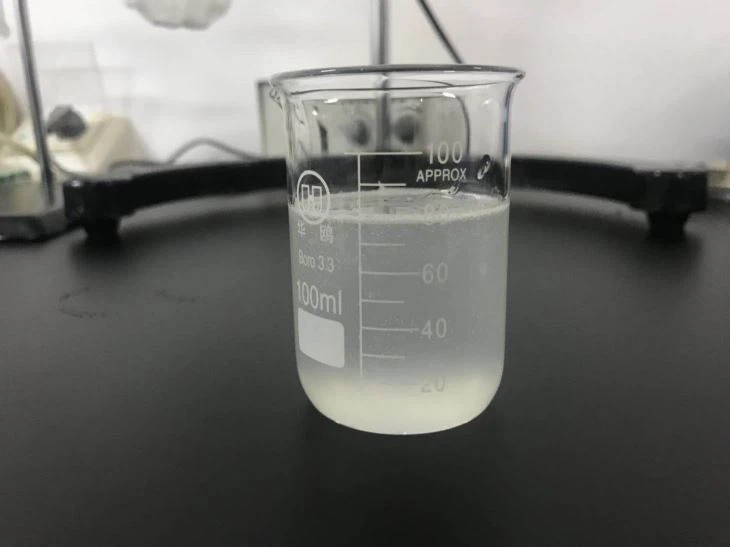
Our APG 0810H65/decyl Glucoside/CAS:68515 - 73 - 1 is often used in high - end facial cleansers because of its excellent solubility and ability to form stable micelles at low concentrations. This ensures a gentle yet effective cleansing action.
Household Cleaners
In household cleaners, alkyl glucoside's hydration behavior helps in removing grease and stains. The micelles can encapsulate the hydrophobic dirt particles and suspend them in water, making it easier to rinse them away. Alkyl glucoside - based cleaners are also less likely to leave behind residues compared to some traditional surfactants.
Our APG 0810/decyl Glucoside/CAS:68515 - 73 - 1 is a popular choice for all - purpose cleaners because it can work well in different water conditions and has good stability over a range of temperatures.
Conclusion and Call to Action
So, there you have it! The hydration behavior of alkyl glucoside is a complex but fascinating topic. It affects how alkyl glucoside performs in various applications, from personal care to household cleaning.
If you're in the market for high - quality alkyl glucoside products, we've got you covered. Our products like Caprylyl/Decyl Glucoside APG 8170, APG 0810H65/decyl Glucoside/CAS:68515 - 73 - 1, and APG 0810/decyl Glucoside/CAS:68515 - 73 - 1 are formulated to have optimal hydration behavior for your specific needs.
If you're interested in learning more or want to start a purchase negotiation, don't hesitate to reach out. We're here to help you find the best alkyl glucoside solutions for your business.
References
- Rosen, M. J., & Kunjappu, J. T. (2012). Surfactants and Interfacial Phenomena. John Wiley & Sons.
- Myers, D. (2011). Surfactant Science and Technology. Wiley.