


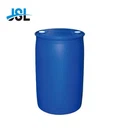

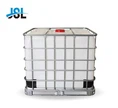
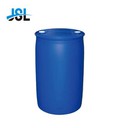
CAS number 68515 - 73 - 1 corresponds to a well - known class of compounds in the field of surfactants, alkyl polyglucosides. As a supplier of the product with this CAS number, I'm going to delve into the molecular formula of this compound and provide some insights into its properties and applications.
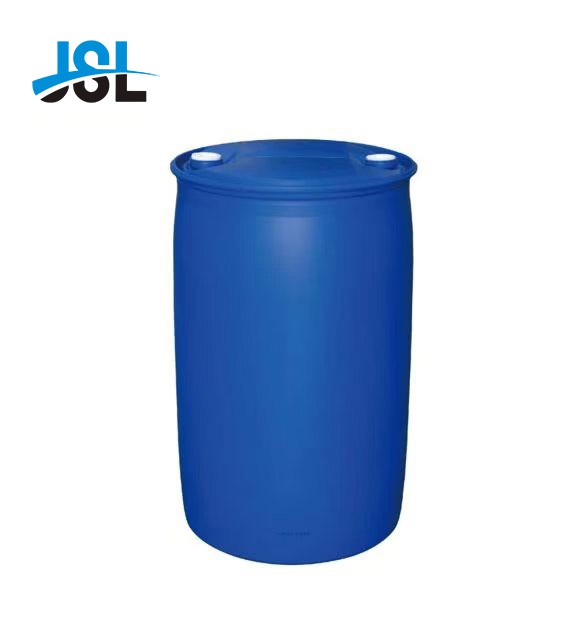

Molecular Formula of the Compound with CAS 68515 - 73 - 1
Alkyl polyglucosides (APGs) with CAS number 68515 - 73 - 1 are non - ionic surfactants. They are typically a mixture of compounds, and their general molecular formula can be represented as CₙH₂ₙ₊₁(OCH₂CH(OH)CH₂)ₘOH, where n usually ranges from 8 to 10, and m is the degree of polymerization, which is usually around 1 - 3.
For the specific case of the products we supply, like APG 0810H70DK/decyl Glucoside/CAS:68515 - 73 - 1/225DK, APG 0810H70BG/decyl Glucoside/CAS:68515 - 73 - 1/BG - 10, and Caprylyl/Decyl Glucoside APG 8170, the alkyl chain length is mainly in the range of C₈ - C₁₀. The presence of a glucoside moiety gives these compounds unique properties compared to other surfactants.
The glucoside part is derived from glucose, and the alkyl group is attached to the glucose unit through a glycosidic bond. The exact composition of the mixture can vary depending on the manufacturing process and the intended application.
Chemical Structure and Properties
The chemical structure of alkyl polyglucosides consists of a hydrophilic glucose head and a hydrophobic alkyl tail. This amphiphilic nature allows them to reduce the surface tension of water, making them excellent surfactants. They are soluble in water, and their solubility is influenced by factors such as the alkyl chain length and the degree of polymerization.
One of the key advantages of APGs is their environmental friendliness. They are biodegradable, which means they can be broken down by natural processes over time. This makes them a preferred choice in many applications where environmental impact is a concern.
In addition, APGs have good skin compatibility. They are mild to the skin and eyes, and they do not cause irritation as easily as some other surfactants. This property makes them widely used in personal care products such as shampoos, body washes, and facial cleansers.
Applications of Compounds with CAS 68515 - 73 - 1
Personal Care Products
As mentioned earlier, the mildness and biodegradability of APGs make them ideal for personal care applications. In shampoos, they can effectively clean the hair without stripping away its natural oils, leaving the hair soft and shiny. In body washes, they provide a gentle cleansing experience while maintaining the skin's moisture balance.
Household Cleaning Products
In household cleaning products, APGs are used in dishwashing liquids, laundry detergents, and all - purpose cleaners. Their ability to reduce surface tension helps in removing dirt and grease from various surfaces. Moreover, their biodegradability makes them a sustainable option for cleaning products.
Industrial Applications
In industrial settings, APGs can be used as emulsifiers, wetting agents, and dispersants. They are used in the formulation of paints, coatings, and adhesives to improve the dispersion of pigments and other components, and to enhance the wetting properties of the formulations.
Quality and Purity
As a supplier, we ensure the highest quality and purity of our products with CAS number 68515 - 73 - 1. Our manufacturing process is carefully controlled to produce APGs with consistent quality. We conduct rigorous quality control tests at every stage of production to ensure that the products meet the required specifications.
The purity of our APGs is also an important factor. We strive to minimize the presence of impurities such as residual solvents and by - products. This not only ensures the performance of the products but also their safety for use in various applications.
Supply and Availability
We have a reliable supply chain in place to ensure the continuous availability of our products. Whether you need a small quantity for research and development purposes or a large - scale supply for industrial production, we can meet your requirements. Our production capacity allows us to handle orders of different sizes efficiently.
We also offer customized solutions based on your specific needs. If you have special requirements regarding the alkyl chain length, degree of polymerization, or other properties of the APGs, we can work with you to develop a tailored product.
Why Choose Our Products
- Quality Assurance: Our products are manufactured under strict quality control standards, ensuring consistent performance and safety.
- Environmental Friendliness: Our APGs are biodegradable, which is in line with the growing demand for sustainable products.
- Technical Support: We have a team of experts who can provide technical support and guidance on the use of our products in different applications.
- Customization: We can customize our products to meet your specific requirements, giving you a competitive edge in the market.
Contact Us for Purchase and Negotiation
If you are interested in our products with CAS number 68515 - 73 - 1, such as APG 0810H70DK/decyl Glucoside/CAS:68515 - 73 - 1/225DK, APG 0810H70BG/decyl Glucoside/CAS:68515 - 73 - 1/BG - 10, and Caprylyl/Decyl Glucoside APG 8170, please feel free to contact us. We are ready to discuss your needs, provide samples, and negotiate the terms of purchase. Our goal is to establish long - term partnerships with our customers based on mutual trust and benefit.
References
- "Surfactants and Interfacial Phenomena" by Milton J. Rosen and Dennis O. Smith. This book provides in - depth knowledge about the properties and applications of surfactants, including alkyl polyglucosides.
- Journal articles on the synthesis, properties, and applications of alkyl polyglucosides, which can be found in scientific databases such as ACS Publications and SpringerLink.