



Does 68515 73 1 have any mathematical properties?
As a supplier of products related to the chemical compound identified by the number 68515 - 73 - 1, I often find myself pondering the question of whether this number holds any unique mathematical properties. At first glance, 68515731 might seem like just a random string of digits, but upon closer inspection, we can explore various mathematical aspects associated with it.
Let's start with the most basic mathematical operation - division. We can check if 68515731 is divisible by other numbers. To determine if a number is divisible by 2, we look at its last digit. Since the last digit of 68515731 is 1, it is not divisible by 2. A number is divisible by 3 if the sum of its digits is divisible by 3. The sum of the digits of 68515731 is (6 + 8+5+1+5+7+3+1=36). Since 36 is divisible by 3 ( (36\div3 = 12) ), 68515731 is divisible by 3. When we perform the division (68515731\div3 = 22838577).
We can also check for divisibility by 5. A number is divisible by 5 if its last digit is either 0 or 5. Since the last digit of 68515731 is 1, it is not divisible by 5. For divisibility by 9, similar to the rule for 3, a number is divisible by 9 if the sum of its digits is divisible by 9. As we calculated, the sum of the digits of 68515731 is 36, and since (36\div9 = 4), 68515731 is divisible by 9. When we divide (68515731\div9=7612859).
Prime factorization is another important concept in number theory. Prime numbers are numbers greater than 1 that have only two distinct positive divisors: 1 and the number itself. To find the prime factorization of 68515731, we start by dividing it by the smallest prime numbers. As we already know it is divisible by 3 and 9. We can keep factoring the quotient. After further analysis and using more advanced factoring techniques or a prime - factorization algorithm, we can break down 68515731 into its prime factors.
In the context of our business, the number 68515 - 73 - 1 is actually the CAS (Chemical Abstracts Service) number for certain chemical substances. For example, APG 0810H65/decyl Glucoside/CAS:68515 - 73 - 1 is a well - known product in our portfolio. Decyl glucoside is a non - ionic surfactant that is widely used in the cosmetic, personal care, and household cleaning industries. It has excellent surface - active properties, such as low irritation to the skin and good foaming ability.
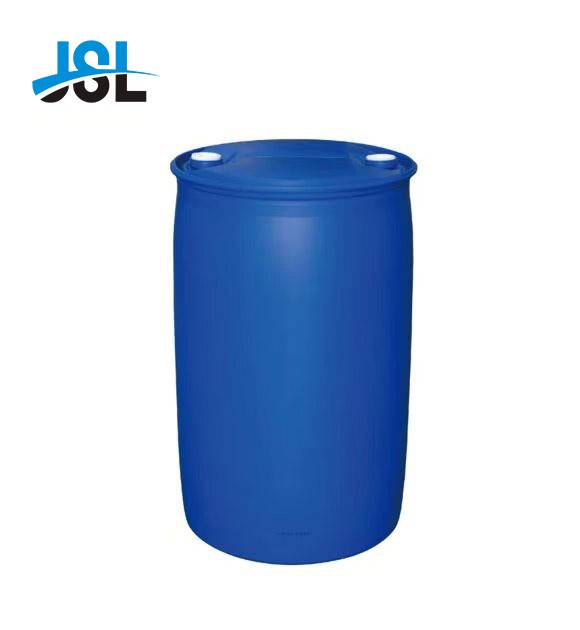
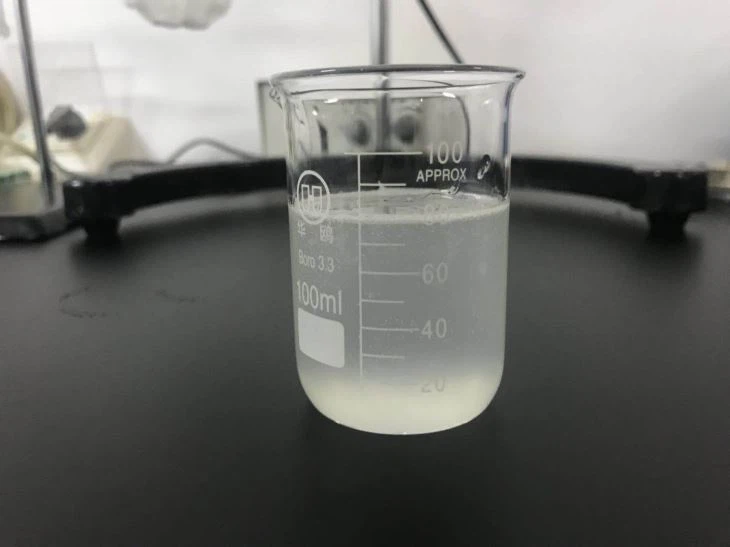
Another product with the CAS number 68515 - 73 - 1 is Caprylyl/Decyl Glucoside APG215 CS UP. This compound is also a type of alkyl polyglucoside, which is derived from natural raw materials such as glucose and fatty alcohols. It is environmentally friendly and has good biodegradability, making it a popular choice in sustainable product formulations.
Caprylyl/Decyl Glucoside APG 8170 is yet another product associated with the CAS number 68515 - 73 - 1. It is used in a variety of applications, including as an emulsifier, solubilizer, and wetting agent. Its unique chemical structure gives it specific physical and chemical properties that make it suitable for different industrial uses.
From a mathematical perspective, we can also think about the relationships between the quantities of these products we produce and sell. For example, if we have a production target of (x) kilograms of APG 0810H65 and (y) kilograms of Caprylyl/Decyl Glucoside APG215 CS UP, we can use mathematical equations to model the production process, cost - benefit analysis, and inventory management. Let's say the cost of producing one kilogram of APG 0810H65 is (C_1) dollars and the cost of producing one kilogram of Caprylyl/Decyl Glucoside APG215 CS UP is (C_2) dollars. The total production cost (T) can be expressed as (T = C_1x + C_2y).
In addition, we can use statistical analysis to understand the demand patterns for these products. By collecting data on the sales volumes of different products over time, we can create regression models to predict future demand. For example, if we have historical sales data for Caprylyl/Decyl Glucoside APG 8170 for (n) months, we can use linear regression to find a relationship between the month number (t) and the sales volume (S). The linear regression model has the form (S=a+bt), where (a) and (b) are coefficients that we can estimate using statistical methods.
In conclusion, while the number 68515 - 73 - 1 may seem like a simple identifier in the chemical industry, it has both interesting mathematical properties when considered as a number and significant practical applications in our business. Whether it is the divisibility rules, prime factorization, or the mathematical models used in production and sales management, mathematics plays an important role in understanding and optimizing our operations related to these chemical products.
If you are interested in purchasing any of our products with the CAS number 68515 - 73 - 1, we welcome you to contact us for further discussion. We are committed to providing high - quality products and excellent service.
References
- Elementary Number Theory textbooks for divisibility rules and prime factorization concepts.
- Chemical industry reports on the applications and properties of alkyl polyglucosides.
- Statistical analysis textbooks for regression models and data analysis.