



Hey there! I'm a supplier of APG 0814, and I've been deeply involved in the study of this amazing product. In this blog, I'll share how we've overcome the challenges in the study of APG 0814.
Understanding the Basics of APG 0814
First off, let's quickly go over what APG 0814 is. APG 0814, also known as alkyl polyglucoside, is a non - ionic surfactant. It's derived from natural raw materials like fatty alcohols and glucose, which makes it biodegradable and environmentally friendly. This has led to its wide use in various industries, such as personal care, household cleaning, and industrial applications.
The Challenges in the Study of APG 0814
When we first started delving into the research of APG 0814, we faced several hurdles.
1. Quality Control
One of the biggest challenges was ensuring consistent quality. The production process of APG 0814 involves multiple steps, and even a slight variation in the reaction conditions, such as temperature, pressure, or the ratio of raw materials, can affect the final product's quality. For example, if the reaction temperature is too high, side reactions may occur, leading to impurities in the product. These impurities can not only reduce the performance of APG 0814 but also cause issues in its applications.
2. Solubility and Compatibility
Another challenge was understanding its solubility and compatibility with other substances. APG 0814 needs to be compatible with different ingredients in formulations to achieve the desired performance. However, figuring out the right combination was no easy feat. In some cases, it showed poor solubility in certain solvents, which limited its use in specific applications. And when it came to mixing with other chemicals, there were sometimes compatibility issues that could result in phase separation or reduced efficacy.
3. Performance Optimization
We also wanted to optimize its performance in different applications. For instance, in personal care products, we wanted it to have better foaming properties, while in industrial cleaning, we aimed for stronger detergency. But achieving these specific performance goals required a deep understanding of its chemical structure and how it interacts with other substances.
Overcoming the Challenges
Quality Control Solutions
To tackle the quality control issue, we implemented a strict quality management system. We closely monitored every step of the production process. We installed advanced sensors in the reactors to continuously measure and control the reaction conditions. For example, we used temperature sensors to maintain the reaction temperature within a very narrow range.
We also carried out comprehensive quality testing at the end of each production batch. We used techniques like high - performance liquid chromatography (HPLC) to analyze the composition of the product and ensure that the impurity levels were within the acceptable range. By doing so, we were able to produce APG 0814 with consistent quality over time.

Solubility and Compatibility Improvements
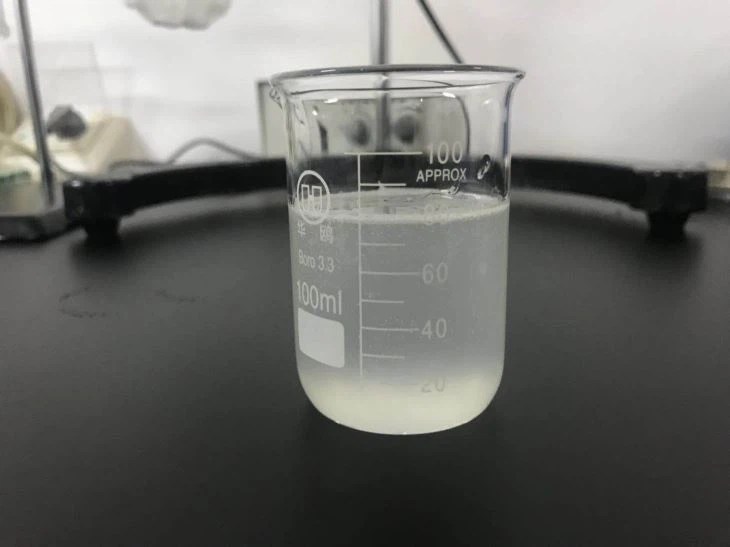
To improve the solubility and compatibility of APG 0814, we conducted a series of experiments. We tested different solvents and additives to find the best combinations. For example, we discovered that adding a small amount of a certain co - solvent could significantly improve its solubility in some otherwise incompatible solvents.
We also developed a database of compatibility information. By testing APG 0814 with a wide range of chemicals commonly used in different industries, we could quickly determine which substances it would work well with. This database has been extremely useful in formulating products and providing technical support to our customers.
Performance Optimization Strategies
For performance optimization, we employed a combination of experimental and theoretical methods. We conducted a large number of experiments to test different formulations. We varied the concentration of APG 0814, as well as the types and amounts of other additives.
We also used computer - aided molecular modeling to understand the molecular interactions between APG 0814 and other substances. This helped us predict how different modifications to its structure or formulation would affect its performance. For example, by adding specific functional groups to the APG 0814 molecule, we were able to enhance its foaming properties in personal care products.
The Results of Our Efforts
Thanks to our hard work in overcoming these challenges, we've achieved some great results. Our APG 0814 products now have consistent quality, which has earned us a good reputation among our customers. The improved solubility and compatibility have expanded its application scope. It can now be used in a wider range of formulations, from high - end personal care products to heavy - duty industrial cleaners.
Moreover, the optimized performance has made our APG 0814 more competitive in the market. For example, in the personal care industry, our product's excellent foaming and mildness properties have made it a popular choice for shampoo and body wash formulations.
Related Products
If you're interested in APG 0814, you might also want to check out some related products. We offer Decyl Glucoside APG 2000UP, which has unique properties and can be used in specific applications. And our APG 0814/coco Glucoside/CAS:141464 - 42 - 8 and APG 0814/coco Glucoside/CAS:141464 - 42 - 8 are also great options with different characteristics.
Let's Connect
If you're in the market for high - quality APG 0814 products, we'd love to have a chat with you. Whether you have questions about our products, need technical support, or want to discuss a potential purchase, don't hesitate to reach out. We're always here to help you find the best solution for your needs.
References
- "Surfactants and Interfacial Phenomena" by Milton J. Rosen and Dennis L. Kunjappu.
- Research papers on alkyl polyglucosides published in the Journal of Surfactants and Detergents.