





Hey there! As a supplier of 141464-42-8, I often get asked about how to write this long chemical code in scientific notation. It might seem like a tricky thing at first, but once you get the hang of it, it's actually pretty straightforward. So, let's dive right in and figure out how to handle this.
First off, what's scientific notation anyway? Well, it's a way to write really big or really small numbers in a more compact and manageable form. It's super useful in science and math because it makes it easier to work with numbers that have a lot of zeros. The general form of scientific notation is (a\times10^{n}), where (a) is a number between 1 and 10 (it can be 1 but has to be less than 10), and (n) is an integer.
Now, let's look at the number 141464. To write it in scientific notation, we need to move the decimal point to the left until we get a number between 1 and 10. For 141464, if we move the decimal point 5 places to the left, we get (a = 1.41464). And since we moved the decimal point 5 places to the left, (n = 5). So, 141464 in scientific notation is (1.41464\times10^{5}).
The numbers 42 and 8 are pretty simple. For 42, we move the decimal point 1 place to the left to get (a = 4.2), and since we moved it 1 place to the left, (n = 1). So, 42 in scientific notation is (4.2\times10^{1}). For 8, we can write it as (8\times10^{0}) because (10^{0}=1), and (8\times1 = 8).
But what about the whole 141464-42-8? Well, in a more practical sense, when we're dealing with the chemical compound represented by this CAS number APG 0814/coco Glucoside/CAS:141464-42-8, we're usually not going to write the whole thing in scientific notation in a normal context. The scientific notation is more about handling the numerical values in a mathematical or scientific operation.
This chemical compound, APG 0814 or Decyl Glucoside APG 2000UP, is quite important in various industries. It's a type of alkyl polyglucoside, which is a mild and biodegradable surfactant. Surfactants are substances that reduce the surface tension between two liquids or between a liquid and a solid. They're used in a ton of products like detergents, shampoos, and body washes.
Decyl Glucoside APG 2000UP Decyl Glucoside APG 2000UP has some great properties. It's non - toxic and environmentally friendly, which is a huge plus these days. People are becoming more and more conscious about the products they use and their impact on the environment. So, products that contain this compound are often preferred by consumers who are looking for more sustainable options.
In the manufacturing process, having the right understanding of the chemical composition and properties is crucial. And sometimes, that means dealing with the numbers in a more scientific way. For example, when calculating the amount of a certain compound needed in a formulation, we might use scientific notation to make the calculations easier. If we know the concentration of a solution in scientific notation and the volume we need, it becomes a lot simpler to figure out the amount of the chemical we're working with.
Let's say we have a solution of APG 0814/coco Glucoside/CAS:141464-42-8 with a concentration of (2.5\times10^{-2}) moles per liter, and we need to make 500 milliliters (or (5\times10^{-1}) liters) of a new solution. To find out how many moles of the compound we need, we just multiply the concentration by the volume. So, ((2.5\times10^{-2})\times(5\times10^{-1})=(2.5\times5)\times10^{-2+( - 1)} = 12.5\times10^{-3}). But we need to adjust this to proper scientific notation, so it becomes (1.25\times10^{-2}) moles.
As a supplier of 141464-42-8, I know how important it is to have a good grasp of these concepts. Whether you're a researcher in a lab, a manufacturer looking to make high - quality products, or just someone interested in the science behind these chemicals, understanding scientific notation can help you work more effectively.
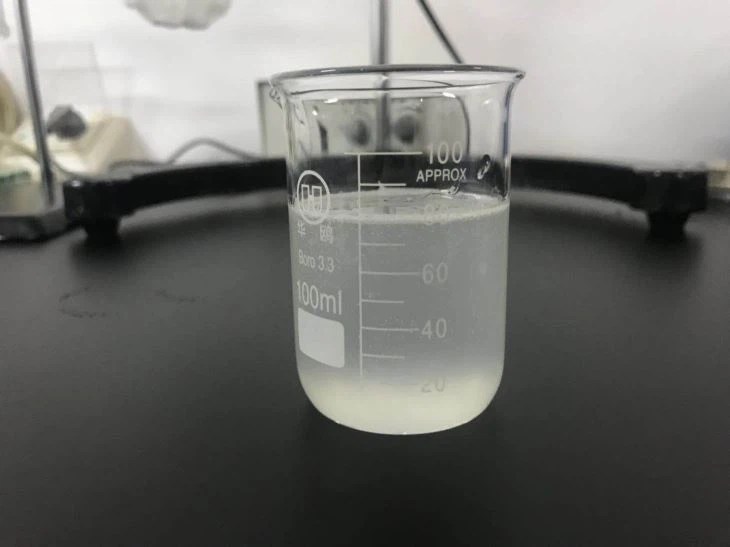
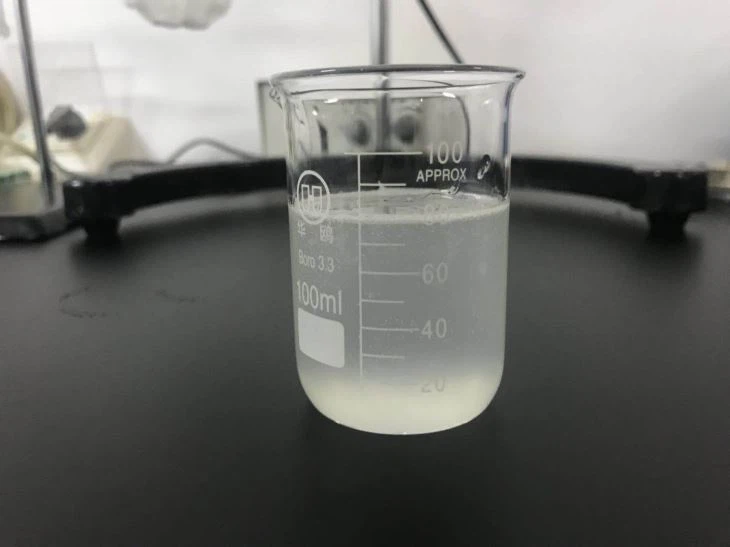
If you're in the market for Decyl Glucoside APG 2000UP or other products related to APG 0814/coco Glucoside/CAS:141464-42-8, I'd love to talk to you. We have a wide range of high - quality products that meet the industry standards. Whether you need a small sample for testing or a large quantity for production, we can accommodate your needs. Don't hesitate to reach out and start a conversation about your procurement requirements.
References
- General knowledge of scientific notation from basic math and science textbooks
- Information on alkyl polyglucosides from industry - specific literature