




In recent years, the demand for environmentally - friendly and effective chemicals in industrial applications has been on the rise. APG 0810, a prominent alkyl polyglucoside, has caught the attention of many industry players. As a supplier of APG 0810, I'd like to delve into the question: Is APG 0810 suitable for industrial use?

Properties of APG 0810
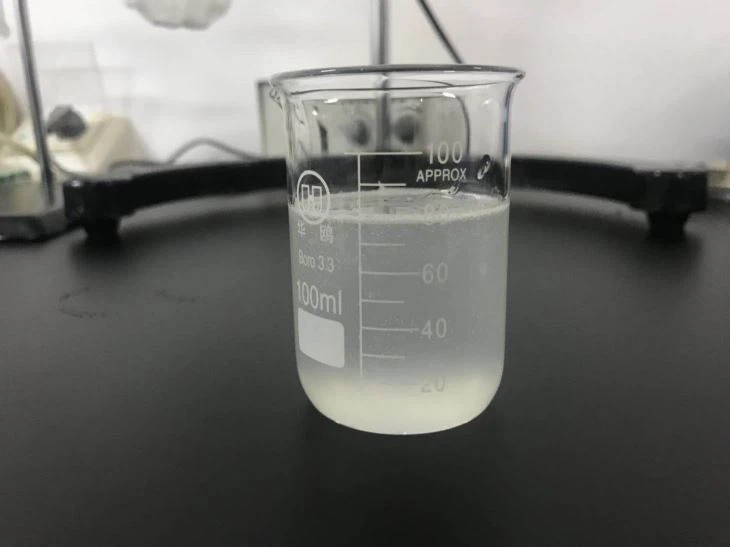
APG 0810 is an alkyl polyglucoside synthesized from renewable raw materials such as glucose and fatty alcohols. Its structure gives it unique properties that make it a candidate for various industrial applications.
One of the most remarkable features of APG 0810 is its excellent surface - active ability. It can significantly reduce the surface tension of water, which is crucial in many sectors like detergents and emulsifiers. For instance, when used in industrial cleaning products, it can penetrate and remove dirt, grease, and oils more effectively than some traditional surfactants. This is because it can form micelles at relatively low concentrations, encapsulating the hydrophobic substances and allowing them to be washed away easily.
Moreover, APG 0810 is highly biodegradable. In an era where environmental regulations are becoming stricter, industries are increasingly seeking sustainable alternatives. APG 0810 breaks down into natural substances over time, minimizing its impact on the ecosystem. This makes it an attractive option for companies aiming to meet environmental standards and reduce their carbon footprint.
Another important property is its mildness. It has low irritation potential to the skin and eyes, which is a valuable trait in industries where workers may be in direct contact with the chemicals. For example, in the formulation of personal care products that are also produced on an industrial scale, mild surfactants like APG 0810 can ensure the safety and comfort of both the consumers and the manufacturing workers.
Industrial Sectors Benefiting from APG 0810
Detergent and Cleaning Industry
The detergent and cleaning industry is one of the major beneficiaries of APG 0810. Industrial cleaning requires powerful yet safe agents. APG 0810 can be used in floor cleaners, degreasers, and industrial laundry detergents. Its ability to reduce surface tension and solubilize stubborn stains makes it an ideal ingredient. In addition, its biodegradability meets the increasing environmental requirements of the cleaning product market. You can find more information about related products like Caprylyl/Decyl Glucoside APG 8170 which share some similar properties with APG 0810 and are also used in this industry.
Personal Care Industry
In the personal care industry, APG 0810 is widely used in shampoos, body washes, and facial cleansers. Its mildness ensures that these products are suitable for all skin types, including sensitive skin. The foaming ability of APG 0810 also provides a pleasant sensory experience for consumers. Industrial manufacturers of personal care products can rely on APG 0810 to create high - quality, safe, and effective products. APG 0810H70DK/decyl Glucoside/CAS:68515 - 73 - 1/225DK is a product variant that is often utilized in this sector.
Agricultural Industry
In agriculture, APG 0810 can be used as an adjuvant in pesticide formulations. It helps to improve the wetting, spreading, and adhesion of pesticides on plant surfaces, enhancing their efficacy. This can lead to better pest control and higher crop yields. Additionally, its biodegradability means that it has less negative impact on the soil and water environment compared to some traditional adjuvants.
Oilfield Industry
The oilfield industry also has potential uses for APG 0810. It can be used as a demulsifier to separate water from crude oil emulsions. Its surface - active properties allow it to break the interfacial film between oil and water, facilitating the separation process. This is important for the efficient production and processing of crude oil.
Challenges and Limitations
Despite its many advantages, APG 0810 also faces some challenges in industrial use. One of the main issues is its cost. Compared to some traditional surfactants, APG 0810 is relatively more expensive to produce. This can be a deterrent for some industries, especially those with tight cost - control requirements.
Another challenge is its performance under certain conditions. For example, in extremely high - temperature or high - salinity environments, the performance of APG 0810 may be affected. It may lose some of its surface - active ability or form precipitates, which can limit its use in some industrial processes.
Overcoming the Challenges
To address the cost issue, continuous research and development efforts are being made to improve the production process of APG 0810. By optimizing the synthesis route and increasing production efficiency, the cost can be gradually reduced. In addition, as the demand for APG 0810 increases, economies of scale can also help to lower the unit cost.
Regarding the performance limitations, scientists are working on modifying the structure of APG 0810 or combining it with other additives. For example, by adding certain stabilizers or co - surfactants, the performance of APG 0810 under harsh conditions can be improved.
Conclusion
In conclusion, APG 0810 has great potential for industrial use. Its unique properties such as excellent surface - active ability, biodegradability, and mildness make it a valuable chemical in multiple industries including detergents, personal care, agriculture, and oilfield. Although it faces some challenges such as cost and performance limitations, continuous efforts in research and development are likely to overcome these issues in the future.
If your industry is looking for a sustainable and effective surfactant solution, APG 0810 could be the answer. We, as a reliable supplier of APG 0810, are committed to providing high - quality products and excellent service. For more information about our APG 0810/decyl Glucoside/CAS:68515 - 73 - 1 and to discuss your specific requirements for procurement, please feel free to reach out to us. We look forward to establishing a long - term business relationship with you.
References
- Smith, J. (2018). Surfactants in Industrial Applications. CRC Press.
- Johnson, A. (2020). Biodegradable Chemicals in the 21st Century. Elsevier.