




As a supplier of APG 0810, one of the most frequently asked questions I encounter is about its charging time. In this blog post, I will delve into the concept of charging time for APG 0810, exploring the factors that influence it and providing a comprehensive understanding of this important aspect.
Understanding APG 0810
Before we discuss the charging time, let's first understand what APG 0810 is. APG 0810, also known as APG 0810/decyl Glucoside/CAS:68515-73-1, is an alkyl polyglucoside (APG). It is a non - ionic surfactant derived from renewable raw materials such as fatty alcohols and glucose. APGs are known for their excellent surface - active properties, biodegradability, and low toxicity, which make them widely used in various industries, including personal care, household cleaning, and industrial applications.
What is meant by "charging time" in the context of APG 0810?
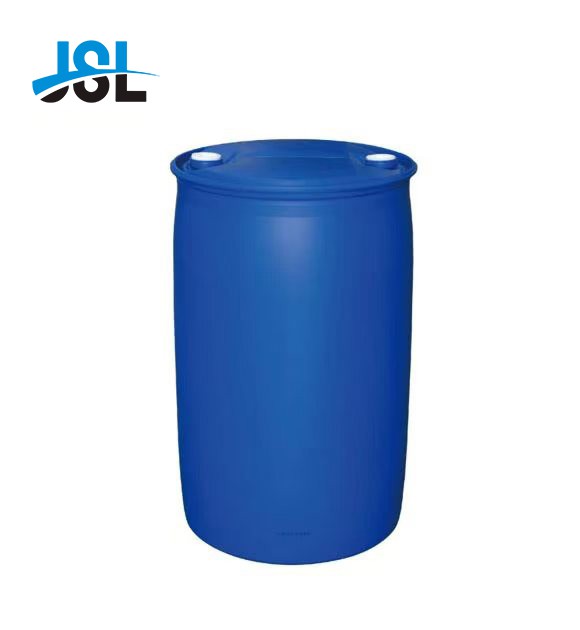
The term "charging time" in relation to APG 0810 does not refer to the same concept as charging an electronic device. In the chemical and manufacturing context, charging time usually refers to the time it takes to add APG 0810 into a reaction vessel, a mixing tank, or a production line during the manufacturing process of a final product.
Factors influencing the charging time of APG 0810
1. Volume of APG 0810 to be charged
The most obvious factor affecting the charging time is the amount of APG 0810 that needs to be added. If a large volume of APG 0810 is required for a production batch, it will naturally take longer to charge compared to a small - scale addition. For example, in a large - scale industrial production of a liquid detergent, where thousands of liters of APG 0810 might be needed, the charging process could take several hours. On the other hand, in a laboratory - scale experiment where only a few milliliters are used, the charging can be completed within minutes.
2. Charging equipment
The type of equipment used for charging APG 0810 also plays a crucial role. Different types of pumps, valves, and transfer systems have different flow rates. A high - capacity pump with a large diameter pipe can transfer APG 0810 much faster than a small - scale, low - flow pump. For instance, a centrifugal pump designed for high - volume chemical transfer can significantly reduce the charging time compared to a peristaltic pump, which is more suitable for small - scale and precise dosing.
3. Viscosity of APG 0810
The viscosity of APG 0810 can vary depending on factors such as temperature and concentration. Higher viscosity means that the fluid flows more slowly, which in turn increases the charging time. APG 0810 may have a relatively high viscosity at low temperatures. In such cases, heating the APG 0810 can reduce its viscosity and speed up the charging process. For example, if the production facility is operating in a cold environment, pre - heating the APG 0810 to an optimal temperature can ensure a more efficient charging process.
4. Safety and regulatory requirements
In some industries, strict safety and regulatory requirements govern the charging process. For example, in the food and beverage or pharmaceutical industries, where product purity and safety are of utmost importance, the charging process may need to be carried out under controlled conditions. This could involve additional steps such as filtering, purging the transfer lines with inert gases, or conducting multiple checks during the charging process. These extra steps will inevitably increase the charging time.
Calculating the charging time
The charging time can be calculated using the following basic formula:
[t=\frac{V}{Q}]
where (t) is the charging time, (V) is the volume of APG 0810 to be charged, and (Q) is the flow rate of the charging equipment.
For example, if we need to charge 1000 liters of APG 0810 and the flow rate of the pump is 100 liters per hour, then the charging time (t=\frac{1000}{100} = 10) hours.
However, in real - world scenarios, this calculation is often more complex due to the factors mentioned above. For instance, if the viscosity of APG 0810 changes during the charging process, the flow rate (Q) may not remain constant.
Importance of optimizing the charging time
Optimizing the charging time of APG 0810 is essential for several reasons. Firstly, it can improve the overall efficiency of the production process. A shorter charging time means that the production cycle can be completed more quickly, leading to higher productivity and potentially lower costs. Secondly, it can help in maintaining the quality of the final product. For example, in some chemical reactions, the timely addition of APG 0810 is crucial for achieving the desired reaction kinetics and product properties.

Different applications and their charging time requirements
Personal care products
In the production of personal care products such as shampoos, body washes, and facial cleansers, the charging time of APG 0810 needs to be carefully controlled. These products often require a high - level of consistency and quality. The charging process may be integrated into a multi - step mixing process, where APG 0810 is added at a specific stage to ensure proper emulsification and formulation. In a typical medium - scale personal care production facility, the charging time for APG 0810 could range from 30 minutes to a few hours, depending on the batch size.

Household cleaning products
For household cleaning products like dishwashing liquids and all - purpose cleaners, the charging time can vary based on the production scale. Large - scale manufacturers may use high - speed transfer systems to charge APG 0810 into large mixing tanks. In these cases, the charging time can be relatively short, perhaps less than an hour for a large batch. Small - scale producers, on the other hand, may take longer due to less efficient equipment.
Industrial applications
In industrial applications such as metal cleaning and textile processing, the charging time of APG 0810 can be influenced by the specific requirements of the process. For example, in a continuous metal - cleaning process, the APG 0810 may need to be charged continuously at a precise rate to maintain the cleaning efficiency. The charging time in such cases is determined by the flow rate required for the continuous operation of the process.
Our APG 0810 products
We offer a range of high - quality APG 0810 products, including APG 0810/decyl Glucoside/CAS:68515-73-1 and APG 0810H70DK/decyl Glucoside/CAS:68515-73-1/225DK. Our products are manufactured under strict quality control measures to ensure consistent quality and performance. We also provide technical support to help our customers optimize the charging process and other aspects of using APG 0810 in their production.
Conclusion and Call to Action
In conclusion, the charging time of APG 0810 is influenced by multiple factors, including the volume to be charged, charging equipment, viscosity, and safety requirements. Understanding these factors and optimizing the charging process can lead to more efficient production and better - quality products.
If you are interested in our APG 0810 products or have any questions regarding the charging time or other aspects of using APG 0810 in your production, please feel free to contact us for more information and to discuss potential procurement opportunities. We are committed to providing you with the best products and services to meet your specific needs.
References
- "Surfactants in Consumer Products: Theory, Technology, and Application" by Jürgen Falbe
- "Industrial Applications of Surfactants" edited by D. R. Karsa