






Yo! As a decyl glucoside supplier, I often get asked about all sorts of technical stuff related to this awesome product. One question that pops up quite a bit is, "What is the entropy of decyl glucoside?" Let's dive into this topic and break it down in a way that's easy to understand.
First off, let's talk a bit about decyl glucoside itself. Decyl glucoside is a mild, biodegradable surfactant that's widely used in the personal care and cleaning industries. It's derived from natural sources like coconut and corn, which makes it a popular choice for eco - friendly products. You can find it in all sorts of things, from shampoos and body washes to dish soaps and laundry detergents.
Now, entropy. Entropy is a concept from thermodynamics. It's basically a measure of the disorder or randomness in a system. In simple terms, the more disordered a system is, the higher its entropy. Think of a messy room. There are lots of different ways for all the stuff in the room to be arranged, so it has high entropy. A tidy room, on the other hand, has lower entropy because there's a more ordered arrangement.
When it comes to decyl glucoside, entropy plays an important role in its behavior. At the molecular level, decyl glucoside molecules can move around and interact with other molecules in different ways. In a liquid state, for example, the molecules are free to move and rotate, which means there are a large number of possible arrangements. This results in a relatively high entropy.
As the temperature of a decyl glucoside solution changes, so does its entropy. When we heat up a solution of decyl glucoside, the molecules gain more energy and start moving around even more vigorously. This increases the number of possible arrangements and thus increases the entropy. Conversely, when we cool the solution down, the molecules slow down, and the entropy decreases.
The concentration of decyl glucoside in a solution also affects its entropy. In a more dilute solution, the decyl glucoside molecules are more spread out, and there are more ways for them to be arranged among the solvent molecules. This leads to higher entropy compared to a more concentrated solution, where the molecules are closer together and have fewer possible arrangements.
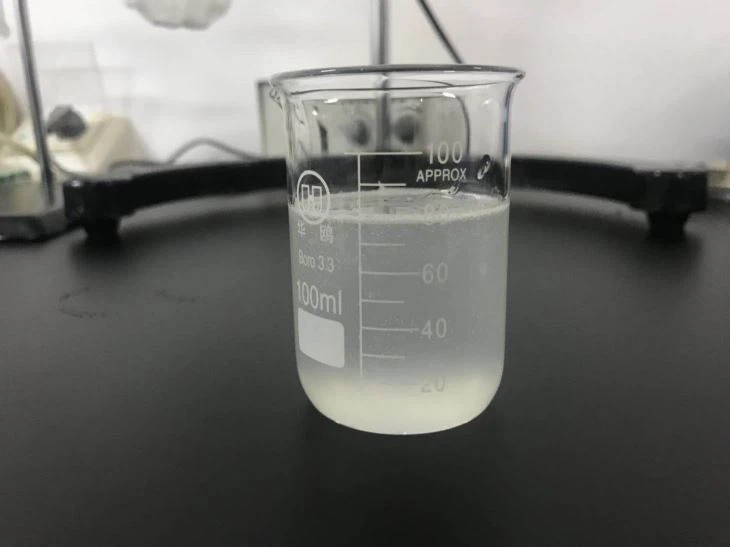

Let's take a look at some of the products we offer as a decyl glucoside supplier. We have Caprylyl/Decyl Glucoside APG215 CS UP. This product is known for its excellent foaming properties and mildness. Another great option is APG 0810H65/decyl Glucoside/CAS:68515 - 73 - 1, which is widely used in the formulation of personal care products. And then there's Caprylyl/Decyl Glucoside APG 8170, which is a high - quality surfactant with good stability.
In the manufacturing process of decyl glucoside, entropy considerations are crucial. For example, during the synthesis, the reaction conditions need to be carefully controlled to ensure the right entropy state of the system. If the entropy is too high or too low, it can affect the yield and quality of the final product. The reaction temperature, pressure, and the ratio of reactants all play a role in determining the entropy of the reaction mixture.
From an application perspective, understanding the entropy of decyl glucoside can help formulators create better products. For instance, in a shampoo formulation, the entropy of the decyl glucoside in the solution can affect how well it foams and how it interacts with other ingredients like oils and salts. By adjusting the temperature and concentration of decyl glucoside, formulators can optimize the product's performance.
In the cleaning industry, the entropy of decyl glucoside solutions can impact their cleaning efficiency. A solution with the right entropy will have the molecules arranged in a way that allows them to effectively break down dirt and grease. This is because the surfactant molecules can more easily surround and remove the dirt particles when they are in a state of appropriate disorder.
Now, let's talk about the entropy changes during phase transitions of decyl glucoside. When decyl glucoside changes from a solid to a liquid (melting), there's a significant increase in entropy. In the solid state, the molecules are arranged in a regular, ordered lattice structure. But when it melts, the molecules break free from this structure and can move around more freely, leading to a large increase in the number of possible arrangements and thus a jump in entropy.
When decyl glucoside evaporates (changes from a liquid to a gas), there's an even more dramatic increase in entropy. In the gas phase, the molecules are far apart and can move independently in a much larger volume. This results in an extremely high number of possible arrangements and a very high entropy value.
As a supplier, we understand the importance of these thermodynamic properties of decyl glucoside. We work hard to ensure that our products have consistent quality, which means that the entropy - related properties are also consistent. This is crucial for our customers, who rely on our products to create high - quality formulations.
If you're in the business of formulating personal care products, cleaning agents, or any other products that use decyl glucoside, you'll want to pay attention to these entropy factors. They can make a big difference in the performance and quality of your final product.
So, if you're interested in learning more about our decyl glucoside products or have any questions about entropy or other technical aspects, don't hesitate to reach out. We're here to help you make the best choices for your business. Whether you're a small - scale formulator or a large - scale manufacturer, we can provide you with the right decyl glucoside products to meet your needs. Just get in touch with us, and we can start a discussion about your requirements and how we can work together.
References:
- Atkins, P. W., & de Paula, J. (2014). Physical Chemistry. Oxford University Press.
- McQuarrie, D. A., & Simon, J. D. (1997). Physical Chemistry: A Molecular Approach. University Science Books.