



As a supplier of APG 0810, I often receive various inquiries from customers. One question that has piqued my interest recently is whether APG 0810 can be used in a magnetic field environment. In this blog post, I will delve into this topic, exploring the properties of APG 0810 and the potential effects of magnetic fields on it.
Understanding APG 0810
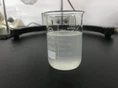
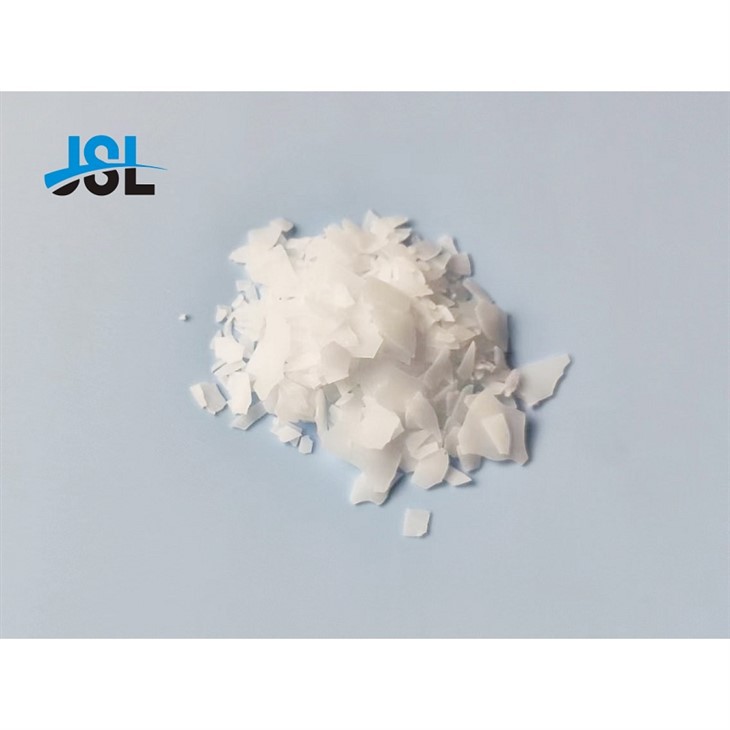
APG 0810, also known as decyl glucoside with the CAS number 68515 - 73 - 1, is a non - ionic surfactant. It is derived from renewable raw materials such as fatty alcohols and glucose, making it an environmentally friendly choice. APG 0810/decyl Glucoside/CAS:68515 - 73 - 1 This surfactant has excellent foaming, emulsifying, and dispersing properties, and it is widely used in various industries, including personal care products, household cleaning agents, and industrial applications.
One of the remarkable features of APG 0810 is its mildness. It has low irritation to the skin and eyes, which makes it a popular ingredient in products like shampoos, body washes, and facial cleansers. In addition, APG 0810 shows good compatibility with other surfactants, allowing it to be used in combination to enhance the performance of the formulation. Another variant, Caprylyl/Decyl Glucoside APG215 CS UP, also offers similar benefits and is often used in different formulations to meet specific requirements. And APG 0810H60/220/decyl Glucoside/CAS:68515 - 73 - 1 has its own unique characteristics that make it suitable for certain applications.
The Nature of Magnetic Fields
Before discussing the interaction between APG 0810 and magnetic fields, it is essential to understand the nature of magnetic fields. A magnetic field is a vector field that describes the magnetic influence on moving electric charges, electric currents, and magnetic materials. Magnetic fields can be generated by permanent magnets, electric currents, or changing electric fields.
Magnetic fields can have different intensities and directions. The strength of a magnetic field is usually measured in teslas (T) or gauss (G), where 1 T = 10,000 G. Magnetic fields can affect the behavior of materials in various ways. For example, ferromagnetic materials such as iron, nickel, and cobalt can be strongly attracted by magnetic fields. Paramagnetic materials are weakly attracted, while diamagnetic materials are weakly repelled.
Potential Effects of Magnetic Fields on APG 0810
To determine whether APG 0810 can be used in a magnetic field environment, we need to consider the potential effects of magnetic fields on its chemical and physical properties.
Chemical Stability
From a chemical perspective, APG 0810 is a relatively stable compound. Its chemical structure consists of a hydrophilic glucose moiety and a hydrophobic alkyl chain. Magnetic fields do not typically have a direct impact on the covalent bonds within the molecule. The forces that hold the atoms together in APG 0810 are much stronger than the forces exerted by normal magnetic fields. Therefore, in terms of chemical stability, APG 0810 is likely to remain intact in a magnetic field environment.
Physical Properties
However, magnetic fields can potentially affect the physical properties of APG 0810 solutions. One of the physical properties that might be influenced is the aggregation behavior of APG 0810 molecules. APG 0810 forms micelles in solution, which are aggregates of surfactant molecules with the hydrophobic tails in the interior and the hydrophilic heads on the surface.
Magnetic fields can cause changes in the orientation and movement of molecules. In a magnetic field, the dipole moments of molecules may align with the magnetic field lines. This alignment can potentially affect the formation and stability of micelles. If the micelle structure is altered, it can impact the foaming, emulsifying, and dispersing properties of APG 0810.
For example, if the magnetic field disrupts the normal micelle formation, the foaming ability of APG 0810 in a cleaning product may be reduced. The emulsifying capacity, which is crucial for creating stable oil - in - water or water - in - oil emulsions, could also be affected. Additionally, the dispersion of particles in a suspension may be altered, which could have implications for industrial applications where APG 0810 is used as a dispersant.
Solubility
The solubility of APG 0810 in water is another physical property that could potentially be influenced by magnetic fields. The solubility of a surfactant is related to the interaction between the surfactant molecules and the solvent molecules. Magnetic fields may change the intermolecular forces between APG 0810 and water molecules, which could affect its solubility. However, the magnitude of this effect is likely to be small under normal magnetic field conditions.
Experimental Evidence and Research
Although there is limited specific research on the effects of magnetic fields on APG 0810, studies on other surfactants can provide some insights. Some research has shown that magnetic fields can have a minor impact on the surface tension and micelle formation of certain surfactants. For example, in some experiments, a weak magnetic field was found to slightly increase the surface tension of a surfactant solution, which could be related to changes in the orientation of surfactant molecules at the air - liquid interface.
However, these effects are often dependent on the strength and duration of the magnetic field exposure. In most practical applications, the magnetic fields encountered are relatively weak. For example, the magnetic field near a common household magnet is on the order of a few hundred gauss, which is much weaker than the magnetic fields used in some scientific experiments.
Practical Considerations for Using APG 0810 in a Magnetic Field Environment
Based on the above analysis, in most common magnetic field environments, APG 0810 can still be used. The potential effects of magnetic fields on its properties are likely to be minimal.
If you are using APG 0810 in a product where the magnetic field is relatively weak, such as in a normal household cleaning product that may be exposed to the Earth's magnetic field or the weak magnetic fields from small electronic devices, the performance of APG 0810 is unlikely to be significantly affected.
However, in industrial settings where strong magnetic fields are present, such as in some magnetic separation processes or near high - power electromagnets, it is advisable to conduct some preliminary tests. These tests can help determine whether the magnetic field has any notable impact on the foaming, emulsifying, or dispersing properties of APG 0810 in your specific application.
Conclusion and Call to Action
In conclusion, while magnetic fields can potentially affect the physical properties of APG 0810, in most common magnetic field environments, APG 0810 is likely to maintain its functionality. As a reliable supplier of APG 0810, we are committed to providing high - quality products and technical support.
If you are considering using APG 0810 in a magnetic field environment or have any other questions about our products, we encourage you to contact us for further discussion. Our team of experts can help you evaluate the suitability of APG 0810 for your specific application and provide you with the best solutions.
References
- Rosen, M. J. (2004). Surfactants and interfacial phenomena. John Wiley & Sons.
- Israelachvili, J. N. (2011). Intermolecular and surface forces. Academic press.