




Hey there! As an alkyl glycoside supplier, I've been getting a lot of questions lately about how alkyl glycoside influences the flocculation process. So, I thought I'd take a deep - dive into this topic and share some insights with you.
First off, let's quickly understand what flocculation is. Flocculation is a process where small particles in a liquid come together to form larger aggregates called flocs. This is super important in many industries, like water treatment, mining, and papermaking. In water treatment, for example, it helps to remove suspended solids, making the water cleaner and easier to filter.
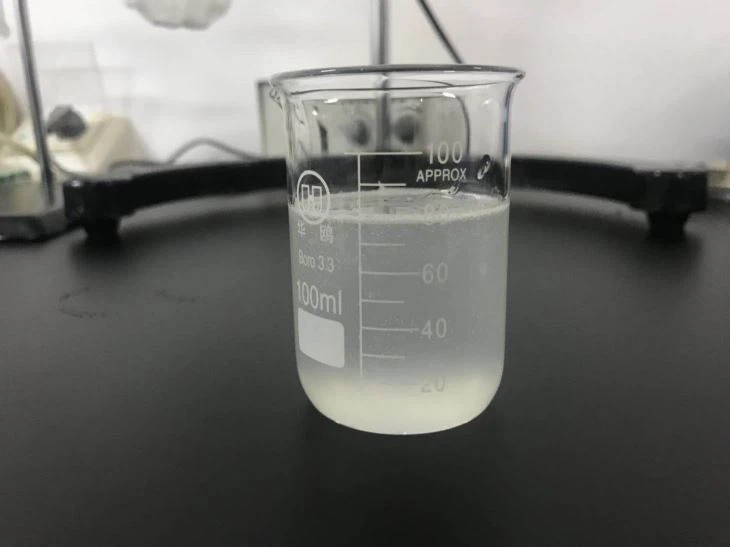
Now, let's talk about alkyl glycosides. Alkyl glycosides are a type of non - ionic surfactant. They're made from natural raw materials like fatty alcohols and sugars, which makes them biodegradable and environmentally friendly. These properties have made them a popular choice in various applications.
One of the key ways alkyl glycoside influences the flocculation process is through its surface - active properties. When added to a solution with suspended particles, alkyl glycosides can adsorb onto the particle surfaces. This changes the surface properties of the particles, like their charge and wettability.
For instance, many particles in a liquid suspension have a negative surface charge. The presence of alkyl glycoside can modify this charge. It might reduce the repulsive forces between the particles. When the repulsive forces are lowered, the particles are more likely to come closer to each other and form flocs.
Let's say you're dealing with a water treatment plant that has a lot of fine clay particles in the water. These clay particles are negatively charged and tend to stay dispersed because of the electrostatic repulsion. By adding an appropriate amount of alkyl glycoside, the surface charge of the clay particles can be altered. As a result, the particles start to aggregate, and larger flocs are formed. These flocs are easier to settle out or filter, improving the overall water treatment efficiency.
Another aspect is the role of alkyl glycoside in reducing the interfacial tension. In a liquid - solid system, the interfacial tension between the liquid and the solid particles can prevent the particles from coming together. Alkyl glycosides can lower this interfacial tension. When the interfacial tension is reduced, the particles can more easily approach each other and form flocs.
In the mining industry, for example, when separating valuable minerals from the ore, flocculation is used to separate the solid particles from the slurry. Alkyl glycoside can be added to the slurry to enhance the flocculation process. By reducing the interfacial tension, it helps the mineral particles to clump together, making it easier to separate them from the rest of the slurry.
The molecular structure of alkyl glycoside also plays a crucial role. Different alkyl chain lengths and degrees of polymerization can lead to different effects on the flocculation process. For example, shorter alkyl chain lengths might have a different impact on the surface charge and wettability of the particles compared to longer alkyl chain lengths.
Let's take a look at some of the products we offer. We have Caprylyl/Decyl Glucoside APG 8170. This product has a well - balanced alkyl chain length, which makes it quite effective in many flocculation applications. It can quickly adsorb onto the particle surfaces and start the flocculation process.
Our APG 0810/decyl Glucoside/CAS:68515 - 73 - 1 is another great option. It has a specific molecular structure that gives it good surface - active properties. It can be used in a wide range of pH conditions, which is really useful in different industrial processes.
And then there's APG 0810H65/decyl Glucoside/CAS:68515 - 73 - 1. This product has a high purity and a well - defined degree of polymerization. It can provide a more consistent and efficient flocculation performance compared to some other products.
The dosage of alkyl glycoside is also an important factor. If you add too little, it might not have a significant effect on the flocculation process. The particles won't aggregate properly, and the flocculation efficiency will be low. On the other hand, if you add too much, it can cause over - stabilization of the particles. This means that the particles might not form large enough flocs, and it could even lead to the re - dispersion of the particles.
In water treatment, a common practice is to conduct jar tests. These tests involve adding different dosages of alkyl glycoside to small samples of the water with suspended particles. By observing the size and settling rate of the flocs formed in each sample, the optimal dosage can be determined.
The temperature of the system can also influence how alkyl glycoside affects the flocculation process. Generally, as the temperature increases, the solubility of alkyl glycoside in the liquid might change. This can affect its adsorption onto the particle surfaces and its ability to modify the surface properties of the particles. In some cases, a higher temperature can speed up the flocculation process because the molecules are more mobile. However, if the temperature is too high, it might cause the alkyl glycoside to degrade, reducing its effectiveness.
The presence of other chemicals in the system can also interact with alkyl glycoside. For example, in a water treatment process, there might be other coagulants or flocculants already present. These chemicals can either enhance or interfere with the action of alkyl glycoside. It's important to understand these interactions when designing a flocculation process.
In conclusion, alkyl glycoside has a significant influence on the flocculation process. Its surface - active properties, ability to reduce interfacial tension, and the specific molecular structure all contribute to its effectiveness in promoting floc formation. Whether you're in the water treatment, mining, or papermaking industry, alkyl glycoside can be a valuable addition to your flocculation process.
If you're interested in using alkyl glycoside for your flocculation needs, we're here to help. We can provide you with the right product based on your specific requirements and offer technical support to ensure you get the best results. Don't hesitate to reach out for more information or to start a purchase negotiation.
References
- "Surfactants in Flocculation Processes" - A research paper in the Journal of Colloid and Interface Science.
- "Environmental Applications of Alkyl Glycosides" - A book chapter that discusses the use of alkyl glycosides in different industries.