


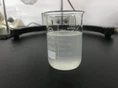



Hey there! As a coco glucoside supplier, I've been getting a lot of questions lately about how coco glucoside affects the foam stability of products. So, I thought I'd take a deep dive into this topic and share what I've learned.
First off, let's talk about what coco glucoside is. Coco glucoside is a natural, biodegradable surfactant derived from coconut oil and glucose. It's widely used in a variety of personal care and household products because it's gentle on the skin, has low toxicity, and is environmentally friendly.


Now, onto the main question: how does coco glucoside affect foam stability? Well, foam stability is all about how long the foam lasts in a product. A stable foam is important in many products, like shampoos, body washes, and dish soaps, because it gives users a luxurious and satisfying experience.
Coco glucoside has some unique properties that can significantly impact foam stability. One of the key factors is its ability to reduce the surface tension of water. When you add coco glucoside to water, it spreads out on the surface and forms a thin layer. This layer makes it easier for air bubbles to form and prevents them from popping quickly.
Think of it like this: when you blow bubbles with a bubble wand, the soap in the bubble solution reduces the surface tension of the water, allowing the bubbles to form and stay intact for a while. Similarly, coco glucoside helps create and maintain bubbles in products, leading to better foam stability.
Another aspect is the structure of coco glucoside molecules. These molecules have a hydrophilic (water - loving) head and a hydrophobic (water - hating) tail. When they are in a solution, they arrange themselves around air bubbles. The hydrophilic heads face the water, while the hydrophobic tails face the air inside the bubble. This arrangement forms a protective layer around the bubble, preventing the water from draining out too quickly and keeping the bubble stable.
In addition to these basic properties, the concentration of coco glucoside in a product also plays a role. Generally, a higher concentration of coco glucoside can lead to more stable foam. However, there's a point of diminishing returns. If you add too much coco glucoside, it might not necessarily make the foam more stable, and it could also increase the cost of the product.
Let's take a look at some real - world applications. In shampoos, coco glucoside can be combined with other surfactants to create a rich and long - lasting foam. When you lather up your hair, the stable foam helps the shampoo spread evenly through your hair, allowing it to clean more effectively.
In body washes, the foam stability provided by coco glucoside gives a pleasant bathing experience. The foam clings to your skin, making it feel like you're getting a thorough clean. And because coco glucoside is gentle, it won't irritate your skin.
Now, I'd like to mention some of the coco glucoside products we offer. We have Decyl Glucoside APG 2000UP, which is known for its excellent foam - forming properties. It can be used in a wide range of products, from personal care items to household cleaners.
Another great option is APG 0814/coco Glucoside/CAS:141464 - 42 - 8. This product has a balanced composition that provides good foam stability while being gentle on the environment.
And we also have APG 0814N/425N/coco Glucoside/CAS:141464 - 42 - 8, which is a popular choice for those looking for a high - quality coco glucoside with reliable foam - stabilizing capabilities.
If you're in the business of formulating products and you're looking to improve foam stability, coco glucoside could be the solution you've been searching for. We're here to help you find the right product for your needs. Whether you're making a small - batch artisanal product or a large - scale commercial item, we can provide the coco glucoside that will give your product the edge.
If you're interested in learning more or starting a procurement discussion, don't hesitate to reach out. We're always happy to talk about how our coco glucoside products can fit into your production process and help you create amazing products.
References
- "Surfactants and Interfacial Phenomena" by Milton J. Rosen and Dennis G. Kunjappu. This book provides in - depth knowledge about surfactants, including their properties and how they affect foam stability.
- Various industry research papers on the use of coco glucoside in personal care and household products, which discuss its performance in terms of foam stability and other aspects.