



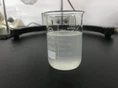


What are the uncertainties in the measurements of APG 0814?
As a supplier of APG 0814, I've been deeply involved in the production, testing, and distribution of this remarkable product. APG 0814, also known as APG 0814/coco Glucoside/CAS:141464-42-8, is an alkyl polyglucoside that has gained significant popularity in various industries due to its excellent properties such as high biodegradability, low toxicity, and good compatibility with other chemicals. However, like any chemical substance, there are uncertainties associated with its measurements. In this blog post, I'll delve into these uncertainties and their implications for both producers and users of APG 0814.
Uncertainties in Composition Analysis
One of the primary areas where uncertainties arise is in the analysis of APG 0814's composition. APG 0814 is a complex mixture of alkyl polyglucosides with different alkyl chain lengths and degrees of polymerization. The composition can vary depending on the raw materials used, the manufacturing process, and the purification steps.
For instance, the ratio of different alkyl chain lengths (such as C8, C10, C12, and C14) can have a significant impact on the physical and chemical properties of APG 0814. Analytical techniques such as gas chromatography (GC) and high-performance liquid chromatography (HPLC) are commonly used to determine the composition. However, these techniques have their limitations.
In GC analysis, the sample needs to be vaporized, which can lead to thermal degradation of some components, especially those with higher molecular weights. This can result in inaccurate quantification of the different alkyl chain lengths. HPLC, on the other hand, can be affected by factors such as column selectivity, mobile phase composition, and detector response. Different columns may have different affinities for the various components of APG 0814, leading to variations in the separation and quantification results.
Another source of uncertainty in composition analysis is the presence of impurities. APG 0814 may contain impurities such as residual raw materials, by-products of the reaction, and contaminants introduced during the manufacturing process. These impurities can interfere with the analysis and make it difficult to accurately determine the composition of the main components. For example, some impurities may have similar retention times to the target components in chromatography, leading to co-elution and inaccurate peak integration.
Uncertainties in Physical Property Measurements
Physical properties such as density, viscosity, and surface tension are important parameters for characterizing APG 0814. However, measuring these properties also comes with uncertainties.
Density is a fundamental physical property that can be affected by factors such as temperature, pressure, and the presence of impurities. Temperature has a significant impact on the density of APG 0814, as most substances expand when heated and contract when cooled. Therefore, accurate density measurements require precise temperature control. Even a small variation in temperature can lead to a noticeable change in density.
Viscosity is another critical property that affects the flow behavior of APG 0814. The viscosity of APG 0814 can vary depending on factors such as the concentration, temperature, and shear rate. Measuring viscosity accurately requires specialized equipment such as viscometers. However, different viscometers may give different results due to differences in their design, calibration, and measurement principles. For example, rotational viscometers and capillary viscometers may provide different viscosity values for the same sample.
Surface tension is an important property for applications where APG 0814 is used as a surfactant. Surface tension measurements are typically carried out using techniques such as the du Noüy ring method or the Wilhelmy plate method. These methods rely on the interaction between the liquid surface and a solid object. However, factors such as surface contamination, the presence of impurities, and the accuracy of the measuring device can introduce uncertainties in the surface tension measurements.
Uncertainties in Performance Testing
In addition to composition and physical property measurements, uncertainties also exist in the performance testing of APG 0814. Performance testing is crucial for evaluating the suitability of APG 0814 for specific applications.
For example, in the detergent industry, the cleaning performance of APG 0814 is an important consideration. Cleaning performance can be affected by factors such as the type and concentration of dirt, the pH of the cleaning solution, and the presence of other additives. Conducting cleaning performance tests in a laboratory setting may not fully replicate the real-world conditions. Different test methods and test substrates may give different results, leading to uncertainties in the evaluation of APG 0814's cleaning performance.
In the personal care industry, the foaming and emulsifying properties of APG 0814 are important. Foaming properties can be affected by factors such as the concentration of APG 0814, the presence of other surfactants, and the water hardness. Emulsifying properties depend on factors such as the type and ratio of oil and water phases, the presence of emulsifiers, and the mixing conditions. Measuring these properties accurately and reproducibly can be challenging, and there are uncertainties associated with the test results.
Implications of Uncertainties
The uncertainties in the measurements of APG 0814 have several implications for both producers and users.
For producers, these uncertainties can affect the quality control of the product. Inaccurate composition analysis can lead to inconsistencies in the product quality, which can result in customer complaints and potential loss of business. Uncertainties in physical property measurements can make it difficult to meet the specified product standards. For example, if the density or viscosity of APG 0814 is not within the acceptable range, it may not be suitable for certain applications.
For users, the uncertainties can pose challenges in formulating products. If the composition and properties of APG 0814 are not accurately known, it can be difficult to optimize the formulation and achieve the desired performance. For example, in a detergent formulation, if the cleaning performance of APG 0814 is uncertain, it may be necessary to use higher concentrations or add other additives to ensure satisfactory cleaning results. This can increase the cost of the product and may also have environmental implications.
Minimizing Uncertainties
To minimize the uncertainties in the measurements of APG 0814, several strategies can be employed.
Firstly, using high-quality raw materials and well-controlled manufacturing processes can help reduce the variability in the composition and properties of APG 0814. This can make the analysis and measurement more consistent.
Secondly, regular calibration and maintenance of analytical equipment are essential. This ensures that the equipment is operating accurately and that the measurement results are reliable. For example, chromatographic columns should be replaced or reconditioned regularly to maintain their separation performance.
Thirdly, using multiple analytical techniques and cross-validating the results can help reduce the uncertainties. For example, combining GC and HPLC analysis can provide more comprehensive information about the composition of APG 0814. Similarly, using different viscometers or surface tension measuring devices and comparing the results can increase the confidence in the physical property measurements.
Finally, conducting inter-laboratory studies and participating in proficiency testing programs can help identify and address any systematic errors in the measurement methods. This can improve the accuracy and reproducibility of the measurement results across different laboratories.
Conclusion
In conclusion, there are significant uncertainties in the measurements of APG 0814, including composition analysis, physical property measurements, and performance testing. These uncertainties have implications for both producers and users of APG 0814. However, by implementing appropriate strategies to minimize these uncertainties, we can improve the quality control of the product and ensure its reliable performance in various applications.
If you're interested in learning more about APG 0814 or are considering purchasing it for your specific application, I encourage you to reach out for a detailed discussion. We're committed to providing high-quality APG 0814 products and can work with you to address any concerns related to the measurements and performance of the product. You can also explore our other product offerings such as APG 0814N/425N/coco Glucoside/CAS:141464-42-8 and APG 0814/coco Glucoside/CAS:141464-42-8.

References
- Smith, J. K. (2018). Analytical Chemistry of Surfactants. CRC Press.
- Miller, C. A., & Neogi, P. (2013). Interfacial Phenomena: Equilibrium and Dynamic Effects. CRC Press.
- Rosen, M. J., & Kunjappu, J. T. (2012). Surfactants and Interfacial Phenomena. Wiley.