




Decyl glucoside is a well - known and widely used surfactant in the field of personal care products, household cleaning agents, and industrial applications. As a decyl glucoside supplier, I am often asked about its chemical structure. Understanding the chemical structure of decyl glucoside is essential for both formulators and consumers who want to know more about the products they use.
Basic Chemical Composition
Decyl glucoside belongs to the class of alkyl polyglucosides (APGs). APGs are non - ionic surfactants derived from renewable raw materials, namely fatty alcohols and carbohydrates. In the case of decyl glucoside, the fatty alcohol is decanol, which has a carbon chain length of ten carbon atoms, and the carbohydrate is glucose.
The general formula for alkyl polyglucosides can be written as $C_nH_{2n + 1}(C_6H_{10}O_5)_xOH$, where $n$ represents the carbon chain length of the alkyl group and $x$ is the degree of polymerization of the glucose units. For decyl glucoside, $n = 10$.
The glucose unit in decyl glucoside is a cyclic six - membered ring structure known as a pyranose ring. Glucose exists in nature mainly in the D - glucose form, and in decyl glucoside, it is typically in the $\alpha$ or $\beta$ anomeric configuration. The anomeric carbon of the glucose ring is linked to the oxygen atom of the decanol through a glycosidic bond.
The Glycosidic Bond
The formation of decyl glucoside involves a reaction between decanol and glucose under specific reaction conditions. This reaction results in the formation of a glycosidic bond, which is a covalent bond between the anomeric carbon of the glucose and the oxygen atom of the decanol. The glycosidic bond is relatively stable under normal conditions but can be hydrolyzed under acidic or enzymatic conditions.
There are two main types of glycosidic bonds in decyl glucoside: $\alpha$ - glycosidic and $\beta$ - glycosidic bonds. The $\alpha$ - anomer has the hydroxyl group on the anomeric carbon pointing downwards relative to the plane of the pyranose ring, while the $\beta$ - anomer has the hydroxyl group pointing upwards. In commercial decyl glucoside products, a mixture of $\alpha$ and $\beta$ anomers is usually present.
Degree of Polymerization
The degree of polymerization ($x$) of the glucose units in decyl glucoside is an important parameter. It determines many of the physical and chemical properties of the surfactant. In most commercial decyl glucoside products, the average degree of polymerization is typically in the range of 1.1 - 1.6. A lower degree of polymerization generally results in a more hydrophilic product, while a higher degree of polymerization makes the product more lipophilic.
The distribution of the degree of polymerization in decyl glucoside can be characterized by techniques such as high - performance liquid chromatography (HPLC) and mass spectrometry. These techniques allow us to determine the relative amounts of different oligomers present in the product.
Physical and Chemical Properties Related to the Structure
The chemical structure of decyl glucoside endows it with several unique physical and chemical properties. Firstly, it is a non - ionic surfactant, which means it does not carry an electric charge in solution. This property makes it compatible with a wide range of other surfactants, including anionic, cationic, and amphoteric surfactants.
Secondly, due to the presence of the hydrophilic glucose unit and the hydrophobic decyl chain, decyl glucoside has excellent surface - active properties. It can reduce the surface tension of water, allowing it to wet surfaces more effectively. This property is crucial in applications such as cleaning, where it helps to remove dirt and grease from surfaces.
In addition, decyl glucoside is biodegradable and has low toxicity. The natural origin of its raw materials and the relatively simple chemical structure contribute to its environmental friendliness. It is widely used in “green” or “natural” products, where consumers are more concerned about the environmental impact of the products they use.
Applications in Different Industries
In the personal care industry, decyl glucoside is a popular ingredient in shampoos, body washes, facial cleansers, and baby care products. Its mildness and low irritation potential make it suitable for sensitive skin. The non - ionic nature of decyl glucoside also helps to maintain the stability of the product formulation and prevent the formation of precipitates or aggregates.
In the household cleaning sector, decyl glucoside is used in dishwashing liquids, laundry detergents, and all - purpose cleaners. Its ability to remove stains and grease, combined with its environmental friendliness, makes it an attractive alternative to traditional synthetic surfactants.
In industrial applications, decyl glucoside can be used as an emulsifier, dispersant, and wetting agent. For example, it can be used in the formulation of paints, coatings, and agricultural chemicals.
Our Decyl Glucoside Products
As a decyl glucoside supplier, we offer a range of high - quality decyl glucoside products. One of our popular products is APG 0810H60/220/decyl Glucoside/CAS:68515 - 73 - 1. This product has a well - defined chemical structure and excellent performance in various applications. It has a suitable degree of polymerization and a balanced ratio of hydrophilic and hydrophobic groups, making it highly effective in reducing surface tension and removing dirt.
Another product is Caprylyl/Decyl Glucoside APG 8170. This product contains a mixture of caprylyl (C8) and decyl (C10) glucosides, which provides enhanced solubility and performance in different formulations. The combination of different alkyl chain lengths allows for a wider range of applications and better compatibility with other ingredients.
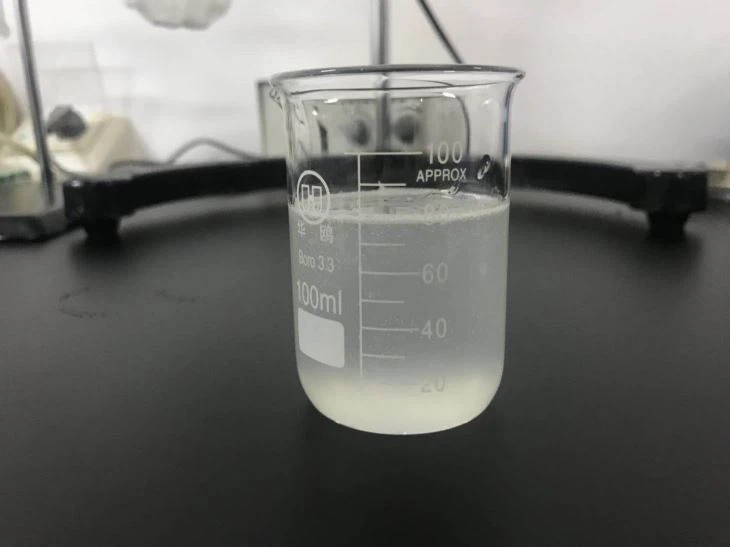
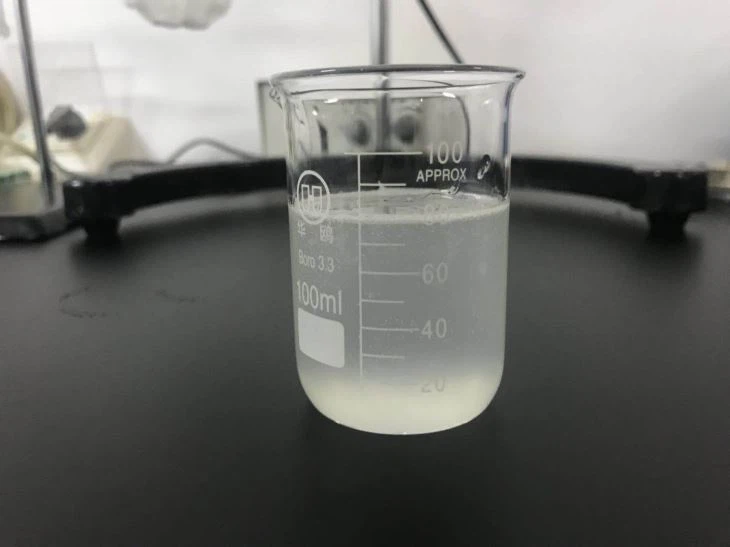
We also offer Caprylyl/Decyl Glucoside APG215 CS UP. This product is specifically designed for applications where high - quality and stable performance are required. It has a consistent chemical structure and is produced under strict quality control measures.
Contact Us for Procurement
If you are interested in purchasing decyl glucoside for your personal care, household cleaning, or industrial applications, we invite you to contact us for procurement discussions. We can provide you with detailed product information, samples, and competitive pricing. Our technical support team is also available to assist you with any formulation or application - related questions.
References
- Hill, K.,冯光炷, & 李和平. (2007). Alkyl polyglycosides - properties and applications of a new class of non - ionic surfactants. Beijing: Chemical Industry Press.
- Rosen, M. J., & Kunjappu, J. T. (2012). Surfactants and interfacial phenomena. John Wiley & Sons.
- Myers, D. (2012). Surfactant science and technology. John Wiley & Sons.