





What is the density of decyl glucose?
Decyl glucose, also known as decyl glucoside, is a non - ionic surfactant that has gained significant popularity in various industries, especially in the personal care and household cleaning sectors. As a decyl glucose supplier, I am often asked about its physical properties, and one of the most frequently inquired aspects is its density. In this blog, we will explore in detail what the density of decyl glucose is, how it can vary, and its significance in different applications.
Understanding Decyl Glucose
Decyl glucoside is derived from natural sources such as fatty alcohols from coconut or palm kernel oil and glucose from corn starch. It is known for its excellent biodegradability, low toxicity, and mildness to the skin. These properties make it a preferred choice for formulating products that are environmentally friendly and gentle on the human body.
Density of Decyl Glucose
The density of a substance is defined as its mass per unit volume. For decyl glucose, the density can vary depending on several factors, including its purity, temperature, and the presence of other substances in the solution.
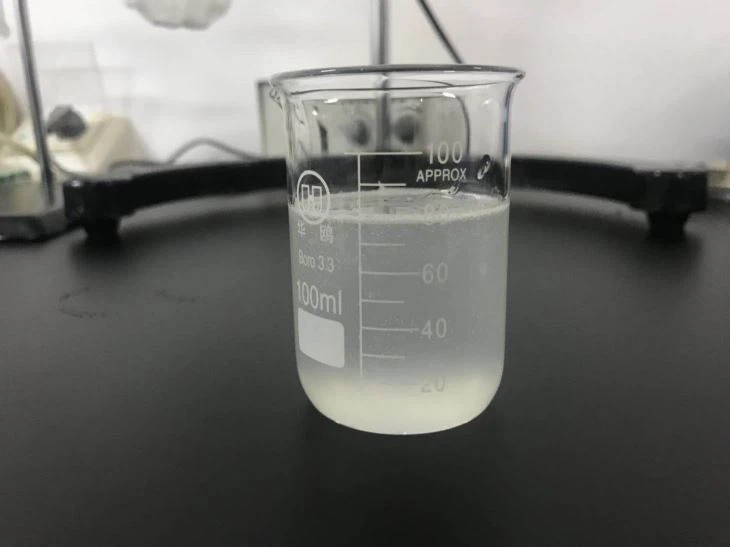
Typically, the density of decyl glucose in its pure form is around 1.1 g/cm³ at 20°C. However, in commercial products, decyl glucose is often available as an aqueous solution with different concentrations. For example, APG 0810H70/decyl Glucoside/CAS:68515 - 73 - 1 and APG 0810H65/decyl Glucoside/CAS:68515 - 73 - 1 are two common products with different concentrations of decyl glucoside in water.
The density of these solutions will be affected by the amount of water present. As the concentration of decyl glucoside increases, the density of the solution will also tend to increase, approaching the density of pure decyl glucoside.
Factors Affecting the Density of Decyl Glucose Solutions
- Concentration: As mentioned above, the higher the concentration of decyl glucoside in the solution, the greater the density. This is because the mass of decyl glucoside per unit volume is increasing. For example, a 70% decyl glucoside solution will have a higher density than a 65% solution.
- Temperature: Temperature has a significant impact on the density of decyl glucose solutions. Generally, as the temperature increases, the density of the solution decreases. This is due to the expansion of the molecules as they gain thermal energy. For accurate density measurements, it is important to specify the temperature at which the measurement is taken.
- Impurities and Additives: The presence of impurities or additives in the decyl glucose solution can also affect its density. For instance, if there are small amounts of salts or other surfactants added to the solution, the density may change depending on the density of these additional substances.
Significance of Density in Applications
- Formulation: In the formulation of personal care products such as shampoos, body washes, and facial cleansers, the density of decyl glucose solutions is an important parameter. It helps formulators to calculate the correct proportions of different ingredients to achieve the desired product consistency and performance. For example, if a product requires a certain viscosity, the density of the decyl glucose solution can be adjusted by changing its concentration or adding other thickening agents.
- Quality Control: Density is also used as a quality control parameter in the production of decyl glucose. By measuring the density of the product at different stages of production, manufacturers can ensure that the product meets the specified quality standards. Deviations in density may indicate problems such as incorrect mixing, contamination, or variations in raw material quality.
- Packaging and Transportation: Knowing the density of decyl glucose solutions is essential for packaging and transportation. It helps in determining the appropriate container size and the weight of the product for shipping. This information is crucial for cost - effective packaging and ensuring compliance with transportation regulations.
Different Grades of Decyl Glucose and Their Densities
We offer different grades of decyl glucose, each with its own unique properties and densities. Caprylyl/Decyl Glucoside APG 8170 is another popular product. This grade is a blend of caprylyl and decyl glucosides, which provides a balance of good foaming properties and mildness. The density of Caprylyl/Decyl Glucoside APG 8170 will also depend on its specific formulation and concentration.
Measuring the Density of Decyl Glucose
There are several methods available for measuring the density of decyl glucose solutions. One of the most common methods is using a pycnometer, which is a precisely calibrated glass container. The pycnometer is first weighed empty, then filled with the decyl glucose solution, and weighed again. The difference in weight gives the mass of the solution, and by knowing the volume of the pycnometer, the density can be calculated.
Another method is using a hydrometer, which is a floating device that measures the density of a liquid based on its buoyancy. Hydrometers are relatively easy to use and can provide quick density measurements. However, they may not be as accurate as pycnometers, especially for very precise applications.
Conclusion
The density of decyl glucose is an important physical property that is influenced by factors such as concentration, temperature, and the presence of impurities. Understanding the density of decyl glucose solutions is crucial for various applications, including formulation, quality control, and packaging. As a decyl glucose supplier, we are committed to providing high - quality products with consistent density and other physical properties.
If you are interested in purchasing decyl glucose for your specific application, we encourage you to contact us for more information and to discuss your requirements. We can provide detailed technical data sheets and samples to help you make an informed decision.
References
- "Surfactants in Consumer Products: Theory, Technology, and Application" by K. Kosswig and R. Stache
- "Handbook of Surfactants" by M. R. Porter