






Decyl glucoside is a widely used non - ionic surfactant known for its excellent mildness, biodegradability, and good detergency. As a decyl glucoside supplier, I often receive inquiries about various properties of decyl glucoside, and one question that comes up quite frequently is: What is the diffusion coefficient of decyl glucoside?
Understanding the Diffusion Coefficient
Before delving into the specific diffusion coefficient of decyl glucoside, it's essential to understand what the diffusion coefficient represents. Diffusion is the process by which molecules move from an area of higher concentration to an area of lower concentration. The diffusion coefficient (D) is a proportionality constant that describes the rate at which this diffusion occurs. It is affected by several factors, including temperature, molecular size, viscosity of the medium, and the nature of the solute - solvent interactions.
Mathematically, Fick's laws of diffusion are used to describe the diffusion process. Fick's first law states that the flux (J) of a substance is proportional to the concentration gradient (∂C/∂x):
[J=-D\frac{\partial C}{\partial x}]
where J is the molar flux, D is the diffusion coefficient, and ∂C/∂x is the concentration gradient.
Factors Affecting the Diffusion Coefficient of Decyl Glucoside
Molecular Size
Decyl glucoside has a relatively large molecular structure. The alkyl chain length (in this case, a decyl group) and the glucoside head - group contribute to its size. Larger molecules generally have lower diffusion coefficients because they experience more resistance when moving through a medium. The complex structure of decyl glucoside means that it has a slower diffusion rate compared to smaller, simpler molecules.
Temperature
Temperature has a significant impact on the diffusion coefficient. According to the Stokes - Einstein equation, the diffusion coefficient is related to temperature (T), the Boltzmann constant (k), and the viscosity of the medium (η):
[D=\frac{kT}{6\pi\eta r}]
where r is the radius of the diffusing molecule. As the temperature increases, the kinetic energy of the decyl glucoside molecules increases, leading to more rapid movement and a higher diffusion coefficient.
Viscosity of the Medium
The viscosity of the medium in which decyl glucoside is diffusing plays a crucial role. In a highly viscous medium, such as a thick gel or a high - molecular - weight polymer solution, the decyl glucoside molecules will have more difficulty moving, resulting in a lower diffusion coefficient. Conversely, in a less viscous medium like water, the diffusion will be faster.
Solute - Solvent Interactions
The interactions between decyl glucoside and the solvent can also affect the diffusion coefficient. Decyl glucoside is amphiphilic, meaning it has both hydrophilic and hydrophobic parts. In an aqueous solution, the hydrophilic glucoside head - group interacts with water molecules through hydrogen bonding, while the hydrophobic decyl chain tends to avoid water. These interactions can either enhance or impede the diffusion process depending on the specific conditions.
Experimental Determination of the Diffusion Coefficient
Measuring the diffusion coefficient of decyl glucoside typically involves experimental techniques such as nuclear magnetic resonance (NMR) spectroscopy, fluorescence recovery after photobleaching (FRAP), and dynamic light scattering (DLS).
NMR spectroscopy can be used to measure the self - diffusion coefficient of decyl glucoside in solution. By observing the motion of the nuclei in the decyl glucoside molecules, the diffusion coefficient can be calculated. FRAP involves bleaching a fluorescently labeled decyl glucoside in a small area and then monitoring the recovery of fluorescence as unbleached molecules diffuse into the bleached area. DLS measures the fluctuations in the intensity of scattered light caused by the Brownian motion of the decyl glucoside molecules, from which the diffusion coefficient can be inferred.
Typical Values of the Diffusion Coefficient
The diffusion coefficient of decyl glucoside can vary widely depending on the conditions. In an aqueous solution at room temperature (around 25°C) and low concentration, the diffusion coefficient of decyl glucoside is typically on the order of (10^{-9}\ m^{2}/s). However, this value can change significantly if the temperature is altered, or if the solution contains other solutes that affect the viscosity or the solute - solvent interactions.
For example, if the solution is heated to 50°C, the diffusion coefficient may increase by a factor of 2 - 3 due to the increased kinetic energy of the molecules. Similarly, if a thickening agent is added to the solution, the diffusion coefficient may decrease by an order of magnitude.
Applications and the Importance of the Diffusion Coefficient
Understanding the diffusion coefficient of decyl glucoside is crucial in various applications.
Detergency and Cleaning Products
In detergents and cleaning products, the diffusion of decyl glucoside is essential for its ability to penetrate and remove dirt and stains. A higher diffusion coefficient means that the decyl glucoside can reach the soiled areas more quickly, enhancing its cleaning efficiency.
Cosmetics and Personal Care Products
In cosmetics, decyl glucoside is often used as a mild surfactant. Its diffusion properties affect how it spreads on the skin and interacts with other ingredients in the formulation. A proper diffusion coefficient ensures uniform distribution of the product on the skin and optimal performance.
Pharmaceutical Applications
In some pharmaceutical formulations, decyl glucoside may be used as an excipient. Its diffusion behavior can impact the release rate of drugs from the formulation, which is critical for the efficacy of the medication.
Our Decyl Glucoside Products
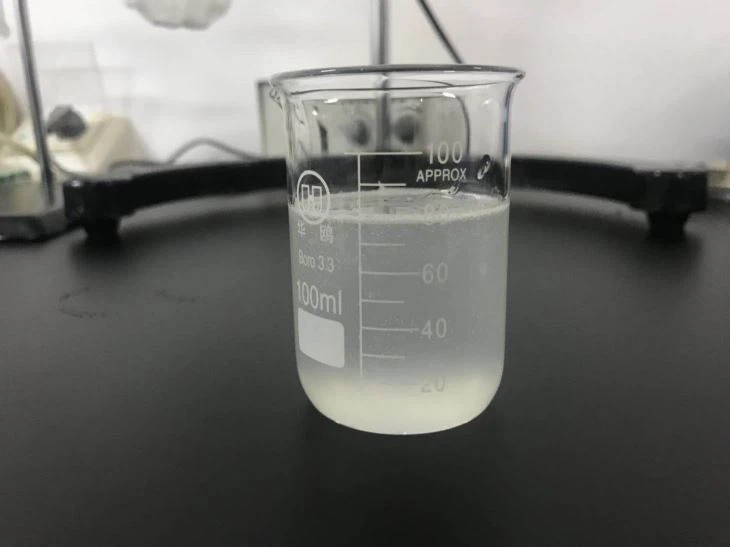
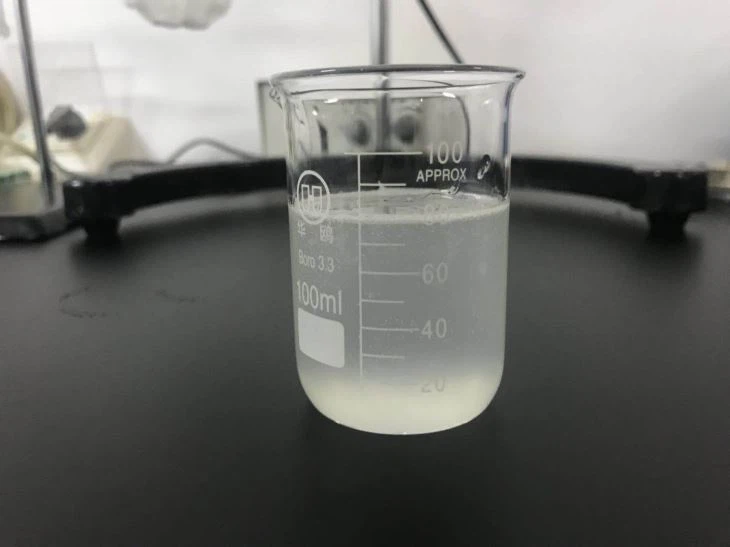
As a decyl glucoside supplier, we offer a range of high - quality decyl glucoside products, including APG 0810H70DK/decyl Glucoside/CAS:68515 - 73 - 1/225DK, Caprylyl/Decyl Glucoside APG215 CS UP, and Caprylyl/Decyl Glucoside APG 8170. These products have been carefully formulated to meet the specific needs of different industries.
Our team of experts can provide detailed information about the diffusion properties of our decyl glucoside products based on your specific application requirements. Whether you need a product with a higher diffusion coefficient for faster - acting formulations or a more controlled diffusion for sustained - release applications, we can work with you to find the best solution.
Contact Us for Procurement
If you are interested in purchasing decyl glucoside or have any questions about its diffusion coefficient or other properties, please feel free to contact us. Our sales team is ready to assist you in finding the right product for your needs and to engage in in - depth discussions about procurement. We look forward to working with you to meet your decyl glucoside requirements.
References
- Crank, J. (1975). The Mathematics of Diffusion. Oxford University Press.
- Atkins, P., & de Paula, J. (2014). Physical Chemistry. Oxford University Press.
- Bird, R. B., Stewart, W. E., & Lightfoot, E. N. (2007). Transport Phenomena. John Wiley & Sons.