


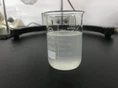

APG 1214, also known as Alkyl Polyglucoside 1214, is a non - ionic surfactant with a wide range of applications. As a supplier of APG 1214, I am often asked whether it can be used in the paper industry. In this blog, we will explore the properties of APG 1214 and its potential uses in the paper - making process.
Properties of APG 1214
APG 1214 is derived from renewable raw materials, mainly fatty alcohols and glucose. It is known for its excellent biodegradability, low toxicity, and good environmental compatibility. These features make it an attractive option in various industries, including the paper industry.
One of the key properties of APG 1214 is its surface - active ability. It can reduce the surface tension of water, which is crucial in many paper - making processes. For example, in the wet - end of the paper machine, where the pulp is formed into a sheet, reducing the surface tension helps the fibers to disperse more evenly in the water suspension. This leads to a more uniform paper structure and better physical properties of the final product.
Another important property is its emulsifying and dispersing ability. APG 1214 can emulsify oils and disperse solid particles in water. In the paper industry, this can be useful for handling additives such as sizing agents, fillers, and dyes. Sizing agents are used to control the absorbency of paper, and APG 1214 can help these agents to be evenly distributed in the pulp, improving the sizing efficiency.
Applications in the Paper Industry
Pulp Preparation
During pulp preparation, APG 1214 can play a significant role in fiber dispersion. The fibers in the pulp tend to clump together due to hydrogen bonding and other intermolecular forces. By adding APG 1214 to the pulp suspension, the surface tension of the water is reduced, and the fibers are more likely to separate from each other. This results in a more homogeneous pulp, which is essential for producing high - quality paper.
Moreover, APG 1214 can help in the removal of impurities from the pulp. It can emulsify and disperse the pitch (a mixture of resins and fats) that is often present in wood pulp. Pitch can cause problems such as deposits on the paper machine and uneven paper quality. By using APG 1214, the pitch can be more easily removed during the pulp washing process.
Sizing Process
Sizing is a crucial step in paper manufacturing, as it determines the paper's resistance to liquid penetration. There are two main types of sizing: internal sizing and surface sizing.
In internal sizing, sizing agents are added to the pulp before it is formed into a sheet. APG 1214 can act as an emulsifier for sizing agents such as alkyl ketene dimer (AKD) or alkenyl succinic anhydride (ASA). These sizing agents are often in the form of oils, and APG 1214 can help them to form stable emulsions in the water - based pulp system. This ensures that the sizing agents are evenly distributed among the fibers, providing better sizing performance.
For surface sizing, a solution containing sizing agents is applied to the surface of the formed paper. APG 1214 can be added to the surface - sizing solution to improve its wetting ability. It helps the sizing solution to spread evenly on the paper surface, enhancing the surface strength and water - resistance of the paper.
Coating Process
In the paper coating process, APG 1214 can be used as a dispersant for coating pigments. Coating pigments, such as calcium carbonate and kaolin, need to be dispersed uniformly in the coating formulation to achieve a smooth and glossy paper surface. APG 1214 can adsorb onto the surface of the pigment particles, preventing them from aggregating and ensuring a stable dispersion. This leads to a more uniform coating layer on the paper, improving the printability and appearance of the paper.
Comparison with Other Surfactants
When compared with other surfactants commonly used in the paper industry, APG 1214 has several advantages. For example, some traditional anionic surfactants may have environmental concerns due to their poor biodegradability. In contrast, APG 1214 is readily biodegradable, which is in line with the increasing demand for sustainable paper - making processes.
Cationic surfactants can sometimes cause problems in the paper - making system, such as interfering with the retention of anionic additives. APG 1214, being non - ionic, does not have such issues and can be used in combination with a wide range of additives without causing compatibility problems.
Case Studies
Although there is not an overwhelming amount of publicly available data on large - scale industrial applications of APG 1214 in the paper industry, some small - scale trials have shown promising results.
In a trial at a paper mill, APG 1214 was added to the pulp during the wet - end process. The results showed an improvement in the formation of the paper sheet, with a more uniform distribution of fibers. The paper also had better strength properties, such as tensile strength and burst strength.

In another case, APG 1214 was used as an emulsifier for an AKD sizing agent. The sizing efficiency was significantly improved, and the paper had better water - resistance, which was beneficial for applications such as packaging paper.
Limitations and Challenges
Despite its potential benefits, there are also some limitations and challenges when using APG 1214 in the paper industry. One of the main challenges is the cost. APG 1214 is relatively more expensive than some traditional surfactants. However, as the demand for sustainable and high - quality paper products increases, the cost - performance ratio of APG 1214 may become more acceptable.
Another challenge is the need for proper dosage control. If the dosage of APG 1214 is too high, it may cause excessive foaming in the paper - making system, which can lead to operational problems such as uneven paper formation and reduced machine efficiency. Therefore, careful optimization of the dosage is required based on the specific paper - making process and raw materials.
Conclusion
In conclusion, APG 1214 has great potential for use in the paper industry. Its unique properties, such as surface - active ability, emulsifying and dispersing ability, and environmental compatibility, make it suitable for various paper - making processes, including pulp preparation, sizing, and coating.
Although there are some challenges, such as cost and dosage control, the benefits of using APG 1214 in terms of paper quality and environmental sustainability are significant. As the paper industry continues to evolve towards more sustainable and high - performance production, APG 1214 is likely to play an increasingly important role.
If you are interested in exploring the use of APG 1214 in your paper - making process, I encourage you to contact us for more information. We can provide you with samples of Lauryl Glucoside 1200UP and APG 1214/lauryl Glucoside/CAS:110615 - 47 - 9 for testing and discuss with you about the best application methods. You can also check our Lauryl Glucoside 1200UP factory information to understand our production capacity and quality control measures. Let's work together to improve your paper - making process and achieve better results.
References
- Surfactant Science Series, Volume 166: Alkyl Polyglucosides: Properties, Synthesis, and Applications
- Journal of Pulp and Paper Science, various issues related to surfactant applications in paper - making
- Conference proceedings on sustainable paper - making technologies