



In the dynamic landscape of the rubber industry, the search for innovative and effective additives is a continuous endeavor. As a supplier of APG1214, I am often asked whether this product can be used in the rubber industry. In this blog post, I will delve into the properties of APG1214 and explore its potential applications in the rubber sector.

Understanding APG1214
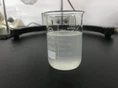
APG1214, also known as APG 1214/lauryl Glucoside/CAS:110615-47-9, is an alkyl polyglucoside (APG). APGs are a class of non - ionic surfactants derived from renewable raw materials, typically fatty alcohols and glucose. APG1214 is specifically composed of a mixture of alkyl chains with carbon numbers 12 and 14.
One of the key advantages of APG1214 is its excellent environmental profile. It is biodegradable, non - toxic, and has low skin irritation potential. These properties make it an attractive alternative to traditional surfactants in many applications. Additionally, APG1214 exhibits good surface activity, including high foamability, emulsifying ability, and wetting power.
Potential Applications in the Rubber Industry
Emulsification and Dispersion
In the rubber industry, emulsification and dispersion are crucial processes. Rubber compounds often contain various ingredients such as fillers, pigments, and additives that need to be uniformly dispersed in the rubber matrix. APG1214 can act as an emulsifier and dispersant due to its surface - active properties.
When used as an emulsifier, APG1214 can help in the formation of stable emulsions of rubber latexes. For example, in the production of synthetic rubber latexes, APG1214 can reduce the interfacial tension between the rubber phase and the aqueous phase, preventing the coalescence of latex particles. This leads to more stable latexes with better storage and processing characteristics.
As a dispersant, APG1214 can improve the dispersion of fillers like carbon black, silica, and other additives in the rubber compound. By reducing the agglomeration of filler particles, APG1214 ensures a more homogeneous distribution of these materials in the rubber matrix. This, in turn, can enhance the mechanical properties of the rubber product, such as tensile strength, tear resistance, and abrasion resistance.
Wetting and Penetration
Another important aspect in rubber processing is wetting and penetration. When rubber is being processed, it is often necessary to wet the surface of the rubber or penetrate certain additives into the rubber structure. APG1214 has good wetting power, which means it can quickly spread on the surface of the rubber and improve the contact between the rubber and other substances.
For instance, in the case of rubber coatings or adhesives, APG1214 can be used to improve the wetting of the substrate by the rubber - based formulation. This results in better adhesion between the rubber coating or adhesive and the substrate, enhancing the overall performance of the end - product.
Foaming Agent
In some rubber applications, such as the production of sponge rubber or foamed rubber products, a foaming agent is required. APG1214 has high foamability, which makes it a potential candidate for use as a foaming agent in the rubber industry.
When APG1214 is added to a rubber compound and subjected to appropriate processing conditions, it can generate a large number of stable bubbles. These bubbles are then trapped in the rubber matrix during the curing process, resulting in a foamed rubber product with desired properties such as low density, good insulation, and shock - absorbing capabilities.
Advantages of Using APG1214 in the Rubber Industry
Environmental Friendliness
As mentioned earlier, APG1214 is biodegradable and non - toxic. In an era where environmental regulations are becoming increasingly strict, using APG1214 in the rubber industry can help companies meet environmental requirements. It also allows for the production of more sustainable rubber products, which is an important selling point in the market.
Compatibility
APG1214 is generally compatible with a wide range of rubber types, including natural rubber, synthetic rubbers such as styrene - butadiene rubber (SBR), and nitrile rubber (NBR). This compatibility means that it can be easily incorporated into existing rubber processing formulations without causing significant changes to the processing conditions or the properties of the final rubber product.
Cost - Effectiveness
Although the initial cost of APG1214 may be slightly higher than some traditional surfactants, its effectiveness in small dosages can offset the cost. By improving the dispersion and processing of rubber compounds, APG1214 can lead to better - quality rubber products with fewer defects. This can result in reduced production costs in the long run due to lower rejection rates and improved productivity.
Case Studies and Research Findings
There have been several studies and practical applications that demonstrate the potential of APG1214 in the rubber industry. For example, in a research project on the dispersion of silica in natural rubber, the addition of APG1214 was found to significantly improve the dispersion of silica particles. This led to an increase in the tensile strength and tear resistance of the natural rubber vulcanizates.
In another case, a rubber coating manufacturer used APG1214 as a wetting agent in their rubber - based coating formulation. The use of APG1214 improved the wetting of the substrate, resulting in a more uniform and durable coating with better adhesion.
Conclusion
In conclusion, APG1214 has significant potential for use in the rubber industry. Its properties as an emulsifier, dispersant, wetting agent, and foaming agent make it a versatile additive in rubber processing. The environmental friendliness, compatibility, and cost - effectiveness of APG1214 further enhance its appeal in this industry.
If you are in the rubber industry and are looking for innovative and sustainable solutions, I encourage you to consider using APG1214 in your rubber formulations. Our company is a reliable supplier of high - quality APG1214, including Lauryl Glucoside 1200UP and APG 1214/lauryl Glucoside/CAS:110615-47-9. We are committed to providing excellent products and services to meet your specific needs. If you are interested in learning more about APG1214 or would like to discuss potential applications in your rubber processes, please feel free to contact us for further information and to start a procurement negotiation.
References
- "Surfactants in the Rubber Industry: Principles and Applications" - Journal of Rubber Science and Technology
- "Environmental - Friendly Surfactants for Rubber Processing" - Proceedings of the International Rubber Conference
- Research reports on the use of alkyl polyglucosides in rubber compounds from various research institutions.