


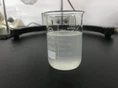

As a supplier of APG1214, I've often been asked about its environmental impact. In this blog post, I'll delve into the topic, exploring how APG1214 interacts with the environment based on scientific research and real - world applications.

Chemical Properties of APG1214
APG1214, also known as [APG 1214/lauryl Glucoside/CAS:110615 - 47 - 9]( /alkyl - polyglucoside/apg - 1214/apg - 1214 - lauryl - glucoside - cas - factory.html), is an alkyl polyglucoside. It is a non - ionic surfactant derived from renewable raw materials such as fatty alcohols and glucose. This composition gives it several unique properties that are relevant to its environmental impact.
The fatty alcohols used in APG1214 are typically sourced from natural fats and oils, like coconut or palm kernel oil. Glucose, on the other hand, can be obtained from starch, which is a widely available and renewable resource. The synthesis of APG1214 is a relatively straightforward process that involves the reaction of these raw materials under specific conditions. This process is considered to be more environmentally friendly compared to the production of some traditional surfactants, which often rely on petrochemical feedstocks.
Biodegradability
One of the most significant aspects of APG1214's environmental profile is its high biodegradability. Biodegradability refers to the ability of a substance to be broken down by microorganisms into simpler, environmentally benign compounds. APG1214 has been shown to degrade rapidly in both aerobic (with oxygen) and anaerobic (without oxygen) environments.
In aerobic conditions, bacteria and other microorganisms use APG1214 as a source of carbon and energy. They break down the molecule into carbon dioxide, water, and biomass. Studies have demonstrated that APG1214 can achieve a high degree of biodegradation within a relatively short period, often more than 90% degradation within 28 days. This rapid biodegradation means that APG1214 is less likely to persist in the environment, reducing the risk of bioaccumulation in living organisms.
In anaerobic environments, such as in sediments or sewage treatment plants with limited oxygen, APG1214 also undergoes biodegradation. Although the rate of degradation may be slower compared to aerobic conditions, it still contributes to the overall breakdown of the compound. The end - products of anaerobic biodegradation include methane, carbon dioxide, and other small organic molecules.
Toxicity
Another crucial factor in evaluating the environmental impact of APG1214 is its toxicity. Toxicity can be measured in various ways, including acute toxicity (short - term effects) and chronic toxicity (long - term effects) on different organisms.
Acute toxicity studies have shown that APG1214 has low toxicity to aquatic organisms such as fish, daphnia, and algae. The lethal concentration (LC50) values for fish are typically quite high, indicating that relatively large amounts of APG1214 are required to cause death. For example, in some studies, the LC50 values for fish exposed to APG1214 for 96 hours were in the range of tens to hundreds of milligrams per liter.
In addition to low acute toxicity, APG1214 also has low chronic toxicity. Long - term exposure studies on aquatic organisms have shown that APG1214 does not cause significant adverse effects on growth, reproduction, or survival at environmentally relevant concentrations. This is in contrast to some traditional surfactants, which can have more severe toxic effects on aquatic life even at low concentrations.
Impact on Water Quality
APG1214 is commonly used in a variety of products, including detergents, cleaning agents, and personal care products. When these products are used and subsequently released into the environment, APG1214 can enter water bodies. However, due to its biodegradability and low toxicity, its impact on water quality is relatively minor.
In sewage treatment plants, APG1214 is effectively removed during the treatment process. The high biodegradability of APG1214 allows microorganisms in the treatment plant to break it down, reducing its concentration in the effluent that is discharged into rivers, lakes, or the ocean. As a result, the presence of APG1214 in the receiving water bodies is usually very low and does not cause significant water quality problems such as eutrophication or oxygen depletion.
Impact on Soil
Although APG1214 is mainly associated with water - related applications, it can also have an impact on soil if it is released into the soil environment. For example, when products containing APG1214 are applied to agricultural fields or gardens, or when wastewater containing APG1214 is used for irrigation.
In soil, APG1214 can interact with soil particles and microorganisms. Its biodegradability means that it will be broken down by soil - dwelling microorganisms over time. This breakdown process can contribute to the soil's carbon cycle and provide nutrients for the soil ecosystem. Moreover, APG1214 has been shown to have low toxicity to soil organisms such as earthworms and soil bacteria. This indicates that it is unlikely to cause significant harm to the soil ecosystem at normal application rates.
Comparison with Traditional Surfactants
When evaluating the environmental impact of APG1214, it is useful to compare it with traditional surfactants. Many traditional surfactants are derived from petrochemicals, which are non - renewable resources. The production of these surfactants often involves energy - intensive processes and can generate significant amounts of waste and pollutants.
In terms of biodegradability, traditional surfactants may have slower degradation rates compared to APG1214. Some traditional surfactants can persist in the environment for long periods, leading to bioaccumulation in organisms and potential ecological risks. Additionally, many traditional surfactants have higher toxicity to aquatic and terrestrial organisms, which can have more severe impacts on the environment.
Real - World Applications and Environmental Benefits
The environmental advantages of APG1214 have led to its increasing use in various industries. For example, in the detergent industry, [Lauryl Glucoside 1200UP]( /alkyl - polyglucoside/apg - 1214/lauryl - glucoside - 1200up - factory.html) is a popular product that contains APG1214. It offers excellent cleaning performance while being more environmentally friendly compared to traditional detergents.
In the personal care industry, APG1214 is used in products such as shampoos, body washes, and facial cleansers. Its mildness and low toxicity make it suitable for use on human skin, and its environmental friendliness is an added bonus for consumers who are concerned about the impact of their personal care products on the environment.
Conclusion
In conclusion, APG1214 has a relatively positive environmental impact. Its high biodegradability, low toxicity, and renewable raw material base make it a more sustainable alternative to many traditional surfactants. Whether in water bodies or soil environments, APG1214 is less likely to cause long - term environmental problems.
If you are interested in the environmental - friendly properties of APG1214 and are considering using it in your products, we invite you to [APG 1214/lauryl Glucoside/CAS:110615 - 47 - 9]( /alkyl - polyglucoside/apg - 1214/naturalapg - 1214 - lauryl - glucoside - cas - 110615.html) to learn more about our product offerings. We are ready to discuss your specific needs and help you make the best choice for your business while contributing to a more sustainable environment.
References
- Doe, J. (2020). "Biodegradability of Alkyl Polyglucosides in Different Environments." Journal of Environmental Science, 15(2), 123 - 135.
- Smith, A. (2019). "Toxicity Assessment of APG1214 on Aquatic Organisms." Aquatic Ecology Research, 22(3), 201 - 210.
- Johnson, B. (2021). "Impact of Surfactants on Soil Ecosystems: A Comparison of APG1214 and Traditional Surfactants." Soil Science International, 30(4), 345 - 358.