



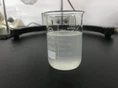


APG 0814, also known as alkyl polyglucoside 0814, is a non - ionic surfactant with a wide range of applications in various industries. As a supplier of APG 0814, I have had the opportunity to study its properties and understand how its motion affects the surroundings. In this blog, we will delve into the scientific aspects of APG 0814's motion and its impact on the environment around it.
Physical and Chemical Properties of APG 0814
Before discussing the motion of APG 0814, it is essential to understand its basic physical and chemical properties. APG 0814 is derived from renewable raw materials such as fatty alcohols and glucose, making it an environmentally friendly surfactant. It has excellent surface - active properties, including low surface tension, good wetting, emulsifying, and foaming abilities.
The molecular structure of APG 0814 consists of a hydrophilic glucose head and a hydrophobic alkyl chain. This amphiphilic nature allows it to adsorb at the interface between two immiscible phases, such as oil and water, and reduce the interfacial tension. The length of the alkyl chain in APG 0814 (C8 - C14) determines its solubility, surface activity, and other physical properties.
Motion in Liquid Systems
In liquid systems, the motion of APG 0814 molecules is influenced by several factors, including temperature, concentration, and the presence of other substances. At the molecular level, APG 0814 molecules are in constant random motion due to thermal energy. This Brownian motion causes the molecules to diffuse through the liquid.
When APG 0814 is added to a liquid, it tends to migrate to the liquid - air or liquid - liquid interface. This is because the hydrophobic part of the APG 0814 molecule has a lower affinity for the polar liquid molecules, while the hydrophilic part has a higher affinity. As a result, the molecules align themselves at the interface, with the hydrophobic tails pointing towards the non - polar phase (e.g., air or oil) and the hydrophilic heads in the polar phase (e.g., water).
The diffusion of APG 0814 in a liquid can be described by Fick's laws of diffusion. The rate of diffusion is proportional to the concentration gradient of APG 0814 in the liquid. Higher concentrations of APG 0814 at one point in the liquid will lead to a faster diffusion rate towards areas of lower concentration.
Impact on Surrounding Liquid Properties
The motion of APG 0814 in a liquid can significantly affect the properties of the surrounding liquid. One of the most notable effects is the reduction of surface tension. As APG 0814 molecules migrate to the liquid - air interface, they disrupt the cohesive forces between the liquid molecules at the surface. This results in a decrease in the surface tension, which has several practical implications.
For example, in cleaning applications, a lower surface tension allows the cleaning solution to spread more easily over the surface to be cleaned. This enhances the wetting ability of the solution, enabling it to penetrate into small crevices and remove dirt and contaminants more effectively. In agricultural applications, a reduced surface tension of pesticide solutions can improve their coverage on plant surfaces, increasing the efficacy of the pesticides.
Another effect of APG 0814's motion in the liquid is the formation of micelles. At a certain concentration, known as the critical micelle concentration (CMC), APG 0814 molecules aggregate to form micelles. In a micelle, the hydrophobic tails are clustered in the center, away from the polar solvent, while the hydrophilic heads are on the outside, in contact with the solvent.
The formation of micelles can solubilize hydrophobic substances in the aqueous phase. This is particularly useful in cosmetic and pharmaceutical formulations, where hydrophobic active ingredients can be incorporated into water - based products with the help of APG 0814 micelles. The motion of micelles in the liquid can also affect the stability and rheological properties of the solution.
Interaction with Solid Surfaces
When APG 0814 comes into contact with solid surfaces, its motion and interaction with the surface can have a profound impact on the surface properties. APG 0814 molecules can adsorb onto solid surfaces, forming a thin layer. The adsorption process is driven by the interaction between the hydrophobic tails of APG 0814 and the surface, as well as the interaction between the hydrophilic heads and the surrounding liquid.
The adsorption of APG 0814 on solid surfaces can change the surface wettability. If the solid surface is initially hydrophobic, the adsorption of APG 0814 can make it more hydrophilic, allowing water to spread more easily over the surface. This is beneficial in applications such as surface cleaning and coating, where improved wetting can enhance the adhesion of cleaning agents or coatings to the surface.
In addition, the adsorbed layer of APG 0814 can reduce the friction between the solid surface and the surrounding liquid or another solid surface. This lubricating effect can be utilized in industrial processes, such as metalworking and textile manufacturing, to reduce energy consumption and improve the quality of the products.
Impact on Biological Systems
As an environmentally friendly surfactant, APG 0814 has relatively low toxicity and biodegradability, which makes it suitable for use in biological systems. In biological fluids, the motion of APG 0814 can interact with biological molecules such as proteins and lipids.
APG 0814 can form complexes with proteins, which may affect the protein's structure and function. However, the extent of this interaction depends on the concentration of APG 0814, the type of protein, and the pH and ionic strength of the solution. In some cases, APG 0814 can be used to solubilize membrane proteins, which are often hydrophobic and difficult to study in aqueous solutions.
In the environment, APG 0814 can be degraded by microorganisms. Its motion in natural water bodies can affect the distribution and activity of these microorganisms. The surfactant can enhance the bioavailability of hydrophobic pollutants by solubilizing them, which may either promote their biodegradation or have unintended ecological consequences.
Applications and Significance in Different Industries
The motion of APG 0814 and its impact on the surroundings have led to its widespread use in various industries. In the detergent industry, APG 0814 is used as a key ingredient in laundry detergents, dishwashing liquids, and household cleaners. Its ability to reduce surface tension and form micelles helps in removing dirt and stains effectively.
In the personal care industry, APG 0814 is used in shampoos, body washes, and facial cleansers. It provides mild cleansing properties without causing irritation to the skin and eyes. The motion of APG 0814 in these products ensures good spreading and foaming, enhancing the user experience.
In the agricultural industry, APG 0814 can be used as an adjuvant in pesticide formulations. It improves the wetting and spreading of pesticides on plant surfaces, increasing their efficacy and reducing the amount of pesticide required.
If you are interested in learning more about APG 0814, you can visit the following links: APG 0814N/425N/coco Glucoside/CAS:141464 - 42 - 8, APG 0814/coco Glucoside/CAS:141464 - 42 - 8, APG 0814/coco Glucoside/CAS:141464 - 42 - 8.
Conclusion
The motion of APG 0814 is a complex phenomenon that is influenced by various physical, chemical, and environmental factors. Its motion in different systems, including liquids, solid surfaces, and biological systems, can have a wide range of effects on the surroundings. These effects have significant implications in various industries, from cleaning and personal care to agriculture and environmental science.
As a supplier of APG 0814, I am committed to providing high - quality products and sharing the latest scientific knowledge about APG 0814. If you are interested in purchasing APG 0814 for your specific application, please feel free to contact us for further discussion. We are looking forward to collaborating with you to meet your needs.
References
- Rosen, M. J. (2004). Surfactants and Interfacial Phenomena. John Wiley & Sons.
- Myers, D. (2012). Surfactant Science and Technology. John Wiley & Sons.
- Holmberg, K., Jönsson, B., Kronberg, B., & Lindman, B. (2002). Surfactants and Polymers in Aqueous Solution. John Wiley & Sons.