


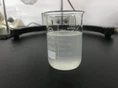

Lauryl glucose, also known as lauryl glucoside, is a key ingredient in the realm of surfactants, finding widespread applications in various industries due to its excellent performance and environmental - friendliness. As a reliable lauryl glucose supplier, I am well - versed in the reactions of lauryl glucose and the by - products that result from these reactions. In this blog, we will delve into the details of the by - products of lauryl glucose reactions.
1. Synthesis of Lauryl Glucose and Initial By - products
Lauryl glucose is typically synthesized through the reaction of glucose with lauryl alcohol. This reaction is often carried out in the presence of an acid catalyst. The main reaction is a glycosylation process where the hydroxyl group of glucose reacts with the hydroxyl group of lauryl alcohol, resulting in the formation of an ether - like linkage.
During this synthesis, one of the common by - products is water. As the reaction progresses, the combination of the hydroxyl groups from glucose and lauryl alcohol releases a molecule of water. Chemically, this can be represented as follows:
[C_{6}H_{12}O_{6}+C_{12}H_{26}O\rightarrow C_{18}H_{36}O_{6}+H_{2}O]
where (C_{6}H_{12}O_{6}) is glucose, (C_{12}H_{26}O) is lauryl alcohol, (C_{18}H_{36}O_{6}) is lauryl glucose, and (H_{2}O) is the water by - product.
Another potential by - product during the synthesis is the formation of oligomers or polymers of lauryl glucose. In some cases, the lauryl glucose molecules can react further with each other or with unreacted glucose or lauryl alcohol, leading to the formation of larger molecules. These oligomers may have different properties compared to the single lauryl glucose molecule and can affect the overall performance of the final product.

2. Reactions of Lauryl Glucose in Detergent and Cleaning Applications
Lauryl glucose is widely used in detergent and cleaning products due to its good surfactant properties. When it is used in these applications, it undergoes various reactions with the substances in the cleaning system.
Oxidation Reactions
In the presence of oxidizing agents, lauryl glucose can be oxidized. For example, in a bleach - containing cleaning solution, the lauryl glucose may react with the oxidizing species such as hypochlorite ions ((OCl^-)). The oxidation reaction can lead to the formation of carbonyl - containing compounds. If the oxidation occurs at the carbon atom adjacent to the glycosidic linkage, it may result in the formation of aldehydes or ketones. These oxidation by - products can have an impact on the odor and stability of the cleaning product.
Hydrolysis Reactions
In an aqueous environment, especially under acidic or basic conditions, lauryl glucose can undergo hydrolysis. Hydrolysis is the reaction of a compound with water, where the glycosidic bond in lauryl glucose is broken. Under acidic conditions, the reaction is catalyzed by (H^+) ions, and under basic conditions, it is catalyzed by (OH^-) ions. The hydrolysis of lauryl glucose results in the formation of glucose and lauryl alcohol. This can reduce the surfactant activity of the lauryl glucose in the cleaning solution and may also affect the overall cleaning performance.
3. Reactions of Lauryl Glucose in Cosmetic Applications
Lauryl glucose is also a popular ingredient in cosmetic products such as shampoos, body washes, and facial cleansers. In these applications, it may react with other components in the formulation.
Reaction with Preservatives
Many cosmetic products contain preservatives to prevent microbial growth. Lauryl glucose may react with some types of preservatives. For example, if a product contains formaldehyde - releasing preservatives, lauryl glucose may react with the formaldehyde released. The reaction can lead to the formation of adducts, which may change the properties of both the lauryl glucose and the preservative. This can potentially affect the efficacy of the preservative and the overall stability of the cosmetic product.
Interaction with Other Surfactants
In cosmetic formulations, lauryl glucose is often used in combination with other surfactants. These surfactants can interact with lauryl glucose through various physical and chemical processes. For example, they may form mixed micelles. During the formation of mixed micelles, there may be some chemical interactions between the molecules, which can lead to the formation of small amounts of by - products. These by - products may be difficult to detect but can have an impact on the sensory properties of the cosmetic product, such as its foam quality and feel on the skin.
4. Environmental Reactions and By - products
When lauryl glucose is released into the environment, it can undergo a series of reactions.
Biodegradation
One of the significant advantages of lauryl glucose is its high biodegradability. In the environment, microorganisms can break down lauryl glucose through enzymatic reactions. During biodegradation, lauryl glucose is gradually degraded into smaller molecules. The initial by - products of biodegradation include short - chain fatty acids and simple sugars. As the biodegradation progresses further, these intermediate by - products are eventually converted into carbon dioxide and water. This is an important aspect of the environmental - friendliness of lauryl glucose, as it does not accumulate in the environment.
Reaction with Natural Organic Matter
In natural water bodies, lauryl glucose can react with natural organic matter. Natural organic matter, such as humic substances, can form complexes with lauryl glucose. These complexes may have different properties compared to the original lauryl glucose and can affect the transport and fate of lauryl glucose in the environment.
5. Our Lauryl Glucose Products
As a lauryl glucose supplier, we offer high - quality lauryl glucose products, such as [Lauryl Glucoside 1200UP](/alkyl - polyglucoside/apg - 1214/lauryl - glucoside - 1200up - factory.html). This product has excellent surfactant properties and is suitable for a wide range of applications, including detergents, cosmetics, and industrial cleaning. You can also learn more about [Lauryl Glucoside 1200UP](/alkyl - polyglucoside/apg - 1214/lauryl - glucoside - 1200up.html) on our website. Additionally, our [APG 1214/lauryl Glucoside/CAS:110615 - 47 - 9](/alkyl - polyglucoside/apg - 1214/apg - 1214 - lauryl - glucoside - cas - factory.html) product is well - recognized in the market for its high purity and consistent quality.
If you are interested in our lauryl glucose products and want to know more about the by - products of lauryl glucose reactions in specific applications, or if you are considering a purchase, please feel free to contact us for a detailed discussion. We are committed to providing you with the best products and services.
References
- "Surfactants and Interfacial Phenomena" by Milton J. Rosen.
- "Cosmetic Science and Technology" edited by Mitchell A. Schlossman.
- "Environmental Chemistry of Surfactants" by Richard A. Williams.