




As a supplier of APG215, I often get asked about the technical details of this product, and one of the most common questions is, "What is the boiling point of APG215?" In this blog post, I'll delve into this question, providing a comprehensive answer based on scientific knowledge and real - world data.
Understanding APG215
APG215, also known as Caprylyl/Decyl Glucoside APG215 CS UP link: Caprylyl/Decyl Glucoside APG215 CS UP, belongs to the family of alkyl polyglucosides (APGs). APGs are non - ionic surfactants that are derived from renewable raw materials such as fatty alcohols and glucose. They are known for their excellent surface - active properties, mildness, and biodegradability, which make them popular in a wide range of applications, including personal care products, household cleaners, and industrial detergents.
The Boiling Point of APG215
Determining the exact boiling point of APG215 is not straightforward. APG215 is a mixture of different compounds, mainly caprylyl and decyl glucosides. Mixtures like APG215 do not have a single, well - defined boiling point like pure substances. Instead, they have a boiling range.
The boiling behavior of APG215 is influenced by several factors:
- Composition: As mentioned, APG215 is a blend of different alkyl glucosides. Each component has its own boiling characteristics, and the overall boiling range of the mixture is a result of these individual components. For example, caprylyl glucoside and decyl glucoside have different molecular weights and intermolecular forces, which affect their boiling points.
- Impurities and additives: Even small amounts of impurities or additives in the APG215 product can impact its boiling behavior. These substances can either lower or raise the boiling range, depending on their nature and concentration.
- Pressure: The boiling point of any substance is affected by pressure. At lower pressures, substances boil at lower temperatures, and at higher pressures, they boil at higher temperatures. Standard boiling points are usually reported at atmospheric pressure (1 atm or 101.325 kPa).
Although there is no widely - reported specific boiling range for APG215 in the public domain, we can make some educated estimates based on the properties of similar alkyl polyglucosides. For example, link: APG 0810H60/220/decyl Glucoside/CAS:68515 - 73 - 1 and link: Caprylyl/Decyl Glucoside APG 8170 are related APG products. These APGs typically have relatively high boiling points due to the presence of long - chain alkyl groups and the hydrogen - bonding capabilities of the glucoside moiety.
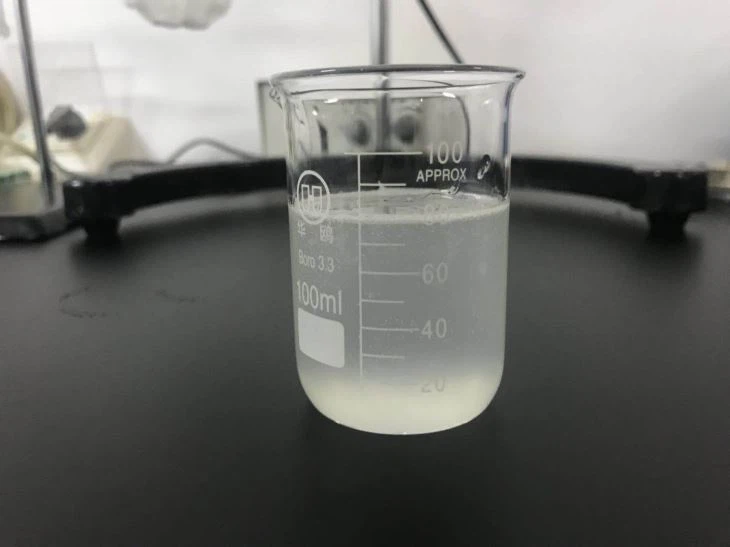
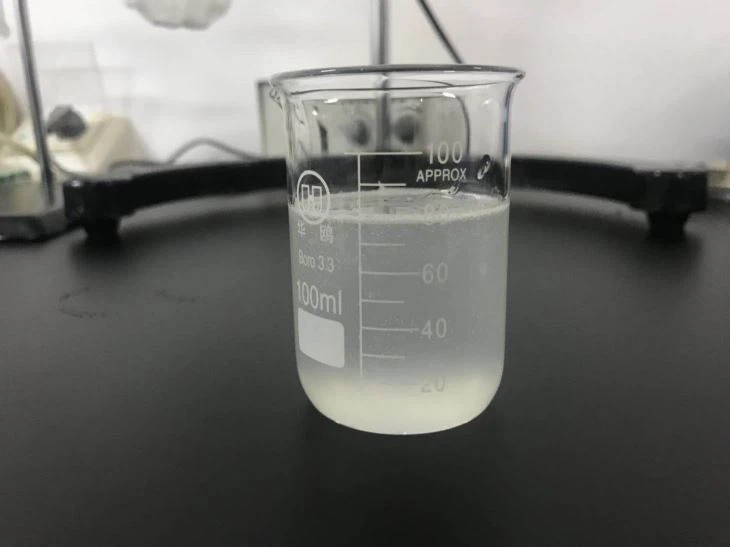
In general, alkyl polyglucosides tend to have boiling points well above 100°C. This is because the intermolecular forces in these compounds, such as van der Waals forces and hydrogen bonds, are relatively strong, requiring a significant amount of energy to break them and convert the liquid phase to the vapor phase.
Experimental Approaches to Determine the Boiling Range
If you need to accurately determine the boiling range of APG215 for a specific application, there are several experimental methods that can be employed:
- Simple distillation: This is a basic method where the APG215 sample is heated in a distillation apparatus, and the temperature at which the vapor starts to condense and collect is recorded. The process continues until most of the sample has been distilled, and a range of boiling temperatures is obtained.
- Differential scanning calorimetry (DSC): DSC measures the heat flow associated with physical and chemical changes in a sample as a function of temperature. By analyzing the DSC curve of APG215, it is possible to identify the temperature range where the phase transition from liquid to vapor occurs.
- Gas chromatography - mass spectrometry (GC - MS): GC - MS can be used to separate and identify the individual components of APG215. By knowing the boiling points of the pure components, it is possible to estimate the overall boiling range of the mixture.
Significance of the Boiling Point in Applications
The boiling point of APG215 is relevant in various applications:
- Manufacturing processes: In the production of products that contain APG215, such as detergents or personal care items, the boiling point information is crucial for determining the appropriate processing temperatures. If the processing temperature is too high, it may cause degradation of APG215 or other components in the formulation.
- Storage and transportation: Knowledge of the boiling point helps in determining the safe storage and transportation conditions. APG215 should be stored and transported at temperatures well below its boiling range to prevent vaporization and potential loss of product.
- Product performance: The boiling point can also influence the performance of products containing APG215. For example, in some cleaning applications, the volatility (related to the boiling point) of the surfactant can affect its ability to remain on the surface being cleaned and perform its cleaning function effectively.
Why Choose Our APG215
As a supplier of APG215, we offer a high - quality product that meets strict quality standards. Our APG215 is carefully formulated to ensure consistent composition and performance. We have a team of experts who can provide detailed technical support and answer any questions you may have about the product, including its boiling behavior.
We understand that different customers have different requirements, and we are committed to providing customized solutions. Whether you are in the personal care, household cleaning, or industrial detergent industry, our APG215 can be a valuable addition to your product formulations.
Contact Us for Procurement
If you are interested in purchasing APG215 or would like to discuss your specific needs, we encourage you to contact us. Our sales team is ready to assist you with product information, samples, and pricing. We believe in building long - term partnerships with our customers, and we are confident that our APG215 will meet your expectations.
References
- "Alkyl Polyglucosides: Properties, Applications, and Environmental Impact" - A comprehensive review on APGs, covering their chemical properties, including boiling behavior.
- "Surfactant Science and Technology" - A textbook that provides in - depth knowledge about surfactants, including alkyl polyglucosides and their physical properties.
- Research papers on the analysis of alkyl polyglucosides using techniques such as DSC and GC - MS, which can be used to determine their boiling ranges.