





Hey there! As a supplier of APG215, I often get asked about the molecular weight of this compound. So, I thought I'd write a blog post to share some insights on this topic.
First things first, let's understand what APG215 is. APG stands for Alkyl Polyglucoside, which is a type of non - ionic surfactant. These surfactants are known for their excellent performance in various applications, such as personal care products, household cleaners, and industrial detergents. They are also biodegradable and have low toxicity, making them an environmentally friendly choice.
Now, getting to the main question: What is the molecular weight of APG215? Well, the molecular weight of APGs can vary depending on their specific composition. APGs are basically a mixture of alkyl chains with different lengths attached to a glucose molecule. The "215" in APG215 is likely a product - specific code that might give some hints about its alkyl chain distribution, but unfortunately, there isn't a one - size - fits - all answer for the molecular weight.
The general formula for alkyl polyglucosides is $C_{n}H_{2n + 1}O(C_{6}H_{10}O_{5})_{x}H$, where $n$ represents the number of carbon atoms in the alkyl chain and $x$ is the degree of polymerization of the glucose units. To calculate the molecular weight precisely, we need to know the average values of $n$ and $x$ for APG215.
In most cases, the alkyl chain length in APGs can range from 8 to 16 carbon atoms, and the degree of polymerization of glucose units is usually between 1 and 2. For a rough estimate, let's consider a simple case. The molecular weight of glucose $(C_{6}H_{12}O_{6})$ is approximately 180 g/mol. If we assume an average alkyl chain with 10 carbon atoms $(C_{10}H_{22})$, which has a molecular weight of about 142 g/mol, and a degree of polymerization of glucose units $x = 1$, the approximate molecular weight of a simple alkyl polyglucoside would be around $142+180 - 18$ (subtracting 18 for the water molecule removed during the formation of the glycosidic bond), which is about 304 g/mol.
However, APG215 is likely a more complex mixture, and its molecular weight could be different. To get the exact molecular weight, we would need to conduct detailed analytical techniques such as mass spectrometry or gel permeation chromatography. These methods can provide accurate information about the molecular weight distribution of the compound.
One of the great things about APGs is their wide range of products available in the market. For example, you might be interested in Caprylyl/Decyl Glucoside APG 8170. This product has its own unique properties and molecular weight characteristics. It's commonly used in many personal care formulations because of its mildness and good foaming properties.
Another option is APG 0810/decyl Glucoside/CAS:68515 - 73 - 1. This product is also popular in the industry and has a specific molecular weight distribution based on its composition. And then there's APG 0810H60/220/decyl Glucoside/CAS:68515 - 73 - 1, which offers different performance features depending on its molecular structure.

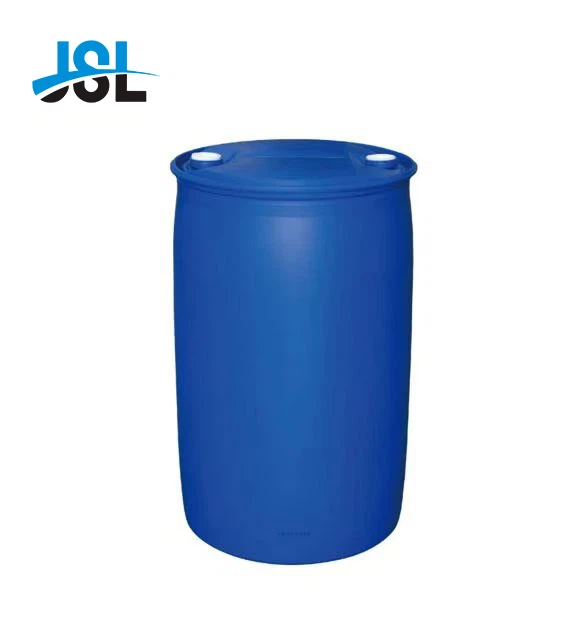
As a supplier of APG215, I can tell you that our product has been carefully formulated to meet the high - quality standards required by various industries. We ensure that the production process is well - controlled to maintain the consistency of the product's properties, including its molecular weight distribution.
If you're in the market for APG215 or any other APG products, we'd love to have a chat with you. Whether you're a manufacturer of personal care items, a producer of household cleaners, or involved in any other industry that uses surfactants, our APG215 can be a great addition to your product line. We can provide you with samples so that you can test the product in your specific applications and see how it performs.
Don't hesitate to reach out if you have any questions about the molecular weight of APG215 or if you want to discuss potential applications. We're here to help you find the best surfactant solution for your needs.
In conclusion, while the exact molecular weight of APG215 might be a bit tricky to pin down without detailed analysis, we know that it belongs to the family of alkyl polyglucosides, which are versatile and eco - friendly surfactants. And as a supplier, we're committed to providing you with high - quality products and excellent service. So, if you're interested in learning more or starting a procurement process, just get in touch!
References:
- "Surfactants and Interfacial Phenomena" by Milton J. Rosen and Drew T. Olson
- Journal articles on alkyl polyglucosides in industrial and academic research databases