





What is the refractive index of APG215?
As a supplier of APG215, I often receive inquiries from customers about various properties of this product, and one question that comes up quite frequently is about its refractive index. In this blog post, I will delve into what the refractive index of APG215 is, why it matters, and how it relates to the overall quality and performance of this substance.

Understanding Refractive Index
Before we specifically discuss the refractive index of APG215, let's first understand what refractive index means. The refractive index of a material is a measure of how much the speed of light is reduced when it passes through that material compared to its speed in a vacuum. It is a fundamental optical property that describes how light bends or refracts as it moves from one medium to another. Mathematically, the refractive index (n) is defined as the ratio of the speed of light in a vacuum (c) to the speed of light in the medium (v): n = c/v.
The refractive index is an important characteristic for several reasons. In industrial applications, it can be used to identify a pure substance, determine its purity, and monitor the progress of chemical reactions. For substances like APG215, which are used in various industries such as cosmetics, detergents, and pharmaceuticals, the refractive index can provide valuable information about its chemical composition and physical state.
The Refractive Index of APG215
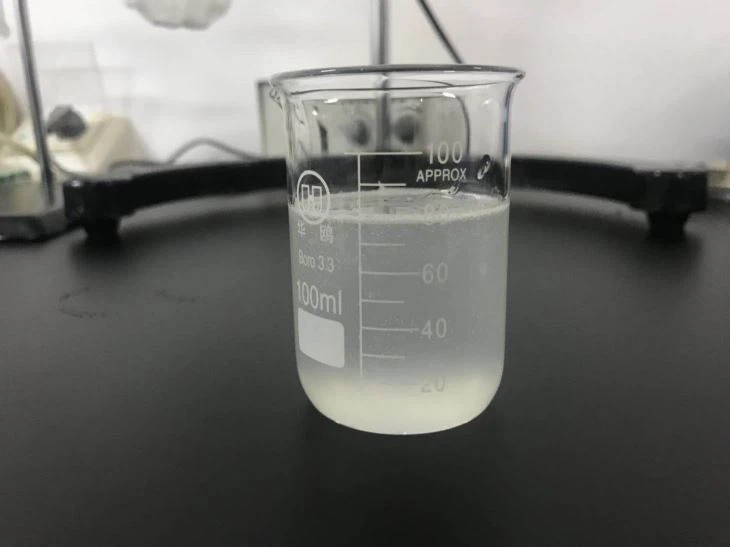
APG215, or Alkyl Polyglucoside 215, is a non - ionic surfactant derived from renewable raw materials such as fatty alcohols and glucose. It is known for its excellent surface - active properties, biodegradability, and low toxicity. The refractive index of APG215 typically falls within a specific range. Under standard conditions (usually at 20°C), the refractive index of APG215 is approximately 1.430 - 1.440.
This value can vary slightly depending on factors such as the exact composition of the APG215, its concentration in a solution, and the temperature at which the measurement is taken. For example, as the temperature increases, the refractive index of APG215 generally decreases because the density of the substance decreases with increasing temperature, and the speed of light in the medium increases accordingly.
Significance of the Refractive Index in APG215 Applications
Cosmetics Industry
In the cosmetics industry, APG215 is widely used as a mild surfactant in products such as shampoos, body washes, and facial cleansers. The refractive index of APG215 can affect the appearance and stability of these products. A consistent refractive index ensures that the product has a uniform appearance, which is important for consumer acceptance. It also plays a role in the product's rheological properties, influencing how the product flows and spreads on the skin or hair.
Detergent Industry
In the detergent industry, APG215 is used in laundry detergents, dishwashing liquids, and industrial cleaners. The refractive index can be an indicator of the product's concentration and purity. A correct refractive index value can ensure that the detergent has the right cleaning power and foaming properties. For example, if the refractive index is too low, it may indicate that the APG215 concentration is lower than expected, which could result in reduced cleaning performance.
Pharmaceutical Industry
In the pharmaceutical industry, APG215 can be used as an excipient in drug formulations. The refractive index is crucial for ensuring the quality and stability of these formulations. It can help in determining the compatibility of APG215 with other ingredients in the formulation and can also be used to monitor the physical state of the drug product over time.
Comparison with Other APG Products
To better understand the refractive index of APG215, it can be helpful to compare it with other APG products. For example, APG 0810H60/220/decyl Glucoside/CAS:68515 - 73 - 1 and APG 0810H70DK/decyl Glucoside/CAS:68515 - 73 - 1/225DK have their own characteristic refractive index values. These products, which are also alkyl polyglucosides, may have different refractive indices due to differences in their alkyl chain lengths and degrees of polymerization.
Caprylyl/Decyl Glucoside APG 8170, as described in Caprylyl/Decyl Glucoside APG 8170, also has a unique refractive index profile. By comparing the refractive indices of different APG products, customers can choose the most suitable product for their specific applications based on the desired optical and physical properties.
Measuring the Refractive Index of APG215
The refractive index of APG215 is typically measured using a refractometer. A refractometer is an optical instrument that measures the angle of refraction of light as it passes through a sample. To obtain an accurate measurement, it is important to follow the correct procedures. The sample should be homogeneous and free of any impurities or air bubbles. The temperature of the sample should be carefully controlled, as temperature can have a significant impact on the refractive index.
Quality Control and Assurance
As a supplier of APG215, we place great emphasis on quality control and assurance. We regularly measure the refractive index of our APG215 products to ensure that they meet the specified standards. By maintaining a consistent refractive index, we can guarantee the quality and performance of our products, which is essential for our customers' satisfaction.
In addition to refractive index measurements, we also conduct other quality tests such as purity analysis, pH measurement, and surface tension measurement. These comprehensive quality control measures help us to provide high - quality APG215 products to our customers.
Conclusion
The refractive index of APG215 is an important optical property that provides valuable information about its chemical composition, purity, and physical state. It has significant implications in various industries such as cosmetics, detergents, and pharmaceuticals. As a supplier, we are committed to providing high - quality APG215 products with consistent refractive index values.
If you are interested in purchasing APG215 for your specific application, we invite you to contact us for further discussion. We have a team of experts who can provide you with detailed technical information and help you choose the most suitable product for your needs.
References
- "Surfactants in Cosmetics" by Mitchell A. Schlossman
- "Industrial Detergency: Theory and Practice" by Peter J. Dyson
- "Pharmaceutical Excipients Handbook" by Raymond C. Rowe, Paul J. Sheskey, and Marian E. Quinn