


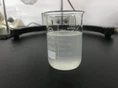

As a supplier of APG1214, I've received numerous inquiries regarding its potential use in cleaning applications. In this blog post, I'll delve into the properties of APG1214 and explore whether it can indeed be effectively used for cleaning.
Understanding APG1214
APG1214, also known as APG 1214/lauryl Glucoside/CAS:110615-47-9, is an alkyl polyglucoside (APG). APGs are a class of non - ionic surfactants derived from renewable raw materials, typically glucose from starch and fatty alcohols from coconut or palm kernel oil. This makes APG1214 an environmentally friendly alternative to many traditional synthetic surfactants.
The chemical structure of APG1214 gives it unique physical and chemical properties. It has a relatively low critical micelle concentration (CMC), which means that it can form micelles in solution at relatively low concentrations. Micelles are important in cleaning because they can encapsulate dirt, oil, and other contaminants, allowing them to be easily removed from surfaces.
Cleaning Mechanisms
Emulsification
One of the key cleaning mechanisms of APG1214 is emulsification. When APG1214 is added to a mixture of oil and water, it can reduce the surface tension between the two immiscible phases. This allows the oil to be dispersed into small droplets in the water phase, forming an emulsion. In cleaning applications, this means that APG1214 can break down and remove oily stains from various surfaces, such as countertops, floors, and clothing.
Wetting
APG1214 also has excellent wetting properties. It can quickly spread over a surface and penetrate into small crevices and pores. This is crucial for cleaning because it allows the cleaning solution to come into contact with dirt and contaminants that may be hidden or deeply embedded. For example, in floor cleaning, APG1214 - based solutions can wet the floor surface thoroughly, loosening dirt and making it easier to mop up.
Solubilization
In addition to emulsification and wetting, APG1214 can solubilize certain substances. It can interact with polar and non - polar molecules, helping to dissolve and remove a wide range of contaminants. This makes it effective in cleaning applications where different types of stains need to be removed, such as in household cleaning products that are used to clean both greasy and non - greasy stains.
Advantages of Using APG1214 in Cleaning
Environmental Friendliness
As mentioned earlier, APG1214 is derived from renewable resources. It is biodegradable, which means that it can be broken down by natural processes in the environment. This is in contrast to many traditional synthetic surfactants, which can persist in the environment and cause pollution. Using APG1214 in cleaning products helps to reduce the environmental impact of cleaning activities.
Mildness
APG1214 is a mild surfactant. It has low skin irritation potential, making it suitable for use in cleaning products that come into contact with human skin, such as hand - dishwashing liquids and mild household cleaners. This is especially important for consumers who have sensitive skin.
Compatibility
APG1214 is compatible with a wide range of other ingredients commonly used in cleaning formulations. It can be used in combination with other surfactants, builders, enzymes, and fragrances. This allows formulators to create cleaning products with customized properties and performance. For example, it can be combined with anionic surfactants to enhance the cleaning power of a laundry detergent.
Applications in Cleaning
Household Cleaning
In household cleaning, APG1214 can be used in a variety of products. For example, it can be used in all - purpose cleaners to clean countertops, tables, and other hard surfaces. Its emulsifying and wetting properties make it effective in removing dirt, grease, and stains. It can also be used in floor cleaners to provide a streak - free shine while being gentle on the floor surface.
In dishwashing detergents, APG1214's mildness makes it suitable for hand - dishwashing. It can effectively remove food residues and grease from dishes without causing skin irritation. Additionally, it can be used in laundry detergents to enhance the cleaning performance and to make the detergent more environmentally friendly.
Industrial Cleaning
In industrial settings, APG1214 can be used in metal cleaning, textile cleaning, and automotive cleaning. In metal cleaning, it can remove oil, grease, and metal chips from metal surfaces. Its biodegradability is an advantage in industrial applications where large amounts of cleaning agents are used, as it reduces the environmental impact of waste disposal.
In textile cleaning, APG1214 can be used to remove dirt and stains from fabrics without causing damage to the fibers. It can also be used in automotive cleaning products, such as car washes and engine degreasers, to effectively clean and protect automotive surfaces.
Personal Care Cleaning
APG1214 is also used in personal care cleaning products, such as shampoos, body washes, and facial cleansers. Its mildness and good foaming properties make it a popular choice for these products. It can clean the hair and skin effectively while maintaining the natural moisture balance.
Considerations
While APG1214 has many advantages for cleaning applications, there are also some considerations. One is its cost. Compared to some traditional synthetic surfactants, APG1214 can be more expensive. However, as the demand for environmentally friendly and mild cleaning products increases, the cost is becoming more competitive.
Another consideration is its performance in hard water. Like many non - ionic surfactants, APG1214 may experience reduced performance in hard water due to the presence of calcium and magnesium ions. However, this can be mitigated by using water softeners or by formulating the cleaning product with builders that can sequester these ions.
Conclusion
In conclusion, APG1214 can indeed be used for cleaning. Its unique properties, such as emulsification, wetting, and solubilization, make it effective in removing a wide range of dirt and stains. Its environmental friendliness, mildness, and compatibility with other ingredients make it a valuable ingredient in a variety of cleaning products, from household cleaners to industrial and personal care cleaning products.

If you are interested in purchasing APG1214 for your cleaning product formulations, we offer high - quality APG 1214/lauryl Glucoside/CAS:110615-47-9 and Lauryl Glucoside 1200UP. We are committed to providing excellent products and services. Please feel free to contact us for more information and to discuss your specific requirements.
References
- Rosen, M. J., & Kunjappu, J. T. (2012). Surfactants and Interfacial Phenomena. John Wiley & Sons.
- Holmberg, K., Jönsson, B., Kronberg, B., & Lindman, B. (2003). Surfactants and Polymers in Aqueous Solution. John Wiley & Sons.