




Hey there! As a decyl glucose supplier, I often get asked about how to test the quality of decyl glucose. Well, in this blog, I'm gonna share with you the methods I use to ensure the top - notch quality of the decyl glucose we supply.
First off, let's talk about what decyl glucose is. Decyl glucose is a type of alkyl polyglucoside (APG), which is a mild and biodegradable surfactant. It's widely used in personal care products, household cleaners, and industrial applications because of its excellent performance and environmental - friendly nature.
Appearance and Odor
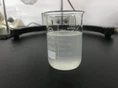
The first step in testing decyl glucose is to check its appearance and odor. A high - quality decyl glucose should be a clear to slightly hazy liquid. Any signs of turbidity, precipitation, or discoloration could indicate impurities or degradation. I usually take a sample in a clear glass container and observe it under good lighting. If it looks murky or has an unusual color, like being too yellow or brown, it's a red flag.
The odor is also crucial. Pure decyl glucose has a very mild, almost odorless smell. A strong, pungent, or off - odor might suggest the presence of contaminants or the breakdown of the product. Sometimes, the off - odor can come from improper storage conditions, like exposure to high temperatures or sunlight. So, whenever I receive a new batch of raw materials or before shipping out our products, I always give it a quick sniff.
Chemical Composition Analysis
One of the most important aspects of quality testing is analyzing the chemical composition of decyl glucose. There are several techniques I use for this.
High - Performance Liquid Chromatography (HPLC)
HPLC is a powerful tool for separating and quantifying the components in decyl glucose. It can help me determine the purity of the product, as well as identify any impurities. By comparing the chromatogram of the sample with a standard, I can tell if the decyl glucose meets the required specifications. For example, if there are peaks corresponding to other compounds that shouldn't be there, it means the product is contaminated. I run samples through the HPLC machine, and based on the retention times and peak areas, I can get a detailed analysis of the chemical makeup.
Gas Chromatography - Mass Spectrometry (GC - MS)
GC - MS is another great method. It can provide information about the volatile components in decyl glucose. This is especially useful for detecting any residual solvents or low - molecular - weight impurities. The mass spectrometer can identify the compounds based on their mass - to - charge ratios, giving me a comprehensive view of what's in the product. I've found that GC - MS is very sensitive and can detect even trace amounts of contaminants.
Physical Properties Testing
The physical properties of decyl glucose can also tell a lot about its quality.
Density
Density is an important physical property. The density of decyl glucose should fall within a certain range. I use a density meter to measure the density of the sample at a specific temperature. If the density is too high or too low, it could mean that the product has an incorrect composition or that there are impurities present. For example, if there are heavy contaminants, the density will be higher than normal.
Viscosity
Viscosity affects how the decyl glucose behaves in different applications. A proper viscosity ensures that it can be easily mixed with other ingredients and provides the desired performance. I use a viscometer to measure the viscosity of the decyl glucose. If the viscosity is too high, it might be difficult to handle and incorporate into formulations. On the other hand, if it's too low, it may not have the necessary thickening or stabilizing properties.
Performance Testing
Finally, I always test the performance of decyl glucose in real - world applications.
Foaming Ability
Decyl glucose is known for its good foaming properties. I conduct foaming tests by agitating a solution of decyl glucose in water and measuring the height and stability of the foam. A high - quality decyl glucose should produce a rich, stable foam that lasts for a reasonable amount of time. If the foam collapses quickly or is very thin, it may not be suitable for applications where foaming is important, like in shampoos or dishwashing liquids.
Emulsifying Ability
In many formulations, decyl glucose is used as an emulsifier. I test its emulsifying ability by creating an oil - in - water emulsion and observing its stability over time. A good decyl glucose should be able to keep the oil droplets dispersed in the water phase without separating. If the emulsion breaks down quickly, it means the decyl glucose doesn't have good emulsifying properties.
Our Product Range
We offer a variety of decyl glucose products to meet different customer needs. You can check out our APG 0810H65/decyl Glucoside/CAS:68515 - 73 - 1, APG 0810H70BG/decyl Glucoside/CAS:68515 - 73 - 1/BG - 10, and Caprylyl/Decyl Glucoside APG215 CS UP. These products have been thoroughly tested using the methods I've mentioned above to ensure their high quality.
Conclusion
Testing the quality of decyl glucose is a multi - step process that involves checking its appearance, analyzing its chemical composition, testing its physical properties, and evaluating its performance in real - world applications. By using these comprehensive testing methods, I can ensure that the decyl glucose we supply meets the highest quality standards.
If you're interested in our decyl glucose products or have any questions about quality testing, feel free to reach out for a procurement discussion. We're always happy to help you find the right product for your needs.
References
- "Surfactants in Consumer Products" by K. Kosswig and R. Stache
- "Handbook of Surfactants" by M. R. Porter