


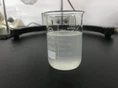


Hey there! As a decyl glucoside supplier, I'm super stoked to spill the beans on how this amazing surfactant works. Decyl glucoside has been making waves in the industry, and for good reason. It's got some pretty cool properties that make it a top choice for a wide range of applications.
What's a Surfactant Anyway?
Before we dive into how decyl glucoside works, let's quickly chat about what a surfactant is. Surfactants are substances that lower the surface tension between two liquids or between a liquid and a solid. In simpler terms, they help things mix better and spread out more easily. You can find surfactants in all sorts of products, from your everyday shampoo and dish soap to industrial cleaners.
The Science Behind Decyl Glucoside
Decyl glucoside is a type of non - ionic surfactant. It's made from natural raw materials, usually glucose (from corn or wheat) and fatty alcohols derived from coconut or palm kernel oil. This natural origin makes it a popular choice for those looking for more eco - friendly and sustainable products.
The structure of decyl glucoside is key to understanding how it works. It has a hydrophilic (water - loving) head and a hydrophobic (water - hating) tail. The hydrophilic head is the glucose part, and the hydrophobic tail is the decyl chain. When decyl glucoside is added to a solution, it arranges itself at the interface between the water and the other substances.
How It Works in Cleaning Products
Let's start with cleaning products, which are one of the most common applications for decyl glucoside. When you're washing your dishes or doing your laundry, you want to get rid of dirt, grease, and grime. Decyl glucoside comes to the rescue here.
The hydrophobic tails of decyl glucoside molecules attach to the dirt and grease particles. These particles are usually non - polar, just like the hydrophobic tails. Meanwhile, the hydrophilic heads remain in the water. As you agitate the solution (like when you scrub your dishes or run your washing machine), the decyl glucoside molecules surround the dirt and grease, forming tiny droplets called micelles.
The micelles are then suspended in the water, allowing the dirt and grease to be easily rinsed away. This is why you see the dirty water running off when you rinse your dishes or clothes. Decyl glucoside makes it possible for water, which normally wouldn't mix well with oil and grease, to carry them away effectively.
In Personal Care Products
Decyl glucoside is also a star in personal care products like shampoos, body washes, and facial cleansers. Our skin and hair are covered with natural oils and sometimes dirt and sweat. Just like in cleaning products, decyl glucoside helps to remove these impurities.
But it's not just about cleaning. Decyl glucoside is very gentle on the skin and hair. Unlike some harsher surfactants, it doesn't strip away the natural oils that keep our skin and hair healthy. It has a low irritation potential, which makes it suitable for people with sensitive skin.
In shampoos, for example, it can help to clean the hair without making it dry and brittle. It also provides a nice, rich lather, which gives that satisfying cleansing experience. You can check out our APG 0810H60/220/decyl Glucoside/CAS:68515 - 73 - 1 product, which is great for formulating high - quality personal care products.
Emulsification
Another important function of decyl glucoside is emulsification. Emulsions are mixtures of two immiscible liquids, like oil and water. In many cosmetic products, you want to combine oil - based ingredients (like essential oils or shea butter) with water - based ingredients.
Decyl glucoside acts as an emulsifier by reducing the surface tension between the oil and water phases. It forms a protective layer around the oil droplets, preventing them from coalescing and separating. This results in a stable emulsion, which is crucial for the quality and shelf - life of products like lotions and creams. Our Caprylyl/Decyl Glucoside APG215 CS UP is an excellent option for creating stable emulsions in personal care formulations.
Solubilization
Solubilization is yet another cool thing that decyl glucoside can do. Some substances are insoluble in water, but you might want to incorporate them into a water - based solution. Decyl glucoside can help with that.
It can dissolve these insoluble substances within the micelles it forms. For example, in some fragrance formulations, essential oils that are not water - soluble can be solubilized using decyl glucoside. This allows the essential oils to be evenly distributed in a water - based product, like a scented body spray. Our APG 0810H70BG/decyl Glucoside/CAS:68515 - 73 - 1/BG - 10 is well - suited for solubilization applications.
Advantages of Decyl Glucoside
There are several reasons why decyl glucoside is so popular. First, as I mentioned earlier, it's derived from natural sources. This makes it biodegradable and more environmentally friendly compared to some synthetic surfactants.
Second, it has excellent foaming properties. The lather it produces is rich and creamy, which gives consumers a positive sensory experience. Whether you're using it in a shampoo or a dish soap, that nice lather makes you feel like you're getting a good clean.
Third, its low irritation potential is a huge plus. It's less likely to cause skin or eye irritation, making it suitable for a wide range of users, including children and those with sensitive skin.
Why Choose Our Decyl Glucoside?
As a supplier, we take pride in offering high - quality decyl glucoside products. We ensure that our manufacturing processes are up to the highest standards, so you can trust the quality of our decyl glucoside.
Our products are versatile and can be used in a variety of formulations. Whether you're a small - scale producer of artisanal soaps or a large - scale manufacturer of industrial cleaners, we've got the right decyl glucoside product for you.
Let's Do Business!
If you're interested in using decyl glucoside in your products, I'd love to hear from you. We can discuss your specific needs, whether it's the quantity, the grade of decyl glucoside, or any custom formulations you might have in mind. Contact us to start a conversation about how we can work together to meet your surfactant needs.
References
- Rosen, Milton J., and Drew T. Kunjappu. Surfactants and Interfacial Phenomena. John Wiley & Sons, 2012.
- McClements, D. Julian. Food Emulsions: Principles, Practice, and Techniques. CRC Press, 2005.