


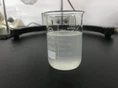

Hey there! I'm a supplier of APG 1214, and today I wanna chat about how to pick the right grade of APG 1214 for different applications. APG 1214, also known as Lauryl Glucoside 1200UP, is a popular non - ionic surfactant. It's made from renewable raw materials like fatty alcohols and glucose, which makes it eco - friendly and biodegradable.
Understanding APG 1214 Basics
Before we dig into choosing the right grade, let's quickly go over what APG 1214 is all about. APG 1214 has a wide range of properties that make it super useful. It has good foaming ability, which means it can create a nice, stable foam. This is great for products where you want a foamy texture, like shampoos or dishwashing liquids. It's also very mild on the skin, so it won't cause irritation even for people with sensitive skin.
The chemical formula of APG 1214/lauryl Glucoside/CAS:110615 - 47 - 9 shows its unique structure. The "1214" in APG 1214 refers to the carbon chain length of the fatty alcohol part. APG 1214 typically has a mixture of C12 and C14 carbon chains, and the ratio of these chains can vary in different grades. This ratio affects the physical and chemical properties of the APG 1214, and that's why choosing the right grade is so important.
Applications in Personal Care
Let's start with personal care products. When it comes to shampoos, you want an APG 1214 grade that has excellent foaming and conditioning properties. A grade with a higher proportion of C12 chains is usually a good choice. C12 chains tend to have better foaming ability, so your shampoo will lather up nicely. And because APG 1214 is mild, it won't strip your hair of its natural oils.
For body washes, the same principle applies. You want a grade that gives a rich, creamy foam and is gentle on the skin. APG 1214/lauryl Glucoside/CAS:110615 - 47 - 9 with a balanced C12 - C14 ratio can work well here. It will clean your skin effectively without causing dryness or irritation.
In facial cleansers, especially for sensitive skin types, a grade with a high purity and a lower concentration of impurities is essential. Some grades of APG 1214 are specifically refined to be extra mild, making them perfect for gentle facial cleansing.
Applications in Household Cleaning
Now, let's move on to household cleaning products. Dishwashing liquids need an APG 1214 grade that can cut through grease and oil easily. A grade with a slightly higher proportion of C14 chains can be more effective for this. C14 chains have better oil - solubilizing properties, so they can break down tough grease stains on your dishes.
For laundry detergents, you want a grade that can work well in different water hardness conditions. APG 1214 is known for its good performance in both soft and hard water. A grade with a balanced C12 - C14 ratio can be a great choice as it provides a good balance between foaming and cleaning power.
Floor cleaners also benefit from APG 1214. You need a grade that can clean the floor effectively and leave it streak - free. A grade with good wetting and spreading properties will help the cleaner cover the floor evenly and remove dirt and grime.
Applications in Industrial Cleaning
In industrial cleaning, the requirements are often more demanding. For example, in metal cleaning, you need an APG 1214 grade that can remove heavy grease, oil, and dirt from metal surfaces. A grade with a high C14 content and strong emulsifying properties is usually preferred. It can break down the stubborn contaminants on the metal and keep the metal surface clean.
In textile cleaning, APG 1214 can be used as a scouring agent. A grade that can penetrate the fabric fibers easily and remove impurities like waxes, oils, and dirt is needed. A balanced grade with good wetting and dispersing properties will ensure thorough cleaning of the textiles.
Factors to Consider When Choosing
When you're choosing the right grade of APG 1214, there are a few factors you should keep in mind. First, the intended application is the most important. As we've seen, different applications have different requirements, so you need to match the grade to the specific use.
Second, consider the environmental conditions. If the product will be used in cold water, you need a grade that has good solubility and performance at low temperatures. On the other hand, if it's for high - temperature applications, the grade should be stable at elevated temperatures.
The cost is also a factor. Some grades of APG 1214 may be more expensive due to their higher purity or specific properties. You need to balance the cost with the performance requirements of your product.
Quality Assurance
As a supplier, I always make sure that the APG 1214 grades I offer meet high - quality standards. We test our products rigorously to ensure that they have the right chemical composition, physical properties, and performance. Whether it's for personal care, household cleaning, or industrial applications, you can trust that our APG 1214 grades will deliver the results you need.
Conclusion
Choosing the right grade of APG 1214 for different applications is crucial for the success of your products. By understanding the properties of APG 1214 and how the different grades vary, you can make an informed decision. Whether you're in the personal care, household cleaning, or industrial cleaning business, there's a perfect grade of APG 1214 out there for you.
If you're interested in purchasing APG 1214 for your specific application, don't hesitate to reach out. I'm here to help you find the right grade and answer any questions you might have. Let's have a chat and see how we can work together to meet your needs.
References
- "Surfactants in Personal Care Products" by various authors, a collection of research on surfactant applications in personal care.
- "Handbook of Industrial Cleaning" which provides in - depth knowledge about different cleaning agents and their uses in industrial settings.
- "Detergent Science and Technology" that covers the principles and applications of detergents, including APG 1214.