



Hey there! As a supplier dealing with products related to the numbers 141464 42 8, I've often pondered what kind of math equations these figures could be part of. Well, let's dive right in and explore this interesting topic.
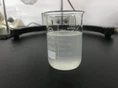
First off, those numbers - 141464 42 8 - might seem random at first glance. But in the world of chemistry, 141464 - 42 - 8 is actually the CAS (Chemical Abstracts Service) number for certain chemical compounds, like APG 0814N/425N/coco Glucoside/CAS:141464-42-8 and APG 0814/coco Glucoside/CAS:141464-42-8. CAS numbers are unique identifiers for chemical substances, and they're used in all sorts of calculations in the chemical industry.
In chemical reactions, math equations are crucial. For example, when we're looking at the synthesis of Decyl Glucoside APG 2000UP, we need to use stoichiometry. Stoichiometry is all about the quantitative relationships between reactants and products in a chemical reaction. The equation might look something like this:
Let's say we have a reaction where we're combining substances A and B to form our Decyl Glucoside APG 2000UP. If the balanced chemical equation is (aA + bB\rightarrow cC), where C is our product (Decyl Glucoside APG 2000UP), and we know the molar masses of A, B, and C.
We can use the following relationships. The number of moles (n=\frac{m}{M}), where (m) is the mass and (M) is the molar mass. If we know the mass of reactant A we're using, we can calculate the number of moles of A. Then, using the stoichiometric coefficients (a), (b), and (c) from the balanced equation, we can figure out how many moles of B are needed and how many moles of C will be produced.
Suppose we have 141.464 grams of reactant A (and just for the sake of this example, let's say its molar mass is 141.464 g/mol, so we have 1 mole of A). If the stoichiometric coefficient (a = 1), (b = 2), and (c = 1) in our reaction equation, we know that we need 2 moles of reactant B to react completely with 1 mole of A. And we'll produce 1 mole of our product C.
In the real - world production of these chemical compounds, we also need to consider things like yield. The percent yield equation is (\text{Percent Yield}=\frac{\text{Actual Yield}}{\text{Theoretical Yield}}\times100%). The theoretical yield is the amount of product we calculate we should get based on the stoichiometry of the reaction, and the actual yield is what we actually obtain in the lab or in the production process.
Now, let's talk about quality control. We use math equations to analyze the purity of our products. For example, if we're testing the purity of [APG 0814/coco Glucoside/CAS:141464-42-8], we might use techniques like chromatography. The area under the peaks in a chromatogram can be related to the amount of the compound present.
Let's say we have a chromatogram with two peaks, one for our desired compound and one for an impurity. If the area of the peak for our compound is (A_1) and the area of the peak for the impurity is (A_2), the purity (P) of our compound can be calculated using the equation (P=\frac{A_1}{A_1 + A_2}\times100%).
In the business side of things, we also use math equations. If we want to calculate the cost - effectiveness of producing a certain amount of [Decyl Glucoside APG 2000UP], we consider the cost of raw materials, labor, and equipment. Let (C_{rm}) be the cost of raw materials, (C_{l}) be the cost of labor, and (C_{e}) be the cost of equipment per unit of production. The total cost (C) of producing (n) units of the product is (C=n(C_{rm}+C_{l}+C_{e})).
We also look at profit equations. If the selling price per unit of our product is (S), and the total cost of producing (n) units is (C), the profit (Pr) is given by (Pr = nS - C).
In terms of inventory management, we use equations to optimize our stock levels. The Economic Order Quantity (EOQ) formula is (EOQ=\sqrt{\frac{2DS}{H}}), where (D) is the annual demand for the product, (S) is the cost per order, and (H) is the holding cost per unit per year. This helps us figure out how much of [APG 0814N/425N/coco Glucoside/CAS:141464-42-8] or [Decyl Glucoside APG 2000UP] we should order at a time to minimize costs.
So, as you can see, the numbers 141464 42 8 are not just random digits. They're part of a whole web of math equations that are essential in the production, quality control, and business operations related to the chemical compounds they represent.
If you're in the market for high - quality [APG 0814N/425N/coco Glucoside/CAS:141464-42-8], [Decyl Glucoside APG 2000UP], or [APG 0814/coco Glucoside/CAS:141464-42-8], I'd love to talk to you about your procurement needs. Whether you're looking for small - scale samples or large - scale production quantities, we've got you covered. Reach out to us for a detailed discussion and let's work together to meet your requirements.
References
- Brown, T. L., LeMay, H. E., Bursten, B. E., Murphy, C. J., Woodward, P. M., & Stoltzfus, M. W. (2017). Chemistry: The Central Science. Pearson.
- Koltun, W. (2019). Stoichiometry for Dummies. Wiley.