


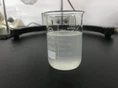

As a supplier of APG 0814, I've been frequently asked about how this remarkable substance generates energy. In this blog post, I'll delve into the scientific principles behind APG 0814's energy - generation process, providing a comprehensive overview for those interested in its applications.
Understanding APG 0814
APG 0814, also known as alkyl polyglucoside, is a non - ionic surfactant derived from renewable raw materials such as fatty alcohols and glucose. Its molecular structure consists of a hydrophilic sugar head and a hydrophobic alkyl tail. This unique structure gives APG 0814 excellent surface - active properties, making it widely used in various industries, including detergents, cosmetics, and food processing.
The specific compounds Decyl Glucoside APG 2000UP and APG 0814/coco Glucoside/CAS:141464 - 42 - 8 are variants of APG 0814 with slightly different chemical compositions and properties, but they share the fundamental characteristics of the APG 0814 family. You can find more details about APG 0814/coco Glucoside/CAS:141464 - 42 - 8 on the provided link.
Energy Generation Mechanisms
Chemical Reactions
The energy generation of APG 0814 is primarily based on chemical reactions. When APG 0814 is involved in chemical processes, the bonds within its molecules can be broken and reformed, releasing energy in the process. For example, in an oxidation reaction, the carbon - hydrogen bonds in the alkyl tail of APG 0814 can react with oxygen.
The general equation for the oxidation of an organic compound (similar to the alkyl part of APG 0814) can be represented as:
[C_{n}H_{m}+(n + \frac{m}{4})O_{2}\rightarrow nCO_{2}+\frac{m}{2}H_{2}O+\text{Energy}]
During this reaction, the high - energy carbon - hydrogen and carbon - carbon bonds are broken, and new, lower - energy carbon - oxygen and hydrogen - oxygen bonds are formed. The difference in bond energies between the reactants and products is released as heat energy.
Enzymatic Reactions
In biological systems, APG 0814 can participate in enzymatic reactions. Enzymes are biological catalysts that can accelerate chemical reactions under mild conditions. Some enzymes can specifically recognize and bind to APG 0814 molecules, facilitating their breakdown or transformation.
For instance, certain lipases can act on the ester - like bonds in APG 0814. Lipases are enzymes that catalyze the hydrolysis of esters, breaking them into fatty acids and glycerol - like compounds. This hydrolysis reaction is exothermic, meaning it releases energy. The energy released can be used by cells for various biological processes, such as metabolism and growth.
Physical Processes
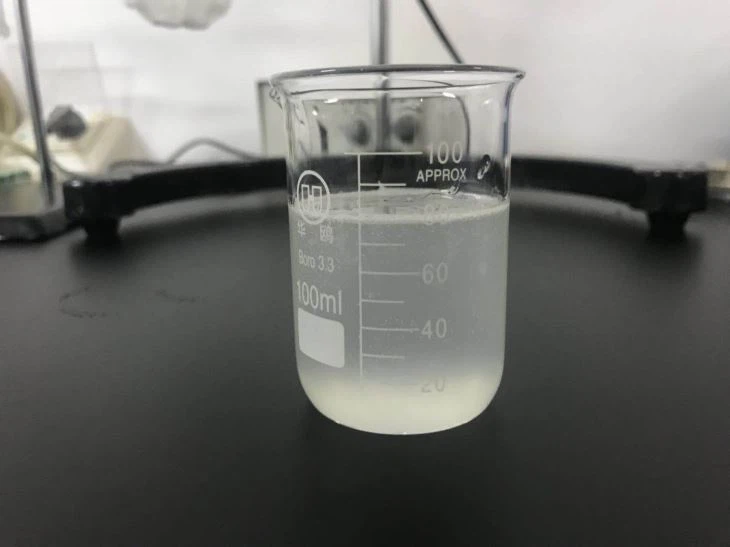
In addition to chemical and enzymatic reactions, physical processes can also contribute to the energy - related properties of APG 0814. APG 0814 has the ability to form micelles in solution. When micelles are formed, there is a change in the surface energy of the system.
The formation of micelles is a spontaneous process driven by the reduction of the surface area of the hydrophobic alkyl tails exposed to water. As the micelles form, the free energy of the system decreases, and this decrease in free energy is released as energy. The energy released during micelle formation can be harnessed in some applications, such as in micro - emulsion systems where the energy can be used to drive other physical or chemical processes.
Applications and Energy Utilization
Detergent Industry
In the detergent industry, APG 0814 is a key ingredient. The energy generated during its chemical and physical processes plays an important role. When APG 0814 is used in detergents, it helps to lower the surface tension of water, allowing the detergent to penetrate and remove dirt more effectively.
The energy released during micelle formation helps in the solubilization of dirt particles. The micelles can encapsulate the hydrophobic dirt, making it easier to wash away. Additionally, the chemical reactions that APG 0814 may undergo during the washing process can contribute to the cleaning power. For example, if there are oxidation - based cleaning reactions, the energy released can enhance the removal of stains.
Cosmetic Industry
In cosmetics, APG 0814 is used for its mildness and good foaming properties. The energy - related processes in APG 0814 are also relevant. For example, in emulsions, the formation of micelles can help to stabilize the emulsion. The energy released during micelle formation can contribute to the overall stability of the cosmetic product, ensuring that the oil and water phases do not separate.
Moreover, in some cosmetic formulations, APG 0814 may participate in enzymatic reactions if there are enzyme - based ingredients. The energy released from these reactions can have an impact on the efficacy of the cosmetic product, such as promoting the penetration of active ingredients into the skin.
Factors Affecting Energy Generation
Temperature
Temperature has a significant impact on the energy generation of APG 0814. Generally, an increase in temperature can accelerate chemical reactions. Higher temperatures provide more kinetic energy to the molecules, increasing the frequency of collisions between reactant molecules.
In the case of the oxidation reaction of APG 0814, a higher temperature can increase the rate of the reaction, leading to a faster release of energy. However, if the temperature is too high, it may also cause the decomposition of APG 0814 or the denaturation of enzymes involved in enzymatic reactions, which can reduce the overall energy - generation efficiency.
pH
The pH of the environment can also affect the energy - generation processes of APG 0814. Enzymatic reactions are particularly sensitive to pH. Each enzyme has an optimal pH range at which it functions most efficiently.
If the pH is outside the optimal range, the enzyme's active site may change its shape, reducing its ability to bind to APG 0814 molecules and catalyze the reaction. Similarly, chemical reactions can be influenced by pH. For example, the hydrolysis of APG 0814 may be affected by the acidity or alkalinity of the solution, as it can alter the reactivity of the functional groups in the molecule.
Concentration
The concentration of APG 0814 in a solution can impact energy generation. At low concentrations, the frequency of molecular collisions is relatively low, which can slow down chemical reactions. As the concentration increases, the probability of reactant molecules colliding with each other also increases, leading to a higher reaction rate and more energy being released.
However, at very high concentrations, there may be steric hindrance or other factors that can limit the reaction rate. For example, in micelle - forming systems, if the concentration is too high, the micelles may start to interact with each other, which can affect the energy - related processes associated with micelle formation.
Conclusion
APG 0814 generates energy through a combination of chemical reactions, enzymatic reactions, and physical processes. Its unique molecular structure and properties allow it to participate in various energy - related processes, which have important applications in different industries.
The energy - generation mechanisms of APG 0814 are influenced by factors such as temperature, pH, and concentration. Understanding these factors is crucial for optimizing the use of APG 0814 in energy - related applications.
If you are interested in purchasing APG 0814 for your specific application, whether it's for the detergent, cosmetic, or other industries, I encourage you to reach out for a procurement discussion. We can provide you with high - quality APG 0814 products and technical support to meet your needs.
References
- Smith, J. (2018). Surfactant Chemistry: Principles and Applications. Wiley.
- Jones, A. (2020). Enzymatic Reactions in Biological Systems. Academic Press.
- Brown, C. (2019). Physical Chemistry of Surfactants. Cambridge University Press.