


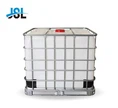
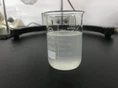


As a supplier of APG220, I've encountered various common problems from our customers. In this post, I'll share some effective troubleshooting methods to help you address these issues promptly and ensure the smooth operation of APG220.
1. Foaming Issues
Excessive Foaming
One of the most frequent complaints is excessive foaming. This can occur during the mixing or processing of APG220 in different applications, such as in cleaning products.

Possible Causes
- High Concentration: Using APG220 at a concentration higher than recommended can lead to excessive foaming. APG220 is a powerful surfactant, and if the dosage is not well - controlled, it will generate more foam than necessary.
- Hard Water: The presence of high levels of calcium and magnesium ions in hard water can react with APG220, changing its surface - active properties and causing more foam to form.
Solutions
- Adjust Concentration: Refer to the product manual for the recommended concentration range. If you find the foaming is too much, try to reduce the amount of APG220 used in the formulation. For example, if you are using it in a dish - washing liquid, start by reducing the concentration by 1 - 2% and observe the foaming behavior.
- Water Softening: If hard water is the culprit, you can use a water softener to remove the calcium and magnesium ions. Another option is to add a chelating agent to the formulation. For instance, adding a small amount of ethylenediaminetetraacetic acid (EDTA) can help to sequester the metal ions and reduce the foaming caused by hard water.
Insufficient Foaming
On the contrary, insufficient foaming can also be a problem, especially in applications where foam is an important characteristic, like in some personal care products.
Possible Causes
- Low Concentration: Using APG220 at a concentration that is too low may not generate enough foam.
- Compatibility Issues: Some other ingredients in the formulation may be incompatible with APG220, inhibiting its foaming ability. For example, certain salts or polymers can reduce the surface - active properties of APG220.
Solutions
- Increase Concentration: Gradually increase the concentration of APG220 within the recommended range to see if the foaming improves. However, be careful not to over - do it, as this may lead to other problems such as excessive foaming.
- Check Compatibility: Review the formulation and identify any ingredients that may be causing the compatibility issues. You can try to replace or adjust the amount of these ingredients. For example, if a particular salt is causing the problem, you can reduce its concentration or use a different type of salt.
2. Emulsification Problems
Poor Emulsion Stability
In applications where APG220 is used as an emulsifier, poor emulsion stability can be a significant issue. An unstable emulsion may separate into its oil and water phases over time, which is unacceptable in products like creams and lotions.
Possible Causes
- Incorrect HLB Value: The hydrophilic - lipophilic balance (HLB) value of APG220 needs to match the requirements of the emulsion system. If the HLB value is not appropriate for the oil and water phases in the emulsion, the emulsion will be unstable.
- Insufficient Mixing: Inadequate mixing during the emulsification process can result in uneven distribution of APG220 and other ingredients, leading to poor emulsion stability.
Solutions
- Select the Right APG220 Grade: Different grades of APG220 have different HLB values. Make sure to choose the grade that is most suitable for your specific emulsion system. You can refer to the product documentation or consult with our technical support team for advice on the appropriate grade.
- Improve Mixing Conditions: Ensure that the mixing process is thorough and uniform. Use high - shear mixers or homogenizers to break down the oil droplets into smaller sizes and disperse them evenly in the water phase. Increase the mixing time if necessary, but be careful not to over - mix, as this can also cause problems.
Difficulty in Emulsion Formation
Sometimes, it can be difficult to form an emulsion in the first place when using APG220.
Possible Causes
- High Viscosity of Oil Phase: If the oil phase has a very high viscosity, it can be challenging for APG220 to penetrate and disperse the oil droplets in the water phase.
- Incorrect Temperature: The temperature during the emulsification process can affect the performance of APG220. If the temperature is too low, the surfactant may not be able to function effectively, and if it is too high, it may cause some ingredients to degrade.
Solutions
- Adjust Oil Phase Viscosity: You can try to reduce the viscosity of the oil phase by heating it or using a thinner oil. For example, if you are using a thick, waxy oil, you can mix it with a more fluid oil to lower the overall viscosity.
- Optimize Temperature: Find the optimal temperature range for the emulsification process. Generally, a temperature between 40 - 60°C is suitable for most APG220 - based emulsions. Monitor the temperature closely during the process and make adjustments as needed.
3. Chemical Compatibility Issues
APG220 may be incompatible with some chemicals, which can lead to various problems such as precipitation, discoloration, or loss of functionality.
Possible Causes
- Acid - Base Reactions: APG220 has a certain pH range within which it is stable. If it is mixed with a chemical that has a very different pH, an acid - base reaction may occur, resulting in the degradation of APG220 or the formation of insoluble precipitates.
- Oxidation - Reduction Reactions: Some oxidizing or reducing agents can react with APG220, changing its chemical structure and properties.
Solutions
- Check pH Compatibility: Before mixing APG220 with other chemicals, check the pH values of both substances. Try to keep the pH of the mixture within the stable range of APG220, which is usually between pH 5 - 9. If necessary, adjust the pH using appropriate acids or bases.
- Avoid Incompatible Chemicals: Refer to the chemical compatibility chart provided by us or conduct small - scale compatibility tests before large - scale production. If you find that a particular chemical is incompatible with APG220, look for alternative chemicals that can achieve the same function.
4. Storage and Shelf - Life Issues
Short Shelf - Life
Sometimes, customers may find that the APG220 they purchased has a shorter shelf - life than expected.
Possible Causes
- Improper Storage Conditions: Storing APG220 at high temperatures or in direct sunlight can accelerate its degradation. Exposure to air and moisture can also cause chemical reactions that reduce its quality over time.
- Contamination: If the storage container is not clean or if there is cross - contamination during handling, it can introduce impurities into the APG220, shortening its shelf - life.
Solutions
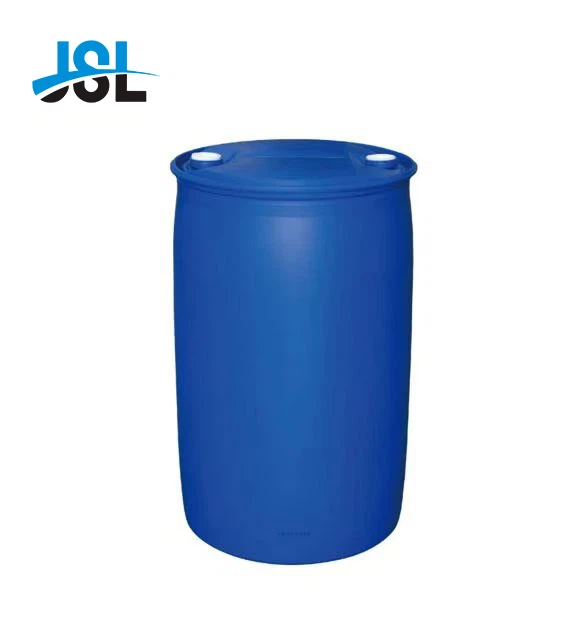
- Optimize Storage Conditions: Store APG220 in a cool, dry place away from direct sunlight. The recommended storage temperature is between 10 - 30°C. Keep the container tightly sealed to prevent air and moisture from entering.
- Ensure Cleanliness: Use clean and dedicated storage containers for APG220. Before transferring the product, make sure the container is thoroughly cleaned and dried. Avoid using containers that have previously held incompatible chemicals.
Solidification or Separation during Storage
In some cases, APG220 may solidify or separate into layers during storage.
Possible Causes
- Low Temperature: If the storage temperature is below the recommended range, APG220 may solidify. Different grades of APG220 have different freezing points, and if the temperature drops too low, it will cause the product to change its physical state.
- Long - Term Storage: Over a long period of storage, some components of APG220 may separate due to differences in density or solubility.
Solutions
- Temperature Adjustment: If the product has solidified, gently warm the container to a temperature within the recommended range. You can use a water bath or a heating pad to gradually increase the temperature. Do not heat it too quickly or at too high a temperature, as this may damage the product.
- Mixing: If separation occurs, stir the product thoroughly to redistribute the components. You can use a mechanical stirrer or a paddle to ensure a uniform mixture.
As a reliable APG220 supplier, we are committed to providing high - quality products and excellent technical support. If you are interested in purchasing APG220 or need more detailed information about its applications and troubleshooting, please feel free to contact us for procurement and negotiation. We also offer related products such as APG 0810H60/220/decyl Glucoside/CAS:68515 - 73 - 1, APG 0810/decyl Glucoside/CAS:68515 - 73 - 1 and Caprylyl/Decyl Glucoside APG215 CS UP.
References
- Product Manual of APG220
- Surfactant Chemistry Handbook
- Journal of Surfactant and Detergent Research