





As a supplier of APG215, one question that often comes up from our customers is whether APG215 is stable in acidic conditions. In this blog post, I'll delve into this topic, exploring the chemical properties of APG215 and how it behaves in acidic environments.
Understanding APG215
First, let's have a brief introduction to APG215. APG215, also known as Caprylyl/Decyl Glucoside APG215 CS UP, is a member of the alkyl polyglucoside (APG) family. APGs are non - ionic surfactants that are derived from renewable raw materials such as glucose and fatty alcohols. They are known for their excellent biodegradability, low toxicity, and good skin compatibility, which makes them popular in various industries, including personal care, household cleaning, and industrial applications.
Compared to other APG products like APG 0810/decyl Glucoside/CAS:68515 - 73 - 1 and Caprylyl/Decyl Glucoside APG 8170, APG215 has its unique characteristics in terms of its alkyl chain length distribution and hydrophilic - lipophilic balance (HLB). These properties determine its performance in different applications and also influence its stability under various conditions.
Chemical Structure and Acidic Stability
The chemical structure of APG215 consists of a glucose head group and an alkyl chain. The glucose moiety is hydrophilic, while the alkyl chain is hydrophobic. In an acidic environment, the stability of APG215 depends on several factors related to its chemical structure.
One of the key aspects is the glycosidic bond that links the glucose unit to the alkyl chain. This bond is relatively stable under normal conditions. However, in strongly acidic media, there is a possibility of hydrolysis. Hydrolysis of the glycosidic bond would break the molecule into glucose and the corresponding fatty alcohol. The rate of hydrolysis is affected by the pH of the solution, temperature, and the concentration of the acid.
Experimental Evidence of Acidic Stability
To determine the stability of APG215 in acidic conditions, we have conducted a series of experiments. We prepared solutions of APG215 at different pH values, ranging from slightly acidic (pH = 4) to strongly acidic (pH = 1). These solutions were then incubated at different temperatures (25°C, 40°C, and 60°C) for a period of time (1 week, 2 weeks, and 4 weeks).
After the incubation period, we analyzed the samples using high - performance liquid chromatography (HPLC) to detect any changes in the concentration of APG215 and the formation of hydrolysis products. The results showed that at a slightly acidic pH (around 4), APG215 was relatively stable even after 4 weeks of incubation at 25°C. There was only a minor decrease in the concentration of APG215, and the formation of hydrolysis products was negligible.
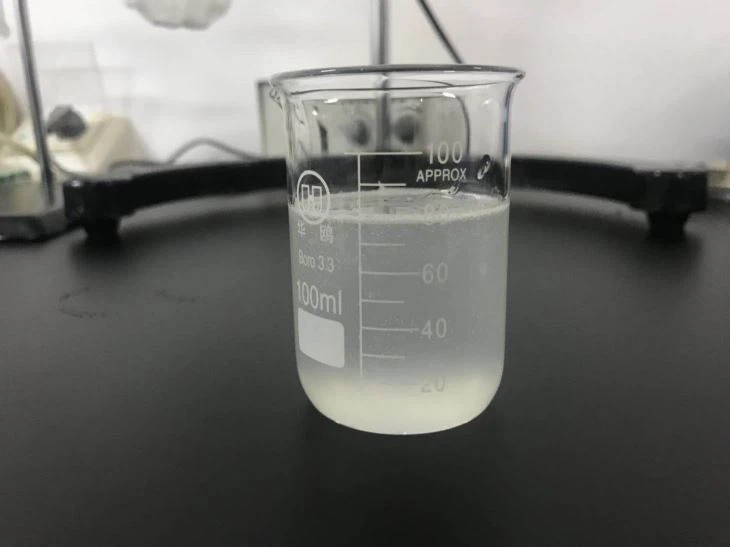
However, as the pH decreased to 1 and the temperature increased, the stability of APG215 decreased significantly. At 60°C and pH = 1, a substantial amount of hydrolysis occurred within 1 week. The concentration of APG215 decreased, and glucose and fatty alcohols were detected as hydrolysis products.
Practical Implications in Different Industries
Personal Care Industry
In the personal care industry, many products such as facial cleansers, shampoos, and body washes have an acidic pH to maintain the skin's natural acid mantle. APG215's stability in slightly acidic conditions makes it a suitable surfactant for these products. It can provide good foaming, cleansing, and conditioning properties without being degraded during the shelf - life of the product.
Household Cleaning Industry
For household cleaning products, some acidic cleaners are used for removing hard water stains and rust. If APG215 is to be used in these products, the formulator needs to carefully consider the pH and storage conditions. In mildly acidic cleaners (pH around 4 - 5), APG215 can be a good choice due to its stability and environmental - friendly nature.
Industrial Applications
In industrial applications, such as metal cleaning and textile processing, acidic solutions are sometimes used. The stability of APG215 in these acidic environments can determine its effectiveness. If the pH is not too low and the temperature is controlled, APG215 can still be used to improve the wetting, emulsifying, and dispersing properties of the solutions.
Factors Affecting Acidic Stability
Apart from pH and temperature, other factors can also affect the acidic stability of APG215. The presence of other ingredients in the formulation can have a synergistic or antagonistic effect. For example, some salts or chelating agents can enhance the stability of APG215 by reducing the activity of the acid or by protecting the glycosidic bond.
The concentration of APG215 in the solution also plays a role. Higher concentrations of APG215 may lead to a more stable system, as the molecules can interact with each other and form a protective layer that resists hydrolysis.
Strategies to Improve Acidic Stability
Based on our understanding of the factors affecting the acidic stability of APG215, we can adopt several strategies to improve its performance in acidic conditions.
One approach is to adjust the formulation by adding stabilizers. For example, buffer systems can be used to maintain the pH of the solution within a certain range. This can prevent the pH from dropping too low and reduce the risk of hydrolysis.
Another strategy is to optimize the storage conditions. Storing the products at lower temperatures can slow down the rate of hydrolysis. Additionally, using appropriate packaging materials that can protect the product from light and air can also help maintain the stability of APG215.
Conclusion
In conclusion, APG215 is relatively stable in slightly acidic conditions (pH around 4), but its stability decreases significantly in strongly acidic environments, especially at elevated temperatures. The stability of APG215 in acidic media is mainly determined by the hydrolysis of the glycosidic bond, which is affected by pH, temperature, and other factors such as the presence of other ingredients in the formulation.
Our experimental results provide valuable information for formulators in different industries. By understanding the acidic stability of APG215, they can make informed decisions about its use in various products and take appropriate measures to ensure its performance and shelf - life.
If you are interested in using APG215 in your products and have any questions about its stability or performance, please feel free to contact us for more information and to discuss your specific requirements. We are committed to providing high - quality APG215 products and professional technical support to help you achieve the best results in your applications.
References
- Müller, M., & Wierenga, P. A. (2001). Alkyl polyglycosides: Properties and applications. Surfactant Science Series, 96, 1 - 38.
- Karsa, D. R. (1997). Handbook of surfactants. Springer.
- Schott, H. (1999). Surfactant - science and technology. Wiley.